Tonkotsu Ramen
Classic Japanese ramen in a rich pork bone broth with wheat noodles, sliced chashu pork and a marinated ajitama egg.
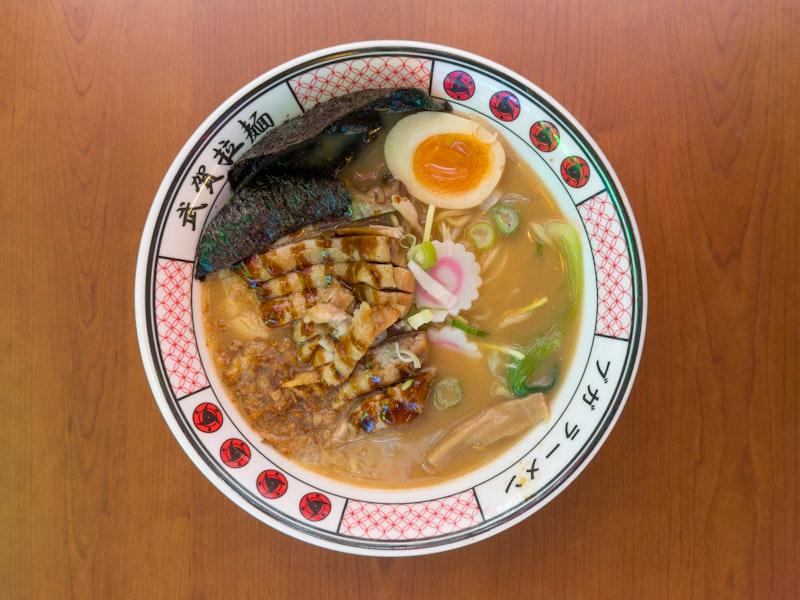
Tonkotsu is one of the four main styles of Japanese ramen (alongside shoyu, miso and shio), named after its broth: "tonkotsu" literally means "pork bones." The broth is boiled hard for hours so the bones essentially break down, and the collagen and fat emulsify into the water, turning the broth cloudy, dense and almost creamy in texture — its main distinction from the clear shio or shoyu broths. The style originated on the island of Kyushu, in the city of Hakata, so it's also known as "Hakata ramen." The broth is served with thin wheat noodles, sliced chashu pork, a soy-marinated ajitama egg with a jammy yolk, scallions, nori and often pickled ginger (beni shoga). A home version with a shortcut broth still gets remarkably rich if you don't skimp on bones and simmering time.
🧺 Ingredients
🍽 4 servings👩🍳 Method
- 1
Prep the bones
Cover the bones with cold water, bring to a boil and simmer for 5 minutes, then drain and rinse off the scum — this removes any murky off-flavor.
- 2
Simmer the broth
Cover the rinsed bones with 4 L of fresh water, add the leek, garlic and ginger, and boil hard, uncovered, for 6–8 hours, topping up water as it evaporates, until milky white.
- 3
Make the chashu
Sear the rolled pork belly on all sides, then braise it in a mix of soy sauce, mirin and water over low heat for 2 hours until tender. Cool and slice.
- 4
Make ajitama eggs
Boil the eggs for 6.5 minutes, cool in ice water and peel. Marinate in the remaining soy sauce and mirin for at least 4 hours, or overnight.
- 5
Assemble
Cook the noodles according to the package, divide into deep bowls, ladle over the hot strained broth, and top with chashu slices, half an egg, scallions and nori.
💡 Tips
- 💡
Don't lower the heat while simmering the broth — it's the hard rolling boil that emulsifies the fat and collagen, making the broth cloudy and thick.
- 💡
Make the broth, chashu and eggs a day or two ahead — the flavor only improves, and assembling the ramen on serving day takes just 10 minutes.
🔄 Swaps & variations
- 🔄
Add a spoonful of spicy chili oil (rayu) or miso paste to the bowl before pouring in the broth for a spicy tonkotsu variation.
Fresh recipes — once a week
Fresh recipes every week — no spam.
❓ Frequently asked questions
How is tonkotsu different from other ramen styles?
Tonkotsu is made from pork bones boiled hard for a long time, which makes the broth cloudy and dense, unlike the clear shoyu (soy) and shio (salt) broths or the paste-based miso style.
Can the broth simmering time be shortened?
Yes, a pressure cooker can cut the simmering time to 2–3 hours while keeping the dense texture, though the flavor differs slightly from a long, slow simmer.
Why should the ramen egg have a jammy yolk?
The semi-liquid ajitama yolk is a signature ramen touch: it adds extra silkiness to the broth as it mixes in when the egg is cut.
Can pork bones be replaced with chicken?
Yes, but that becomes a different style — paitan (chicken broth), which is simmered similarly but yields a lighter flavor than classic tonkotsu.