Crème Brûlée
A classic French dessert: silky egg-yolk custard topped with a crisp, torched sugar crust.
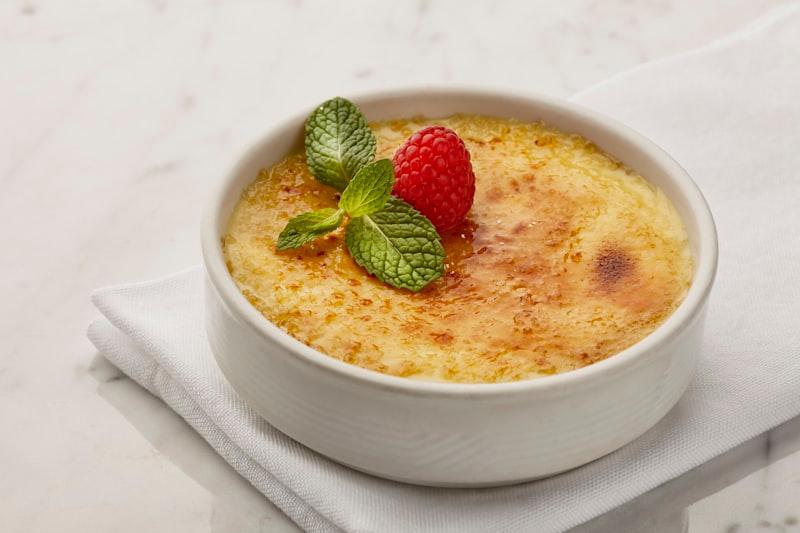
Crème brûlée is one of the most recognizable French desserts, its name literally meaning 'burnt cream.' The secret lies in the contrast of textures: beneath a thin, crackly caramelized crust hides an incredibly smooth, barely set custard made with egg yolks and flavored with vanilla. It's baked in shallow ramekins in a water bath so the custard sets evenly without curdling, while the caramel crust is formed just before serving — a thin layer of sugar is torched or broiled until it caramelizes. It's that moment when a spoon cracks through the crisp top into the soft custard beneath that makes crème brûlée so beloved worldwide.
🧺 Ingredients
🍽 6 servings👩🍳 Method
- 1
Warm the cream
Preheat the oven to 150°C (300°F). Pour the cream into a saucepan, add the split vanilla pod (or extract), and heat almost to a simmer without boiling. Remove from heat and let it infuse for 10 minutes.
- 2
Whisk yolks with sugar
Whisk the yolks with the sugar and a pinch of salt until smooth, without over-beating, to avoid creating too much foam.
- 3
Combine
Slowly pour the warm cream into the yolk mixture in a thin stream, whisking constantly, then strain the custard through a sieve to remove bubbles and any vanilla pod bits.
- 4
Bake in a water bath
Divide the custard among ramekins, place them in a deep baking tray, pour hot water halfway up the sides of the ramekins, and bake for 35–40 minutes until the edges are set but the centers still jiggle slightly.
- 5
Chill and caramelize
Let the custard cool, then chill for at least 3 hours. Just before serving, sprinkle a thin layer of sugar on top and caramelize with a kitchen torch (or under the broiler) until crisp and golden.
💡 Tips
- 💡
Use shallow, wide ramekins — the custard heats more evenly and sets faster.
- 💡
Before caramelizing, blot the surface of the custard with a paper towel — excess moisture keeps the sugar from caramelizing evenly.
🔄 Swaps & variations
- 🔄
A popular variation infuses the cream with orange zest or a splash of Grand Marnier liqueur while warming it.
Fresh recipes — once a week
Fresh recipes every week — no spam.
❓ Frequently asked questions
What if I don't have a kitchen torch?
Sprinkle sugar over the chilled custard and place the ramekins under a hot broiler for 2–3 minutes, watching closely so the sugar doesn't burn.
Why did my custard end up bubbly or curdled?
The cream was probably too hot when mixed with the yolks, or the oven was too hot. Keep the oven at no more than 150°C (300°F) and pour the cream in slowly while whisking constantly.
Can crème brûlée be made ahead?
Yes, the custard without the sugar crust keeps in the fridge for up to 2 days. Caramelize the sugar just before serving so the crust stays crisp.
What kind of sugar works best for the caramel crust?
Regular white sugar caramelizes most evenly, but raw cane sugar gives a deeper caramel flavor.