Croissant — classic French pastry
A real laminated croissant from homemade dough: dozens of buttery layers, a crisp crust and an airy crumb — the symbol of French pastry.
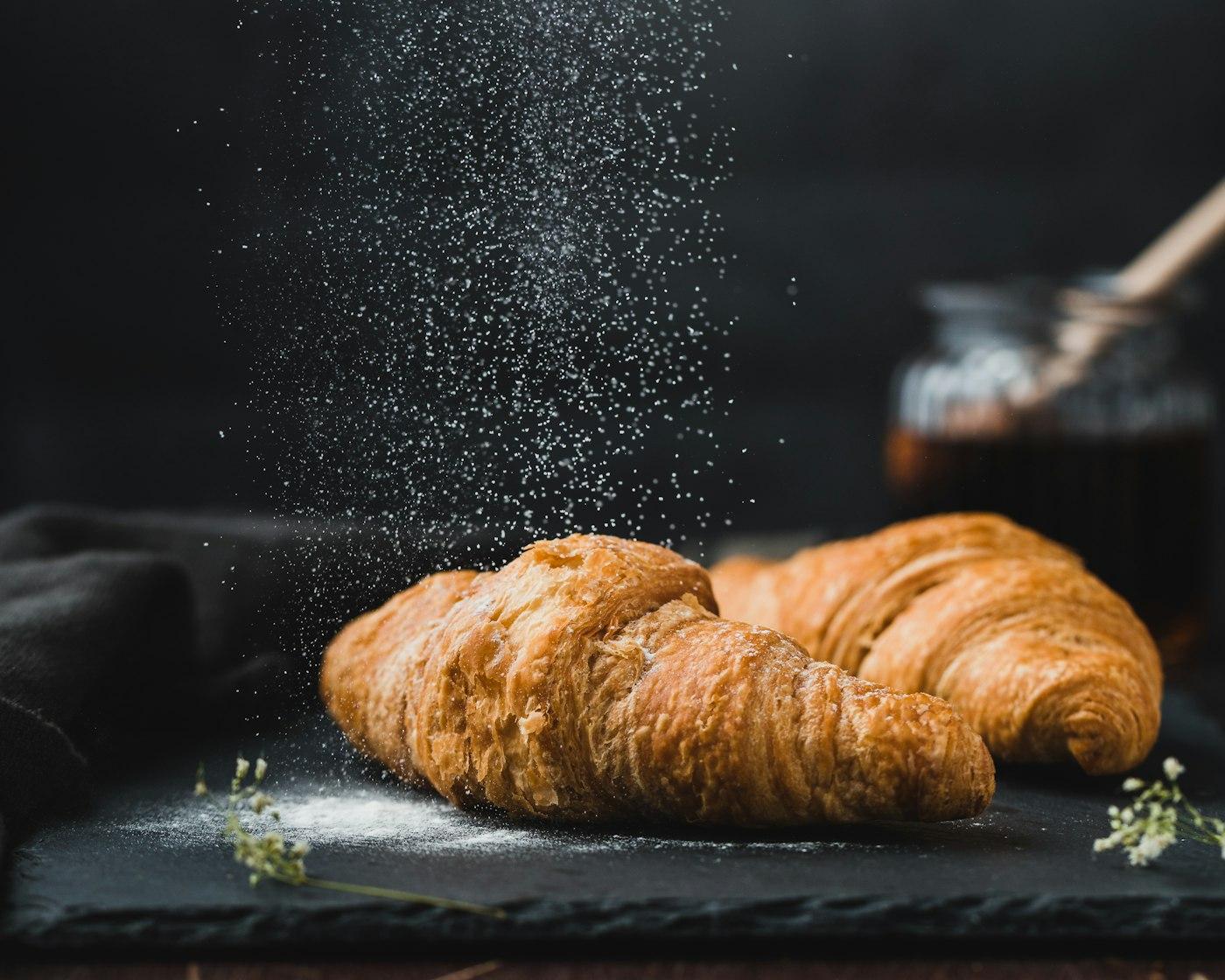
The croissant is the calling card of French cuisine and perhaps the most recognizable pastry in the world. Its secret is lamination: yeast dough is repeatedly folded with a sheet of butter, creating dozens of paper-thin layers. As it bakes, the butter turns to steam, the layers rise, and the croissant becomes crisp outside and airy inside. The recipe takes patience and proofing time, but the reward is worth it — a warm homemade croissant is nothing like a store-bought one.
🧺 Ingredients
🍽 8 servings👩🍳 Method
- 1
Dough
Make a dough from flour, milk, water, sugar, yeast, salt and 30 g soft butter. Form a ball, wrap and chill overnight.
- 2
Butter block
Roll the remaining 250 g butter into a square between parchment sheets and chill — this is the butter block.
- 3
Lamination
Roll out the dough, enclose the butter block, fold like an envelope. Do 3 single folds, chilling the dough 30 minutes between each.
- 4
Shape
Roll the dough to a 4 mm sheet, cut into triangles and roll each into a croissant from the wide end to the tip.
- 5
Proof
Let the croissants proof 2 hours in a warm spot until doubled, then brush with beaten egg.
- 6
Bake
Bake at 200 °C for 15–18 minutes until deep golden. Cool on a rack.
💡 Tips
- 💡
Work in a cool kitchen: if the dough starts weeping butter, chill it immediately.
- 💡
A sharp knife and a ruler for cutting triangles give even, pretty croissants.
- 💡
Do not proof croissants in a too-hot oven — the butter will leak and the layers vanish.
🔄 Swaps & variations
- 🔄
Tuck a stick of chocolate before rolling for a pain au chocolat.
- 🔄
Fill cooled croissants with almond cream and bake again for almond croissants.
Fresh recipes — once a week
Fresh recipes every week — no spam.
❓ Frequently asked questions
Why don't my croissants turn out flaky?
Most often because the butter melted into the dough. Keep both dough and butter cold, work fast and chill the dough between folds.
Can I freeze croissants?
Yes. Freeze shaped but unproofed croissants, then thaw and proof before baking. Baked croissants are best eaten fresh.
What butter should I use?
Use butter with at least 82% fat — it is more pliable and gives more pronounced layers and flavor.