If you've ever watched a Korean drama, you know the feeling: the characters sit down to eat, and a minute later you're rummaging through the fridge looking for anything even remotely spicy. Food scenes in K-dramas are practically their own genre, with their own rules. The camera lingers on a steaming bowl, the actors eat with visible delight, and the sound design — the crunch, the bubbling broth, the sizzle of oil — is recorded so carefully that your mouth waters even with your eyes closed.
This is no accident. Food in Korean dramas is a full-fledged character. It conveys care, reconciliation, flirtation and loneliness. Sharing a pot of instant noodles can say more about two people than ten minutes of dialogue. No wonder viewers around the world started googling recipes mid-episode.
In this article we'll break down five dishes that show up on screen most often: tteokbokki, Korean ramyeon, the corn dog, gimbap and the legendary duo known as "chimaek." We'll cover what they actually are, where they came from and how to make them at home without a flight to Seoul.
Tteokbokki: the spicy rice cakes you can't forget
Tteokbokki (떡볶이) is arguably the most recognizable Korean street food. Cylindrical rice cakes called tteok are simmered in a thick, bright-red sauce built on gochujang (fermented chili paste) and gochugaru (red chili flakes). The sauce is spicy, sweet and faintly smoky all at once, while the rice cakes turn tender and chewy outside, dense inside.
Despite its fiery reputation, tteokbokki has a royal past. An early version called gungjung tteokbokki was prepared at the court of the Joseon dynasty and wasn't spicy at all: the rice cakes were stir-fried with soy sauce, beef and vegetables. The modern spicy version came much later, in the mid-20th century, when a street vendor named Ma Bok-rim in Seoul's Sindang-dong district began cooking tteokbokki with gochujang. The idea took off, and the dish became a national staple.
In dramas, tteokbokki almost always signals something warm and personal: student hangouts, heart-to-heart talks, comfort after a hard day. To recreate it at home, you'll need:
- tteok rice cakes (sold fresh or frozen at Asian groceries);
- gochujang paste and a little gochugaru for heat;
- an anchovy or kombu seaweed broth;
- sugar or rice syrup for sweetness;
- fish cakes (eomuk), green onion and boiled eggs to taste.
Soak the rice cakes, reduce the sauce until thick, then simmer everything together for a few minutes. The key is not to overcook the tteok or they'll fall apart. Serve hot, straight from the pan.
Korean ramyeon: noodles eaten straight from the lid
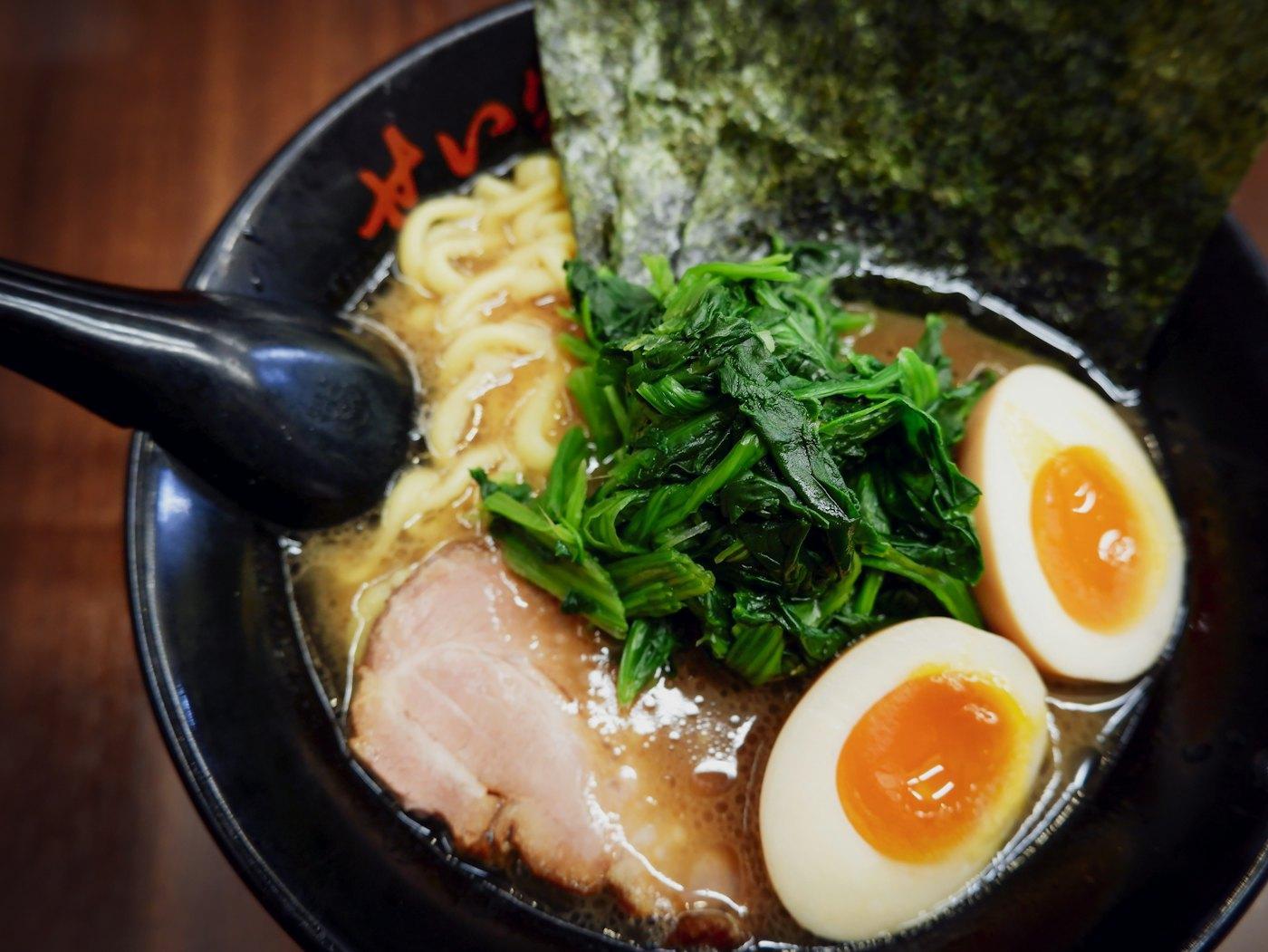
Korean ramyeon (라면) isn't quite the same thing as handcrafted Japanese ramen. More often than not, drama characters are eating instant noodles, frequently the famous Shin Ramyun: spicy broth, springy noodles and a dramatic stir with the chopsticks. These noodles are often cooked right in a small aluminum pot called a yangeun-nambi and eaten from the lid — that's part of the cultural code.
Korean instant noodles were born in 1963, when the company Samyang released the country's first ramyeon to help solve food shortages in a post-war nation. Korea has since become one of the world's leaders in noodle consumption per capita, and ramyeon has gone from "poor man's food" to a source of pride and endless culinary experimentation.
If you're after something more serious and time-consuming, look to the Japanese tradition of long-simmered broth — for example, Ichiraku Ramen from Naruto, where the broth simmers for hours. The Korean home upgrade of a single packet, by contrast, takes minutes: add an egg, a slice of processed cheese, green onion, kimchi or a sliced sausage. In dramas, the line "want to come over for ramyeon?" has long become iconic, and it rarely means just dinner.
Korean corn dog: the new-generation street hit
The Korean corn dog (핫도그, hotdog) blew up on social media and appears in dozens of dramas and reality shows as a symbol of street-food fun. Unlike the American classic in cornmeal batter, the Korean version uses a yeasted or rice-flour batter and is often rolled in breadcrumbs for extra crunch.
The main draw is the surprise filling. Inside you might find not just a sausage but stretchy mozzarella cheese (or a half-and-half combination of the two), while the outside gets coated in cubes of fried potato, corn flakes or sugar. On top come zigzags of ketchup, mustard and sweet sauce. That money shot where the cheese stretches half a meter is practically a required element of any food-focused drama.
At home, a corn dog takes a bit of practice:
- skewer a sausage or a block of cheese on a wooden stick;
- dip it into the thick batter, holding and rotating the stick;
- roll it in breadcrumbs or potato cubes;
- deep-fry until golden;
- dust with sugar and drizzle with sauces.
The key is hot oil around 170°C (340°F) and a dry sausage surface, or the batter will slide right off.
Gimbap: Korea's seaweed roll with its own personality
Gimbap (김밥) is rice wrapped in a sheet of dried seaweed (gim) along with fillings, then sliced into neat rounds. It looks like Japanese rolls, but it's its own dish with its own logic: the rice is seasoned with sesame oil and salt rather than vinegar, and the fillings tend to be cooked and pickled rather than raw.
A classic lineup inside includes pickled yellow radish (danmuji), sautéed carrot, spinach, omelet, and Korean ham or beef. Gimbap is picnic food, lunchbox food, road-trip food, so in dramas it often shows up in outdoor scenes, on journeys, or as a token of a mother's care: someone rolling these up at dawn so a loved one won't go hungry.
Rolling gimbap isn't hard: on a bamboo mat, lay out a sheet of gim, spread a thin layer of rice, line up the fillings in a strip and roll tightly, pressing gently. Brush your knife with sesame oil before slicing — that way the rounds come out clean and won't stick.
Chimaek: chicken and beer as a national ritual
"Chimaek" (치맥) is a portmanteau of "chicken" (fried chicken) and "maekju" (beer). It's not a dish but an entire tradition: crispy fried chicken in the company of an ice-cold beer. Korean fried chicken differs from the American version thanks to a double fry, which makes the crust especially thin and crunchy; it's then coated in a glaze — the classic sweet-and-spicy yangnyeom or a soy-garlic version.
It was the drama "My Love from the Star" (2013–2014) that turned chimaek into an international phenomenon: the heroine adored chicken and beer on snowy evenings, and after the show aired, demand for fried-chicken delivery soared not only in Korea but in China too. Ever since, the "chicken plus beer under falling snow" scene has become a visual cliché that fans recognize instantly.
At home you can capture the spirit of chimaek even without a deep fryer: marinate chicken pieces, dredge them in a mix of starch and flour, fry twice (first to cook through, then to brown), and coat them in a sauce of gochujang, garlic, soy sauce and honey. Serve immediately, while the crust is still crisp, with pickled radish and, of course, something cold.
Why drama food scenes are so appetizing
It isn't only about the dishes themselves. Korean dramas use a whole toolkit that works directly on the viewer's appetite. First, the deliberate sound design: microphones capture the crackle of a crust and the bubbling of broth so vividly that your brain fills in the flavor. Second, the close-ups of steaming food and slow-motion shots of stretching cheese. Third, the sincere reactions of the actors — the Korean habit of eating with loud enjoyment (that "mukbang" energy) is contagious.
But the real secret is that food in dramas is always tied to emotion. It's never just a snack; it's a way to show intimacy, forgiveness, or the loneliness of a character eating alone late at night. The viewer connects to the meaning, not the taste, and that's exactly why we want to recreate the dish: along with it, we seem to take home a piece of that warm scene.
The good news is that most of these dishes are simpler to make than they look. Start with tteokbokki or an upgraded packet of ramyeon, then expand your repertoire all the way to a full chimaek night. Press play on your favorite drama and let the kitchen become part of the story.