Asian street food is more than a quick bite. It is an entire culture that lives on sidewalks, under the awnings of night markets, and beside steaming carts on wheels. Here a single cook may spend a lifetime perfecting one dish, and a line of locals is the best recommendation you will ever find.
Asian street food spans dozens of cuisines, but they share a common spirit: bold contrasts of flavor (spicy, sour, sweet, and salty in a single bowl), lightning-fast service, and atmosphere. The smell of fried garlic, the sizzle of oil in a wok, neon signs, and plastic stools are all part of the pleasure.
In this guide we will travel through the signature dishes of Japan, Thailand, China, and Korea. We will explain what they are made of, where they come from, and how to recreate something similar at home, even if the nearest night market is thousands of miles away.
Japan: takoyaki and ramen
Japanese street food (often served from carts called yatai) is about precision and seasonality, even in its most casual form.
Takoyaki — octopus balls
Takoyaki comes from Osaka, where it first appeared in the 1930s. The name is literal: tako means octopus, yaki means grilled. A thin wheat-flour batter mixed with dashi (a stock made from kombu seaweed and tuna flakes) is poured into a special cast-iron mold with hemispherical wells, then topped with a piece of cooked octopus, pickled ginger, green onion, and tenkasu (crispy bits of fried batter).
The real magic is in the technique: using long picks, the cook turns each ball inside the mold so it becomes perfectly round and crisp on the outside while staying almost liquid within. Finished takoyaki is drizzled with takoyaki sauce (thick, sweet-savory, similar to Worcestershire), mayonnaise, and a shower of katsuobushi flakes that seem to "dance" in the rising steam.
Ramen — the soup that became a legend
Ramen arrived in Japan from China in the early twentieth century and grew into a national dish with hundreds of regional variations. Every bowl rests on four elements: the broth, the tare (a concentrated seasoning), the noodles, and the toppings.
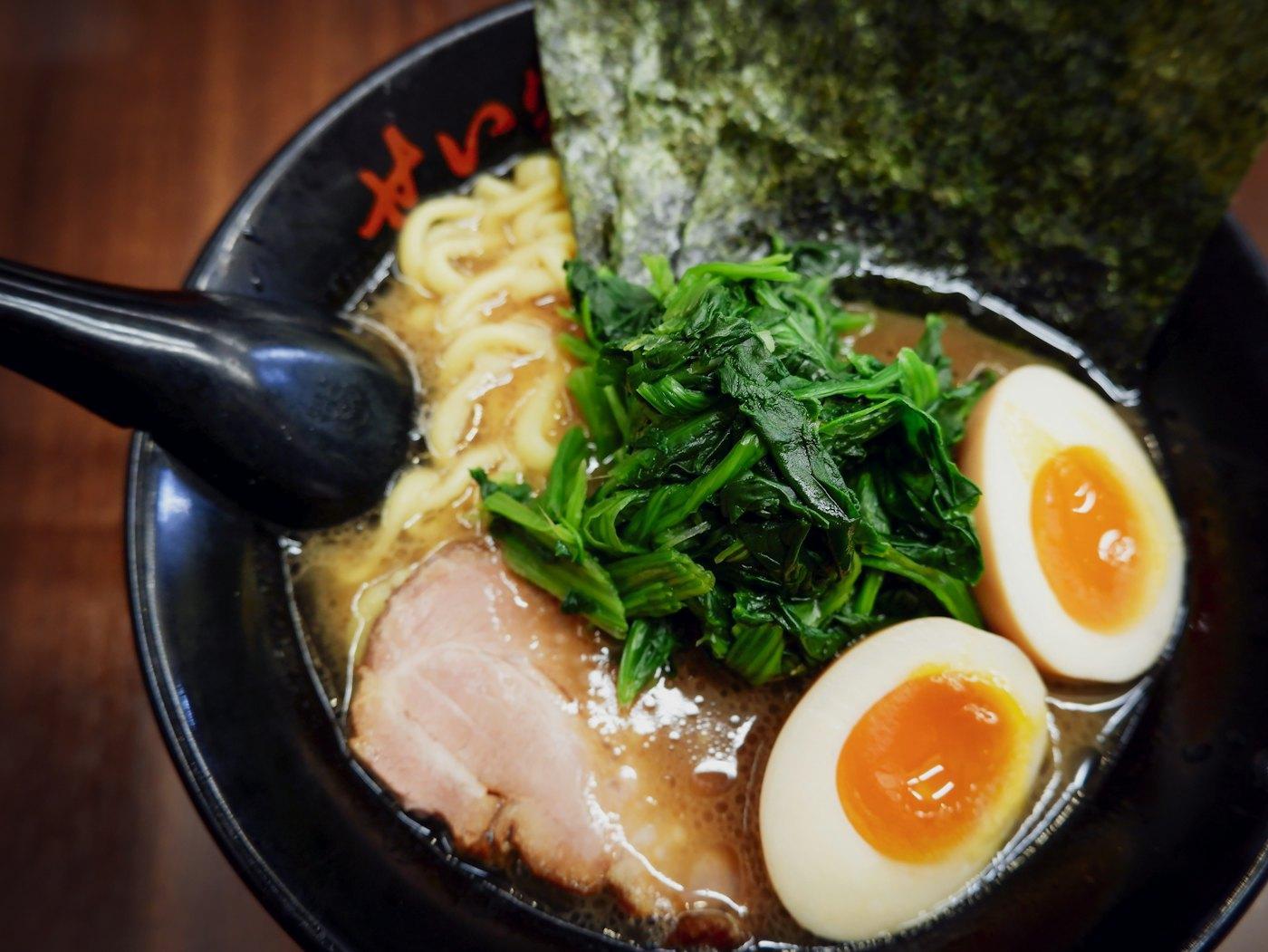
The broths vary widely: light shio (salt), deeper shoyu (soy sauce), aromatic miso, and the rich, creamy tonkotsu simmered from pork bones for hours. On top you might find chashu (braised pork), an ajitama soft-boiled egg, bamboo shoots, nori, and scallions.
Ramen is firmly woven into pop culture — think of the Ichiraku noodle shop in the world of Naruto, where the hero spends what feels like half the series. In the canon it is a simple shoyu ramen with pork and narutomaki (the pink-and-white swirl of kamaboko fish cake the character is named after). If you want to build that bowl at home, we have a detailed walkthrough: Ichiraku Ramen from Naruto.
Thailand: pad thai and sour-spicy soups
Thai cuisine is a master of balance. A single spoonful should carry four flavors at once: sweet, sour, salty, and spicy. The street carts of Bangkok are the best place to feel it.
Pad thai
Pad thai is rice noodles stir-fried in a wok. Surprisingly, it is younger than it looks: it was popularized in the 1930s and 1940s as part of a national campaign to promote Thai identity and reduce rice consumption. Since then pad thai has become a symbol of the country.
The classic recipe includes flat rice noodles, shrimp or chicken, tofu, egg, bean sprouts, and green onion. The sauce is the signature part: tamarind paste for sourness, palm sugar for sweetness, and fish sauce for umami and salt. Pad thai is served with a wedge of lime, crushed roasted peanuts, and dried chili flakes so everyone can fine-tune the flavor to their own taste.
Tom yum and soup culture
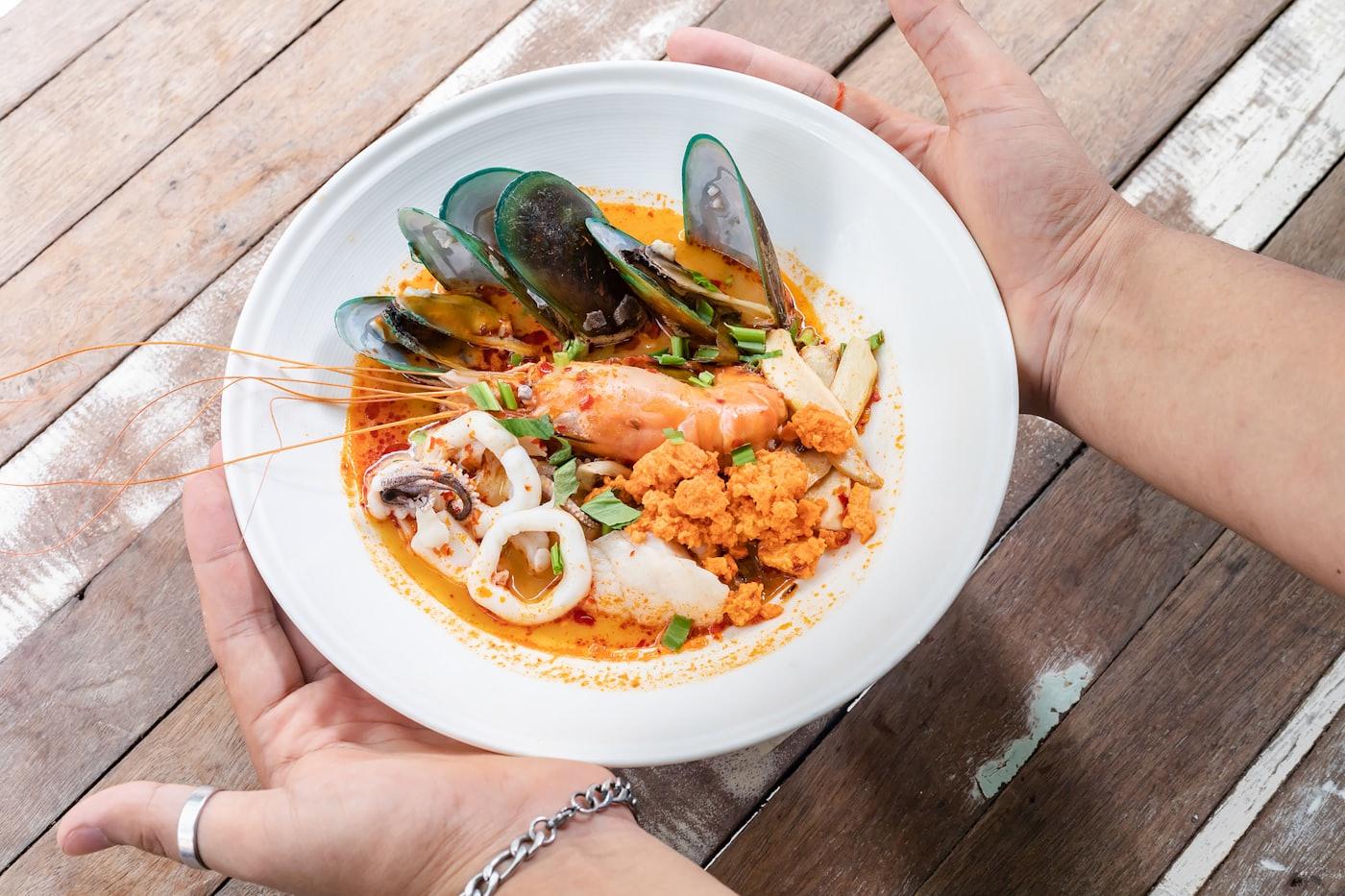
Thai markets also bubble with soups — above all the famous tom yum, a hot-and-sour broth with lemongrass, galangal, kaffir lime leaves, chili, and fish sauce. The shrimp version, tom yum kung, is the best known. This dish perfectly captures the Thai philosophy of flavor, and it is genuinely doable at home: see the recipe for Tom Yum with Shrimp.
A few more things worth hunting for at a Thai night market:
- Satay — marinated skewers on bamboo sticks with peanut sauce.
- Mango sticky rice — glutinous rice with coconut milk and ripe mango.
- Som tam — a spicy green-papaya salad pounded right in front of you in a large mortar.
- Roti — a thin fried flatbread with banana and condensed milk for dessert.
China: bao and noodles
Chinese street food is vast and varied, since it draws on dozens of regional cuisines. But two icons are known everywhere: steamed bao buns and the endless world of noodles.
Bao — steamed buns
Bao (or baozi) are soft yeasted buns cooked over steam. They come closed, with a filling inside (pork, vegetables, sweet red bean paste), and open, in the pocket shape of gua bao, which holds braised pork, pickled vegetables, and peanuts. Gua bao originated in Taiwan and has become a global street-food hit in recent years.
The dough is made from wheat flour with a little sugar and sometimes fat, so the buns turn out snow-white and fluffy. They are cooked in stacked bamboo steamers set over boiling water.
Noodles in every form
Noodles in China are not one dish but an entire universe. They are pulled by hand (lamian), shaved with a knife straight over the boiling pot (daoxiaomian), served in broth, or stir-fried in a wok (chow mein). In the south, thin egg-based wonton noodles are popular; in the north, the wheat noodles are heavier and chewier.
A street classic is Lanzhou beef noodles: a clear, spiced beef broth, slices of meat, cilantro, and a drop of fiery chili oil. The hand-pulling itself often becomes a little show performed right before your eyes.
Korea: tteokbokki and late-night markets
Korean street food (known as bunsik) is about rich, warming, and often very spicy flavor. At its heart are tteokbokki rice cakes.
Tteokbokki
Tteokbokki is made from cylindrical rice cakes called tteok, simmered in a thick, sweet-and-spicy sauce based on gochujang (fermented chili paste). Their texture is distinctive: bouncy, chewy, a little gummy — and that is exactly why people love them. The sauce often includes eomuk fish cakes, boiled eggs, scallions, and a touch of sugar for balance.
Historically tteok was eaten even in royal cuisine, but the spicy street version we know today appeared in the mid-twentieth century and quickly became a national favorite. Today tteokbokki is a must at any Korean market and an inseparable part of the mukbang genre (videos of people eating on camera).
More things to look for at Korean stalls:
- Hotteok — sweet fried pancakes filled with brown sugar, cinnamon, and nuts.
- Gimbap — rice rolls with vegetables and meat in a sheet of seaweed.
- Twigim — Korean tempura: vegetables, seaweed, and dumplings in batter.
- Eomuk/odeng — fish cakes on a skewer in warm broth, perfect in winter.
The atmosphere of night markets
The night market is half the joy of Asian street food. Taiwan's Shilin, Bangkok's weekend market, Osaka's Dotonbori, Seoul's Gwangjang — each has its own character, but they share one energy.
Everything here is heightened: the smell of charcoal and fried garlic, the hiss of the wok, steam rising from the steamers, the clink of spoons, neon signs, and the flow of people. The food is democratic — small portions, low prices, and the freedom to try five different dishes in one evening, moving from cart to cart. This is the format people call grazing: you do not sit down at a table, you wander with a cup or a skewer in hand.
The traveler's main tip is simple: look for a line of locals and carts that make only one dish. Narrow specialization almost always means quality.
Conclusion
Asian street food is the art of turning simple ingredients into a concentrate of flavor and emotion. The precision of Japanese takoyaki and ramen, the balance of Thai pad thai, the steamed tenderness of Chinese bao, and the heat of Korean tteokbokki are all different answers to one question: how do you make fast food genuinely delicious?
The good news is that much of this is achievable at home. Start with something iconic — a bowl of Ichiraku Ramen from Naruto or a fragrant Tom Yum with Shrimp — and the night market will feel closer than you think.