Get a real handle on just five sauces, and a good half of classic French cooking stops being a mystery. These five are called the "mother sauces" (in French, sauces meres), and dozens of derivative sauces branch off from them like descendants from common ancestors. The idea is simple: instead of memorizing hundreds of recipes, a cook learns to make a base, then adds mustard, cheese, wine, herbs or cream — and ends up with a new sauce.
The system as we know it was codified by the great French chef Auguste Escoffier in the early twentieth century. In his landmark work Le Guide Culinaire (1903), he organized the sauces into a clear hierarchy and named the foundational ones. Before him, back in the early nineteenth century, Marie-Antoine Careme had already worked on classifying sauces, identifying four leading ones. Escoffier refined the list and added the tomato sauce, which is why today we speak of exactly five.
In this article we will go through all five in turn: what goes into each base, how to make it and which famous sauces come out of it. We will also talk at length about roux — that mixture of flour and fat without which most of these sauces would be impossible. And along the way we will see how the French roux technique traveled to the American South and became the backbone of gumbo.
What a roux is and why it matters
Before tackling the sauces, you need to understand roux — it is the foundation of three of the five mother sauces. A roux is simply flour cooked in an equal weight of fat (most often butter). It sounds primitive, but the roux is exactly what makes a sauce thicken instead of turning into a lumpy mess.
The color of a roux depends on how long you cook it, and that color in turn determines both flavor and thickening power:
- White roux — cooked for just a couple of minutes, barely changing color. It goes into bechamel and gives a neutral, milky taste.
- Blond (golden) roux — cooked a bit longer, to a pale beige with a light nutty aroma. The base for veloute.
- Dark (brown) roux — cooked for a long time, to the color of caramel or chocolate. It delivers a rich, toasty flavor but thickens less, because prolonged cooking partly breaks down the starch. This is the base for espagnole.
The key rule: the darker the roux, the more flavor and the less thickening power. That is why dark sauces call for more roux.
Bechamel: the white milk sauce
Bechamel is the best known and arguably the simplest of the five. It is a white roux into which hot milk is gradually whisked, stirring constantly, until the sauce thickens to a velvety, creamy texture. Classically it is seasoned with salt, white pepper and nutmeg, and often an onion studded with cloves (the so-called oignon pique) is steeped in the milk.
Bechamel is what binds lasagna, becomes the filling for croquettes and blankets gratins. A whole family of derivatives grows out of it:
- Mornay — bechamel with grated cheese (Gruyere, Parmesan). The very sauce that makes gratins stretchy and gooey.
- Soubise — with pureed onion, delicate and slightly sweet.
- Nantua — with crayfish butter and cream, a classic for fish and shrimp dishes.
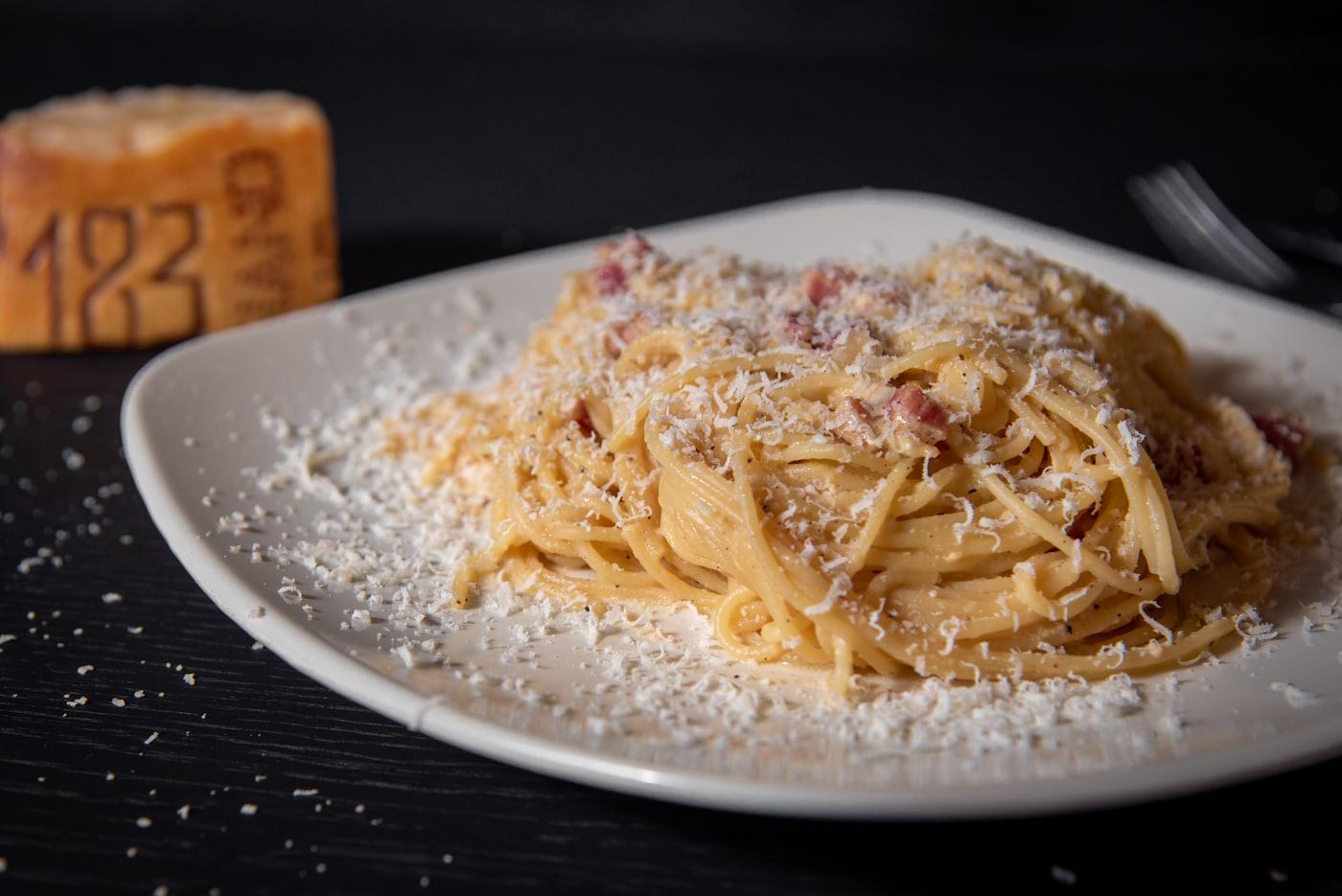
Incidentally, cheesy and creamy pasta sauces often follow the same logic as bechamel, though Italians have their own techniques too. Compare it, for instance, with the way Pasta Carbonara is made: there the creaminess comes from eggs and cheese with no roux at all — a different route to a similar result.
Veloute: the velvety pale sauce
The name veloute literally means "velvety," and that is an honest description of the texture. Veloute is a blond roux thinned with a light stock: chicken, veal or fish. Unlike bechamel, which is built on milk, everything here rests on stock, so veloute takes on the character of whatever it is made from.
Veloute is rarely served as is — it is more of a building block, a half-finished base for more complex sauces:
- Allemande — veloute enriched with egg yolk and lemon juice.
- Supreme — chicken veloute with cream and butter, silky and rich.
- Beurre blanc and wine sauces on a fish veloute — for seafood.
The logic is the same as bechamel: take a base and tune it to a specific dish. The difference is that veloute brings a more "meaty" or "fishy" flavor thanks to the stock.
Espagnole: the rich brown sauce
Espagnole is the most labor-intensive of the mother sauces. It is a dark roux thinned with brown stock (from roasted bones), with added tomato paste and an aromatic vegetable base — mirepoix (onion, carrot, celery). The sauce is simmered for a long time so the flavor turns deep and concentrated.
Espagnole is almost never used on its own — it is too rough. Instead it is the base for demi-glace (espagnole reduced with extra stock to a thick, glossy consistency) — and from demi-glace come dozens of finishing sauces:
- Bordelaise — with red wine, shallots and beef bone marrow.
- Chasseur ("hunter's sauce") — with mushrooms, tomatoes and white wine.
- Robert — with onion, white wine and mustard, a classic for pork.
Espagnole is all about meat: steaks, roasts, game. It is the sauce behind that restaurant-quality "jus from the pan," only taken to perfection.
Hollandaise: the emulsion sauce with no roux
Hollandaise stands apart from the rest: it contains no roux at all. It is an emulsion — egg yolks whisked with melted butter and lemon juice (or wine vinegar) over gentle heat. The thickening here comes not from flour but from the yolks binding the fat into a stable, creamy mass. Technically, hollandaise is a relative of mayonnaise, only warm and made with butter.
It is the most temperamental of the five: overheat it and the yolks scramble; let it cool or pour the butter in too fast and the emulsion breaks. But the result is worth it: a lemony, buttery, airy sauce that melts over asparagus, fish or eggs.
The derivatives of hollandaise are no less famous:
- Bearnaise — with tarragon, shallots and wine vinegar. The king of steak sauces.
- Maltaise — with the juice and zest of blood orange, for asparagus.
- Mousseline — hollandaise folded with whipped cream, especially light.
It is hollandaise that makes the classic eggs Benedict what it is.
Tomato sauce: the fifth and most familiar
Escoffier added tomato sauce to Careme's list, and in its classic version it is quite different from the Italian one. The French tomato sauce was traditionally thickened with roux too and cooked on stock, sometimes with salt pork and mirepoix — in other words, it was a serious, hearty base, not just pureed tomatoes.
Today the "mother" tomato sauce is more often understood as a concentrated tomato base from which countless variations can be drawn — from Provencal styles to sauces with vegetables and herbs. It is the most intuitive of the five: tomatoes, onion, garlic, olive oil, time.
French roux and American gumbo
Now for the most interesting part — the connection with gumbo. When French colonists reached Louisiana, they brought the roux technique with them, and the local Creole and Cajun cooking reinvented it in their own way. In gumbo, the roux plays the same role it does in French sauces: it thickens and adds flavor. But there is a fundamental difference.
For gumbo, the roux is cooked very long and very dark — to the color of "peanut butter," "copper" or even "dark chocolate." Cajun dark roux is sometimes cooked for 45 minutes or more, developing a nutty, slightly bitter, smoky flavor you will never find in French classics. And the fat here is often not butter but vegetable oil or bacon fat — that way the roux survives the long cooking without burning.
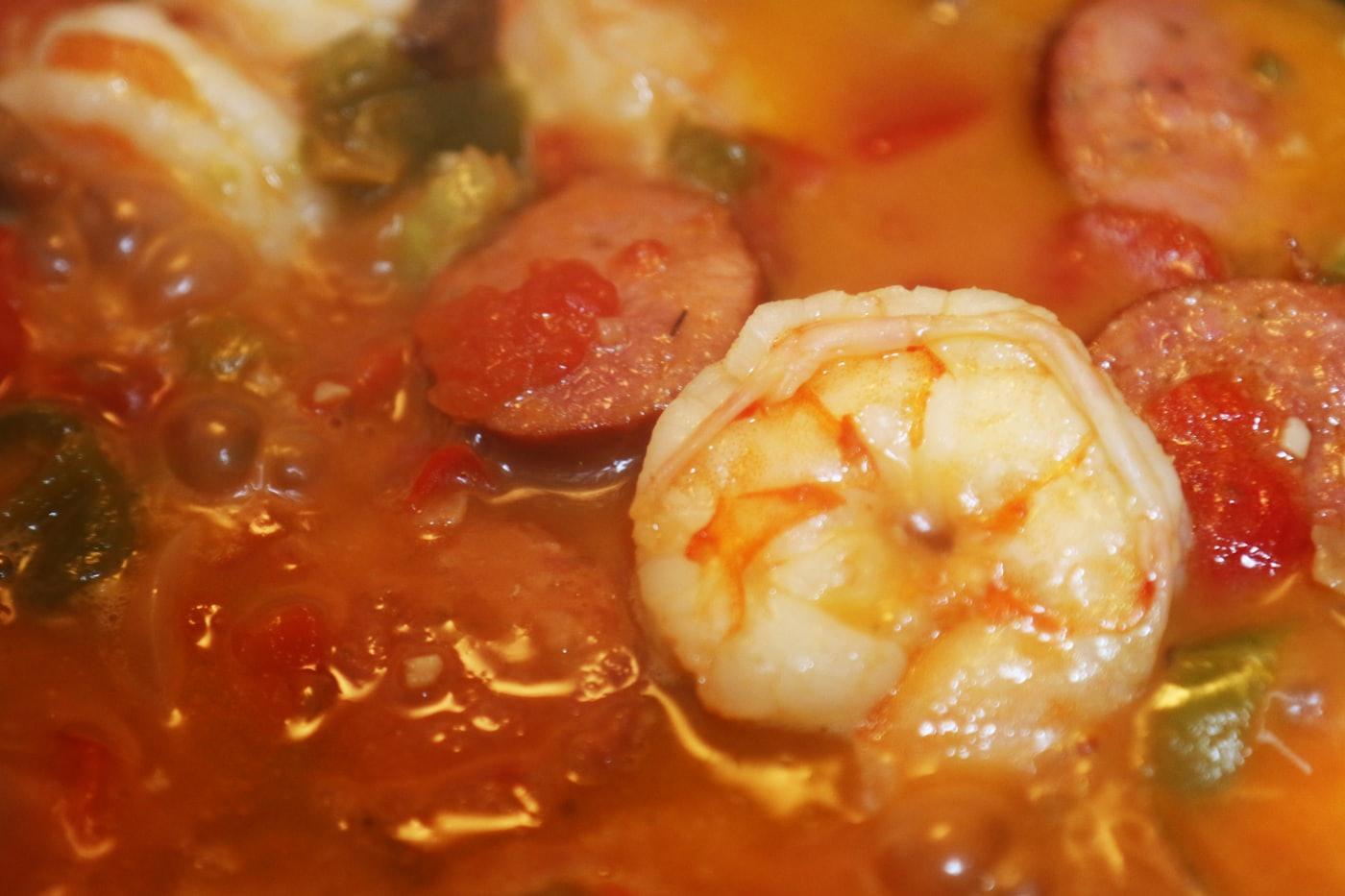
This is a perfect example of how a single technique, born in French kitchens, migrates and turns into something new. A French cook stops the roux at the blond stage for a veloute; a Cajun cook takes it nearly black to capture the soul of gumbo. If you want to try this technique in practice, take a look at the recipe for Tiana's Gumbo from The Princess and the Frog — there the dark roux is exactly what sets the whole character of the dish. By the way, in the film The Princess and the Frog itself, Tiana's gumbo is a symbol of her dream of owning a restaurant, and the scene where she stirs the pot beautifully captures how slow and patience-demanding the dish really is.
Conclusion
The five mother sauces are not dusty theory from a culinary textbook but a practical map. Master bechamel, veloute, espagnole, hollandaise and tomato, and you hold the key to hundreds of dishes: all you need is to understand the base and the principle by which derivatives are built from it. And roux is the common language spoken by both French chefs and Louisiana gumbo cooks, even if with very different "accents." Start with bechamel as the most forgiving, learn your roux — and from there French cuisine will open up to you far more generously.