Breakfast is the most personal meal of the day. Lunch and dinner are often dictated by colleagues, schedules and restaurants, but the morning belongs to us: it is up to each of us to decide what goes on the table while the city is still waking up. That is exactly why breakfasts vary so dramatically from country to country. In one culture, morning is unthinkable without miso soup and rice; in another, without crisp buttered toast; in a third, without sweet pastry and strong coffee.
Trace a line across the map and the breakfast table becomes a short summary of an entire regional cuisine: what grows there, what people value, where they are rushing to, and how they like to start the day. In some places breakfast is a quick bite on the go, in others a full ritual of a dozen little plates, and in others still an excuse to gather the whole family on a lazy weekend.
In this guide we will visit morning tables around the world: the classic English fry-up, the Japanese breakfast, American pancakes, French pastry, Middle Eastern shakshuka and the ever-flexible omelet. Along the way we will show how to bring these traditions into your own kitchen, and where we already have recipes ready so you can try them tomorrow morning.
The English breakfast: a hearty start
The full English breakfast, or simply a fry-up, is probably the most recognizable hearty breakfast in the world. The classic lineup includes fried eggs, crisp bacon, sausages, baked beans in tomato sauce, fried mushrooms and tomatoes, plus toast and sometimes black pudding, a type of blood sausage. In Ireland and Scotland the cast shifts slightly, adding potato cakes and oatcakes.
Historically, this breakfast grew out of the substantial morning meals of British farms and became a symbol of hospitality in Victorian England, when both the aristocracy and country lodgings began the day at a generous table. Today a true fry-up is more often a weekend affair or a cafe brunch order; it is simply too heavy for an ordinary workday.
The real secret of the English breakfast is not the recipe but the timing: every component should be hot at the same moment. That is why bacon and sausages are often finished in the oven, beans are kept warm over low heat, and eggs are fried last. It is less a single dish than a whole composition on one plate.
The Japanese breakfast: balance and calm
The traditional Japanese breakfast is the spiritual opposite of the English one, even though it too is built from many elements. There is no deep frying and no heaviness here. At its core sit a bowl of rice, miso soup, a piece of grilled fish (often salmon or mackerel), pickled vegetables (tsukemono) and frequently tamago, a slightly sweet rolled Japanese omelet built up in delicate layers.
The table often features natto, fermented soybeans with a distinctive flavor and sticky texture, along with nori seaweed and green tea. Everything is served in small portions in separate dishes, because Japanese cuisine values food that pleases the eye as much as the stomach.
This breakfast reflects a core principle of Japanese eating: balance and lightness. Protein, slow carbohydrates, fermented foods and vegetables in one meal give long, steady energy without weighing you down. Recreating it at home is easier than it looks: all you really need is rice, miso paste and any simple fish, and tamago can be swapped for a neatly folded plain omelet.
American pancakes: a sweet weekend morning
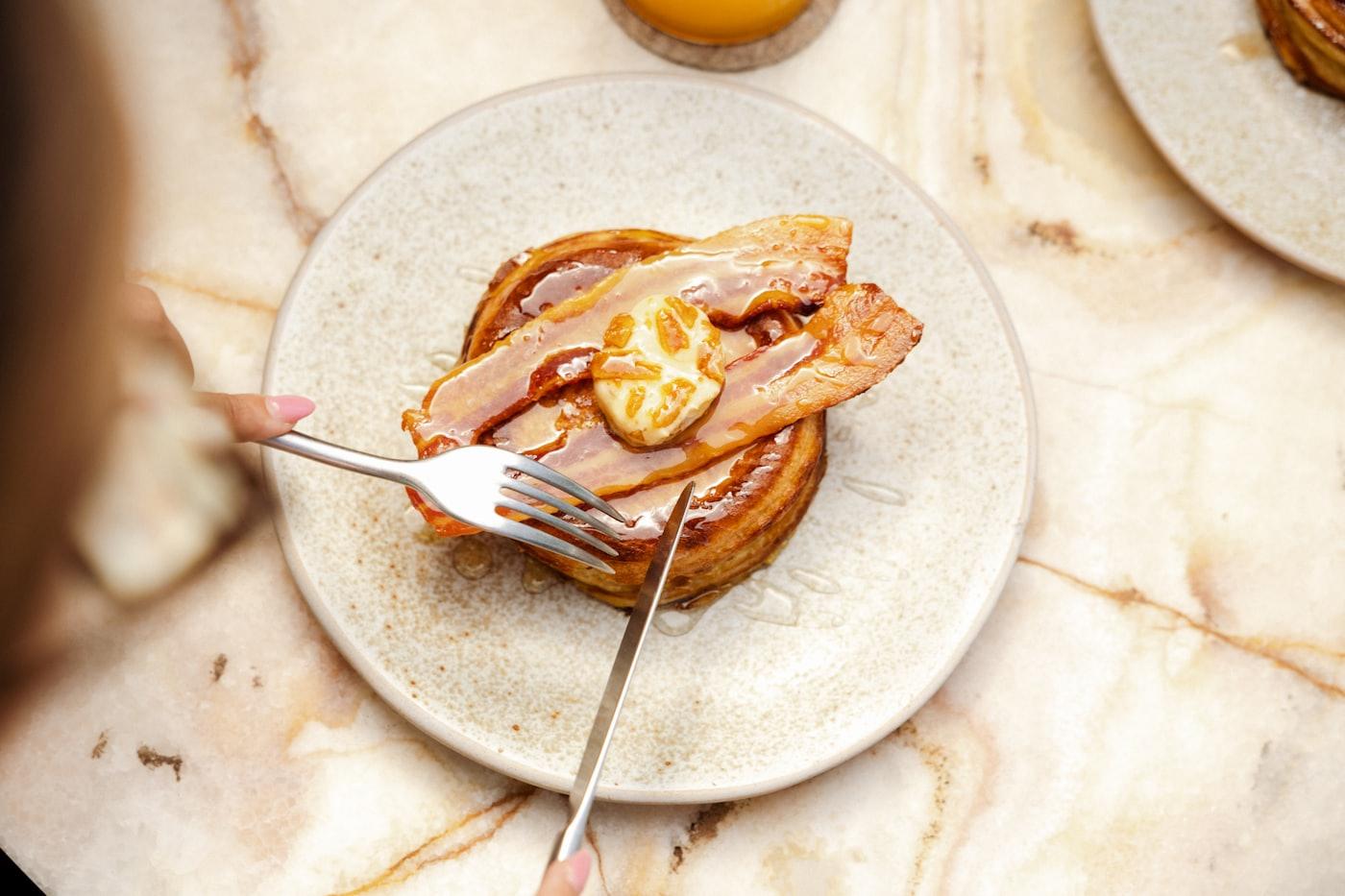
If the English breakfast is about substance and the Japanese one about balance, the American breakfast is about pleasure. Its icon is a tall stack of fluffy pancakes drenched in maple syrup, with a pat of butter slowly melting on top. Alongside come bacon, eggs, and sometimes waffles or French toast.
Pancakes in their modern form took shape in the United States in the nineteenth century, when chemical leaveners became widely available: baking soda and baking powder are what make the batter airy. Maple syrup is a gift of American and Canadian forests, where the sap of the sugar maple has been tapped for centuries. The pairing of salty bacon and sweet syrup on a single plate is a signature American move that underpins countless dishes.
The creators of the cartoon Adventure Time pushed that sweet-and-salty contrast to its logical extreme: the show even has a little song about bacon pancakes, where bacon is baked right inside the batter. It is a fictional dish from the cartoon, but the idea is entirely real and genuinely tasty, and we have turned it into a recipe: Jake's Bacon Pancakes from Adventure Time, where crisp salty pieces disappear into tender pancake batter.
The French breakfast: pastry and coffee
The French breakfast, or petit-dejeuner, surprises anyone used to a substantial morning: it is deliberately light and sweet. The classic is a fresh croissant or another laminated pastry (pain au chocolat, brioche), a large cup of coffee with milk or hot chocolate, plus jam and butter. No eggs, no bacon.
Despite its name, the croissant in its modern buttery form was perfected in France in the early twentieth century, although its ancestor is thought to be the Austrian kipferl. The croissant's secret is lamination: dough and butter are rolled and folded many times, creating dozens of paper-thin layers that puff apart in the oven to give that crisp, airy structure.
Baking croissants from scratch at home is a half-day project, which is why in France people usually buy them fresh from the bakery. Still, the underlying philosophy is worth borrowing: sometimes the best breakfast is not the number of dishes but the quality of one. Good bread, real butter and a cup of fragrant coffee are already enough to make the morning feel special.
Shakshuka: breakfast of the Middle East and Maghreb
Shakshuka is a perfect example of how humble ingredients can become the star of the table. It is eggs poached directly in a thick tomato sauce with onion, bell pepper and spices such as paprika, cumin and sometimes chili. It is served with a piece of bread, ideal for scooping up the sauce.
Shakshuka originated in North Africa (the Maghreb) and gained wide popularity across the Middle East, especially in Israeli cuisine, from where it spread to cafes around the world. The name comes from a word meaning a mixture, which neatly describes a dish where everything cooks together in a single pan.
The great appeal of shakshuka is that it is a filling but not heavy hot breakfast made from affordable ingredients, easy enough to cook every day. The yolks stay runny, the sauce stays rich, and the variations are endless: with feta, with spinach, with chickpeas. It is a breakfast that works equally well on a busy weekday and a slow weekend.
The omelet: a breakfast without borders
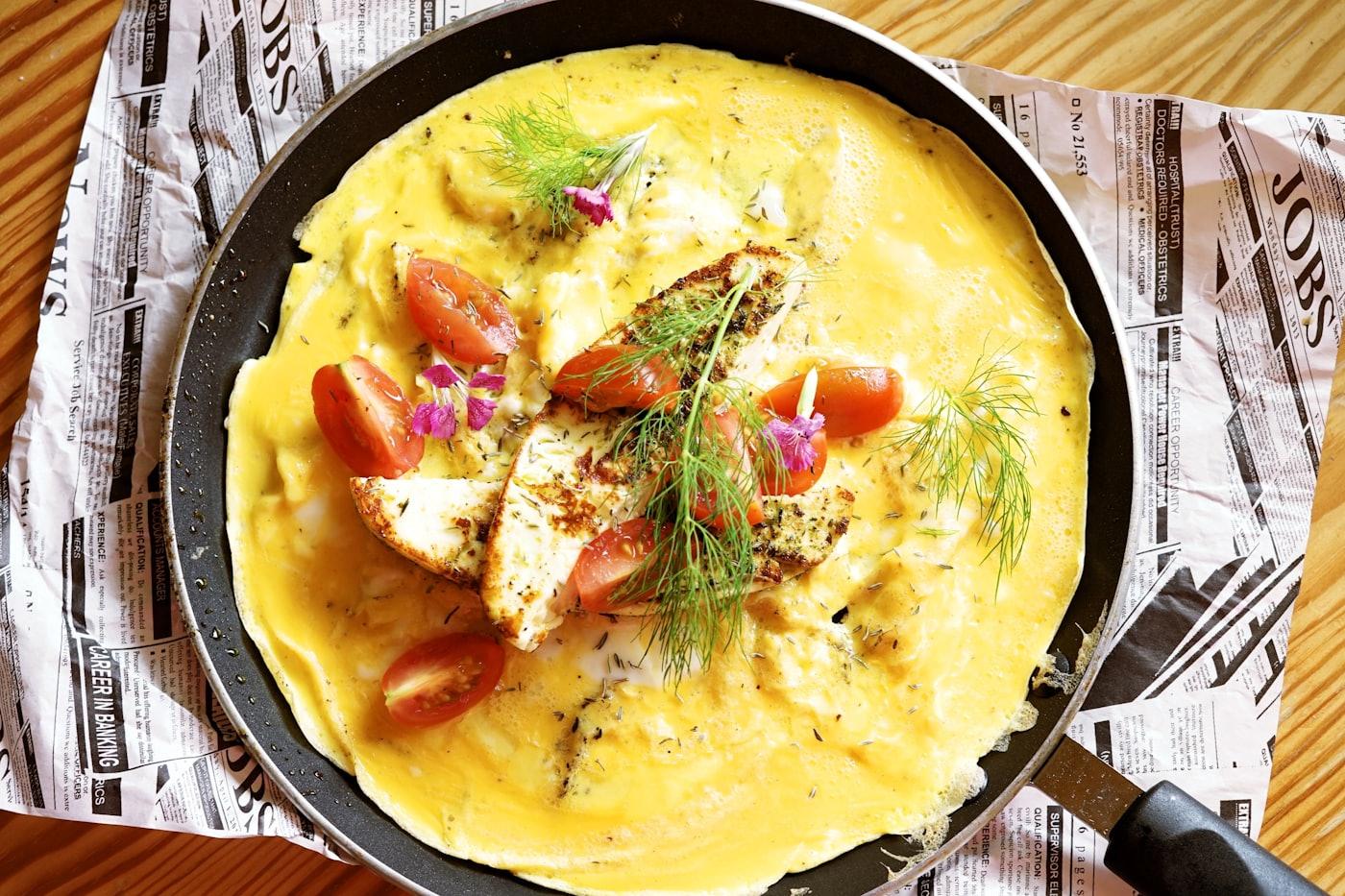
If you are looking for a truly universal breakfast, it has to be eggs, and the omelet first of all. It appears in the cuisine of almost every country, simply in different guises: the airy French omelet, the dense Spanish tortilla with potatoes, the Italian frittata with vegetables and cheese, the fluffy stuffed American omelet.
Eggs are the ideal morning food: quick, nutritious and available year-round. Above all, the omelet is a blank canvas. You can keep it minimal, with just a pinch of salt and some herbs, or turn it into a full meal with vegetables, meat and cheese. That is why the omelet is loved by professional chefs and absolute beginners alike.
This homely, comforting side of the omelet is captured beautifully by farmhouse cooking. In the game Stardew Valley, the omelet is one of the basic dishes the character makes from eggs gathered on the farm, and that idea of a cozy morning meal from simple ingredients inspired our recipe Farmhouse Omelet from Stardew Valley. In the game's canon it is simply a nourishing food that restores energy; in reality it is a tender omelet with milk and cheese that anyone can master.
What the world's breakfasts teach us
Gather all these morning traditions together and a simple thought emerges: there is no perfect breakfast, only the one that suits you. Some people need a hearty English start before a long day, some prefer the light Japanese balance, and some want a sweet French treat on the weekend.
What unites good breakfasts everywhere in the world is this:
- Seasonality and accessibility — almost all of these dishes are built on simple local ingredients.
- Balance — protein, carbohydrates and a little something for pleasure, in reasonable proportions.
- Ritual — even a quick breakfast feels better when it is a mindful pause rather than food eaten on the run.
- Flexibility — almost any breakfast is easy to adapt to your taste and whatever you have on hand.
The best part is that most of these traditions can move into your own kitchen with little effort. Start with whatever appeals to you most: cook a stack of pancakes on the weekend, assemble a Japanese-style morning plate, or set a pan of shakshuka on the heat. And if you want ready-made inspiration, browse our breakfast recipes, such as the Farmhouse Omelet from Stardew Valley or Jake's Bacon Pancakes from Adventure Time. Here's to mornings that feel just a little bit like a celebration, every day.