If you have ever watched anime, you have almost certainly seen wagashi without knowing the name. Three pink-white-green balls on a skewer that Nezuko Kamado nibbles, or that the spirits enjoy in «Spirited Away». A fish-shaped waffle a character buys from a stall at a summer festival. A filled pancake the robot cat Doraemon would do anything for. All of these are wagashi, traditional Japanese sweets, and behind their adorable looks hides an entire culture.
The word wagashi (和菓子) literally means «Japanese sweets», as opposed to yogashi, the Western-style cakes and cookies. These are not just an afterthought with tea: wagashi are deeply tied to the tea ceremony, to the changing seasons and to a Japanese aesthetic where taste, shape, colour and even the name of a sweet all matter. Many kinds of wagashi are eaten not every day, but only during a specific season or festival.
In this article we will look at the most «cinematic» wagashi — the ones that show up most often in your favourite shows. We will explain what they are actually made of, where they appear in anime, and why the Japanese treat sweets almost like an art form.
What all wagashi have in common
Most wagashi are built from the same handful of simple ingredients, combined in dozens of ways. They are easier to understand once you know the building blocks.
- Anko (餡) — a sweet paste made from azuki beans. This is the heart of Japanese sweets. It comes smooth (koshian) or chunky (tsubuan), and it hides inside roughly every other wagashi.
- Mochi rice and rice flour. Sticky mochigome rice and the flours made from it (mochiko, shiratamako) give that signature chewy, stretchy texture.
- Sugar and wasanbon. The sweetness is gentle, never cloying — Japanese desserts are usually far less sweet than European ones.
- Kanten (agar-agar). A plant-based gelatine from seaweed that holds together jellies and anmitsu.
Another key trait is seasonality. Spring brings sweets flavoured with cherry blossom, summer brings cool jellies, autumn brings chestnut and persimmon, and winter brings mandarin and warm fillings. The Japanese say wagashi should be «eaten with the eyes»: they are often shaped like flowers, leaves or snowflakes.
Dango: balls on a skewer
Dango (団子) is perhaps the most recognisable wagashi in anime. These are small, springy balls of rice flour threaded onto a bamboo skewer, usually three or four to a stick.
The most famous version is hanami dango: a pink, a white and a green ball on a single stick. This trio symbolises spring and the blooming cherry trees, and these dango are eaten during hanami, the custom of admiring the sakura. You will spot them in the opening of «Clannad» (the song «Dango Daikazoku») and in the hands of countless characters during spring episodes.
Another popular type is mitarashi dango: the balls are lightly grilled and coated in a glossy sauce of soy sauce, sugar and starch. The result is a sweet-and-salty flavour with a hint of caramel. This is exactly what Nezuko adores in «Demon Slayer» (though in the manga she eats them in her human form, before she is turned).
At home, dango is made from a blend of joshinko and mochiko rice flours: you knead the dough, shape the balls, boil them until they float, then shock them in ice water so they turn pleasantly chewy.
Mochi and daifuku: a chewy cloud
Mochi (餅) is a rice mass made by pounding steamed sticky rice in a wooden usu mortar with a heavy mallet. Traditionally this is done at New Year in a ceremony called mochitsuki, and scenes of this «rice-pounding» often appear in New Year anime episodes.
When mochi is wrapped around a filling, you get daifuku. The classic is anko daifuku, but there is also ichigo daifuku with a whole strawberry inside, and modern versions filled with custard. The soft, slightly sticky texture is exactly what fans love — and joke about: in Japan, mochi is eaten carefully, in small bites.
Worth a special mention is warabimochi — a translucent, wobbly treat made from bracken starch and dusted in roasted soybean flour (kinako). In summer it is sold from carts, and the bell of the warabimochi vendor is an instantly recognisable sound of the Japanese season.
Taiyaki and dorayaki: filled batter
These two wagashi are closer to baking, which makes them especially popular as anime street food.
Taiyaki (たい焼き) is a waffle shaped like a tai (sea bream), baked in a special mould and filled with anko, custard or chocolate. The fish shape is no accident: the tai is considered a fish of good fortune. Crisp outside and soft inside, taiyaki is the classic summer-festival (matsuri) snack, and you will often see characters in yukata munching one beneath the fireworks.
Dorayaki (どら焼き) is two fluffy castella-style pancakes with a layer of anko pressed between them. Dorayaki owes its global fame to the robot cat Doraemon: it is his favourite food, and it is hard to find a viewer who has not absorbed that detail. The batter is made with honey and mirin, which gives the pancakes their golden colour and gentle springiness.
Anmitsu and kakigori: summer chill
When the sweltering Japanese summer arrives in anime, cold wagashi appear on the table.
Anmitsu (あんみつ) is an assorted dessert in a bowl: cubes of kanten jelly, a scoop of anko, pieces of fruit, sometimes small shiratama mochi balls and a spoonful of sweet black kuromitsu syrup. It is a light, refreshing sweet often eaten in cafés. Its ancestor is mitsumame, the same dish without the anko.
Kakigori (かき氷) is shaved ice with syrup, the Japanese cousin of the snow cone. Bright red (strawberry), blue ("blue Hawaii"), green (matcha) — these glass bowls of ice practically shout «summer» in any seasonal episode. Kakigori shows up almost every time there is a festival or beach scene.
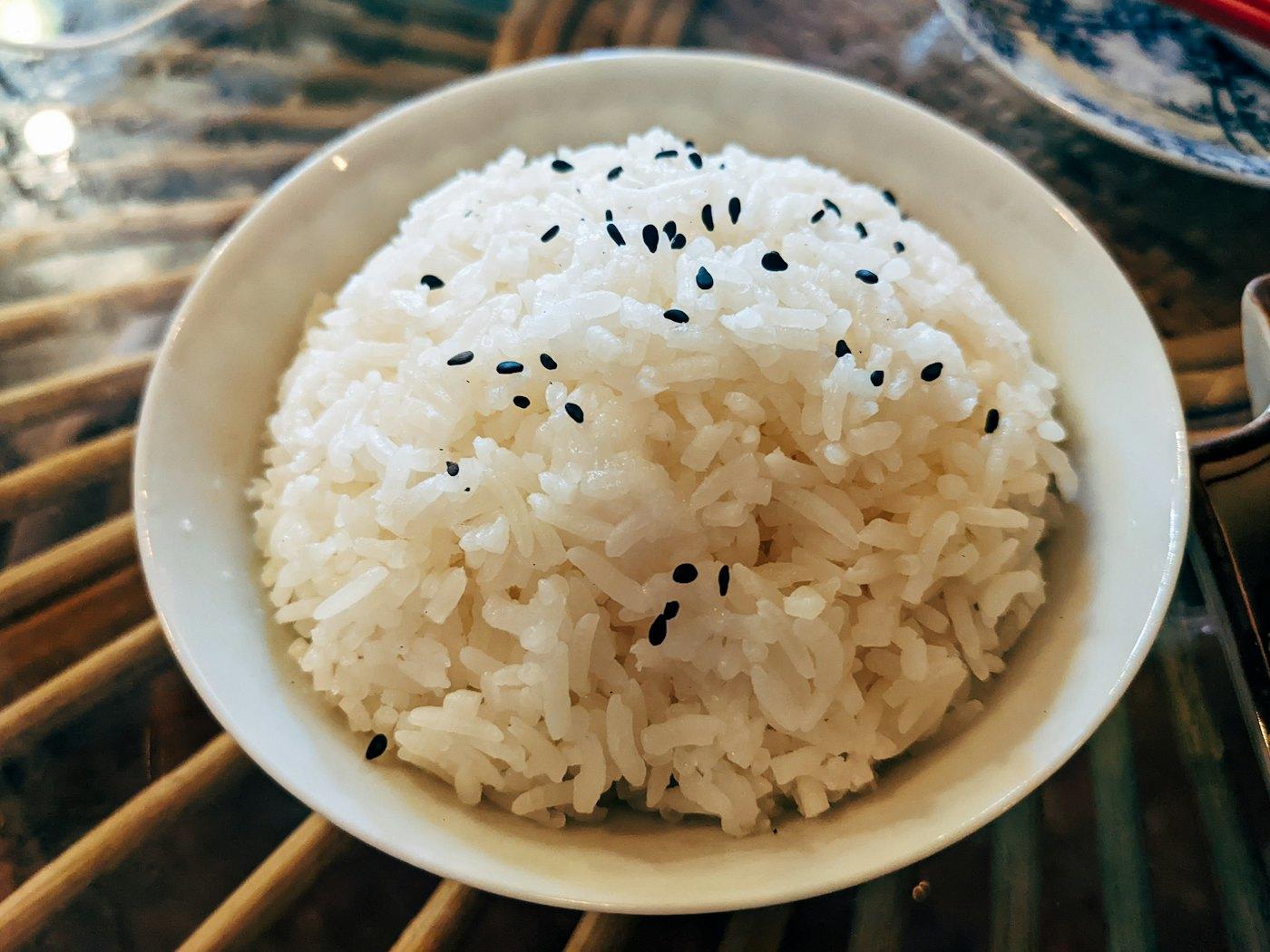
If you want to take a real step toward Japanese cooking, it is easier to begin not with a dessert but with something savoury — for example, the homemade rice triangles in Onigiri from Spirited Away. Once you have learned to handle Japanese rice for onigiri, you will approach mochi and dango — where rice is the star — with far more confidence.
Why wagashi appear so often in anime
Wagashi are not just food on screen, but a handy visual and cultural code. A seasonal sweet instantly tells the viewer the time of year: hanami dango means spring, kakigori means summer, chestnut sweets mean autumn. Street wagashi at the stalls create a festive mood without a single line of dialogue.
Wagashi are also beautiful. Animators love drawing bright, colourful, cleanly shaped sweets — they read clearly on screen and add warmth to a scene. And for viewers around the world they conjure that cosy, slightly nostalgic image of Japan.
Conclusion
Wagashi are a small, edible textbook of Japanese culture. Behind three dango balls stands the spring hanami, behind a taiyaki fish stands the belief in good luck, and behind a mountain of kakigori stands the brutal summer heat that anime loves to portray. Once you understand what these sweets are made of and when they are eaten, you will start noticing far more detail in your favourite shows.
The good news: almost all of the basic wagashi are made from accessible ingredients — rice flour, azuki beans and sugar. Start small, get comfortable with Japanese rice, and a whole world of sweets that used to exist only on screen will gradually open up to you.