Turkish cuisine is a vast crossroads where the Mediterranean, the Balkans, the Caucasus, the Middle East and Central Asia all meet. Several centuries of the Ottoman Empire stirred the culinary traditions of dozens of peoples into one pot, and a modern Turkish menu still carries Greek, Arab, Persian and Turkic roots. It is one of those cuisines that food writers happily place alongside French and Chinese — that rich and that self-sufficient.
The real magic of the Turkish table lies in simple, high-quality ingredients: lamb and beef, eggplant and peppers, tomatoes and olive oil, yogurt, nuts and honey. Turks know how to coax maximum flavor out of every ingredient using charcoal, spice and time. Here, food is rarely hidden under heavy sauces — instead, it is brought to life.
Turkish cuisine is also remarkably good at traveling. The doner kebab now sold on every corner in Berlin and London was born right here. And, as we will see below, it has a distant relative on the other side of the planet — the Mexican Tacos al Pastor. That unexpected family tie is a perfect illustration of how food travels along with people.
Kebab: more than meat on a stick
In Turkish, the word "kebab" simply means "roasted meat," and under that umbrella hide dozens of completely different dishes. One thing unites them all — fire.
- Shish kebab — the classic chunks of marinated meat threaded on a skewer over coals. The word comes from the Turkish şiş, meaning "skewer."
- Adana kebab — spicy hand-minced lamb pressed onto a wide flat skewer. Named after the southern city of Adana, it is officially protected as a regional product.
- Iskender kebab — sliced meat over pieces of flatbread, drenched in tomato sauce and melted butter, with a dollop of yogurt on the side. It was invented in Bursa in the late 19th century by the family of Iskender Efendi.
- Doner kebab — meat stacked in layers on a vertical spit and roasted as it turns. This one deserves a closer look.
The doner (from the Turkish döner, "turning") took its modern shape in Bursa in the 19th century, when a cook had the idea of standing the spit upright instead of laying it horizontally over the coals. The fat drips away, the edges crisp up, and thin slices are shaved straight into a flatbread. Today it is the number-one street food across Europe.
Kofte: the Turkish meatball in all its forms
If kebab is about whole cuts and minced meat over fire, kofte is about minced meat in its purest form. Köfte is the collective name for the whole family of chopped-meat balls and patties, and every region has its own version.
The classic Izmir kofte or Akcaabat kofte is made from beef or lamb with onion, garlic, parsley and spices — cumin, paprika, sometimes cinnamon. The mince is kneaded for a long time until it turns dense and pliable, then shaped into small patties and fried or baked.
A special case is cig kofte (çiğ köfte) — originally a raw mince kneaded with bulgur, tomato paste and hot spices. Today, vendors all over Turkey sell a vegan version with no meat at all, made entirely from bulgur — and it is still called cig kofte. It is served wrapped in lettuce leaves with lemon and pomegranate sauce.
Kofte is almost always eaten with a side of rice or bulgur, fresh vegetables and, without fail, yogurt or cacik sauce (a cousin of the Greek tzatziki).
Lahmacun and pide: the Turkish "pizza"
They are often called Turkish pizza, though that is not quite accurate — it is more a matter of shared Mediterranean roots.
Lahmacun (from the Arabic for "dough with meat") is an ultra-thin, crisp flatbread spread with a layer of minced meat, tomatoes, peppers, onion and herbs. It bakes for barely a minute in a very hot oven. You do not eat it like pizza — you roll it up: tuck in fresh parsley, slices of tomato and onion, squeeze over some lemon. Thin, light, fragrant.
Pide, by contrast, is a sturdier boat of yeasted dough with raised edges, filled with cheese, mince, egg or sucuk (spicy sausage). Its shape is distinctive — like a little boat — with the ends pinched so the filling stays put. Pide is hearty, substantial food.
Meze: the art of the small plate
No proper Turkish table is complete without meze — a spread of small cold and hot appetizers placed in the center and eaten slowly, over conversation and usually a glass of raki, the anise spirit.
Here is just part of a classic lineup:
- Haydari — thick yogurt with garlic and herbs.
- Cacik — a refreshing yogurt dip with cucumber and mint.
- Babaganoush and patlican salatasi — dips made from fire-roasted eggplant.
- Dolma — grape leaves or peppers stuffed with herbed rice.
- Sigara boregi — crisp "cigars" of yufka pastry filled with feta.
- Ezme — a spicy paste-salad of finely chopped tomato, pepper and onion.
The philosophy of meze is simple: many different things in small amounts, so everyone can build their own plate. This is the part of Turkish cuisine closest to the Mediterranean way of life — unhurried and made for enjoyment.
Baklava and the sweet finale
Turkish desserts are a universe of their own, and baklava reigns over it. Dozens of paper-thin, almost transparent sheets of phyllo dough, layered with ground pistachios or walnuts and soaked in sugar syrup. The country's finest baklava comes from Gaziantep in the southeast — so much so that "Antep baklava" holds a protected geographical status.
But it does not stop at baklava. There is lokma — fried dough balls in syrup; sutlac — rice pudding with a browned top; künefe — a hot dessert of kadayif pastry with stretchy cheese under syrup; and of course lokum (Turkish delight) — jelly cubes rolled in powdered sugar. All of it is washed down with strong Turkish coffee brewed in a cezve, or sweet black tea served in tulip-shaped glasses.
A crossroads of cultures: from doner to taco
Now for the best part. Remember the vertical spit of the doner kebab? In the 19th century, Ottoman cooks invented this way of roasting meat. In the early 20th century, Lebanese immigrants from the former Ottoman lands arrived in Mexico and brought the technique with them — shawarma, the Middle Eastern cousin of the doner on a vertical spit.
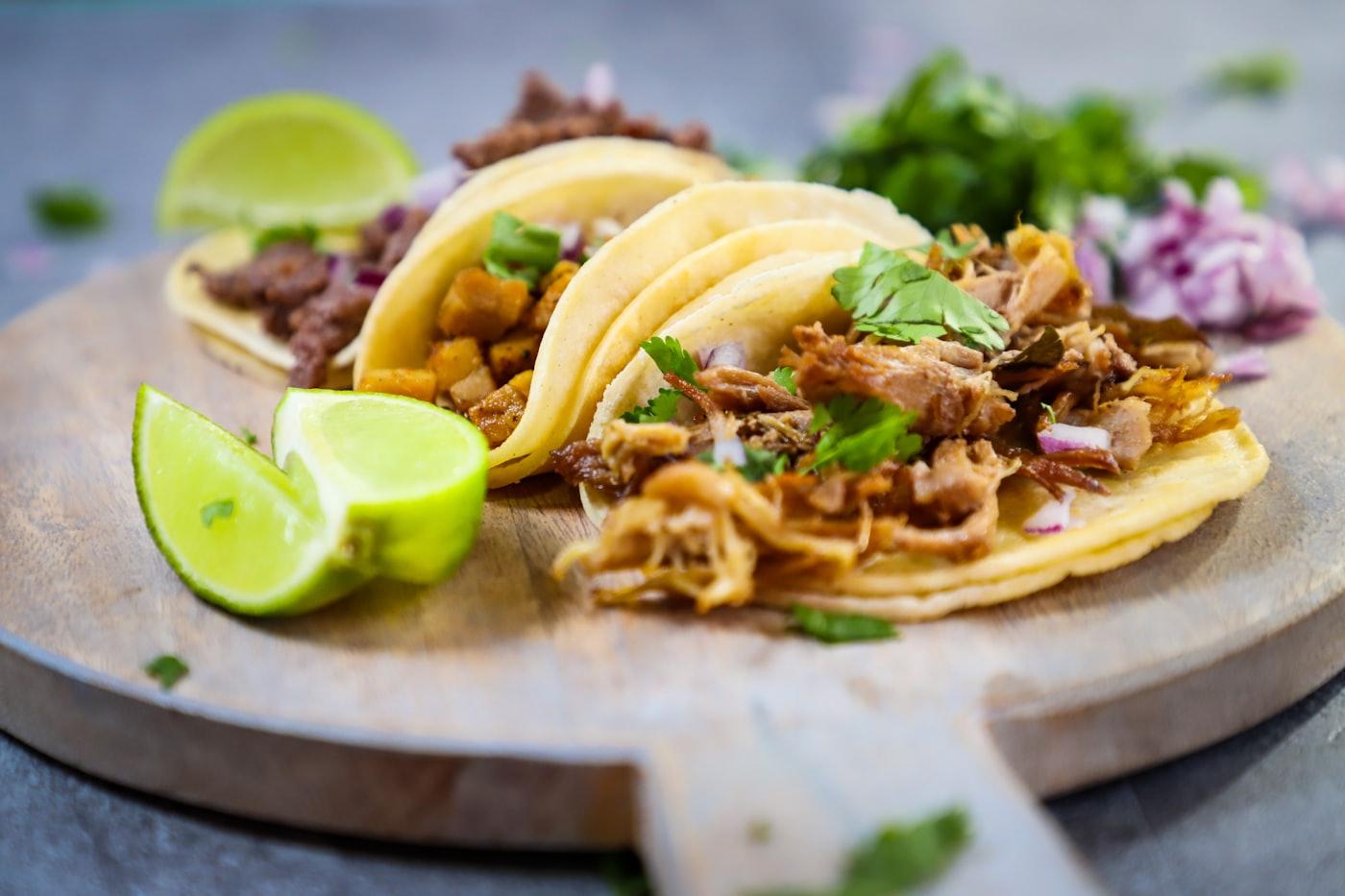
Mexicans reimagined the idea in their own way. Instead of lamb they used pork, marinated it in red chiles and achiote, and crowned the spit with a pineapple. And so Tacos al Pastor were born — literally "shepherd-style tacos." The very name al pastor and the vertical spit called the trompo betray the dish's Middle Eastern origin.
It makes for an elegant chain: Turkish doner → Middle Eastern shawarma → Mexican tacos al pastor. A single cooking technique, traveling with people across continents, gave rise to two iconic street foods that today seem utterly unrelated. Turkish cuisine here is not a museum piece but a living source that keeps shaping the world's food.
Conclusion
Turkish cuisine is about generosity, fire and the meeting of cultures. From a simple shish kebab to layered baklava, from a street-corner doner to a leisurely spread of meze, it offers heartiness, finesse and history all at once. And it reminds us of something important: dishes are not born in a vacuum. They travel, mingle and get reinvented — and sometimes a Turkish spit comes back around as a Mexican taco on the other side of the world. Start with any dish, pull on the thread, and it will surely lead you somewhere further.