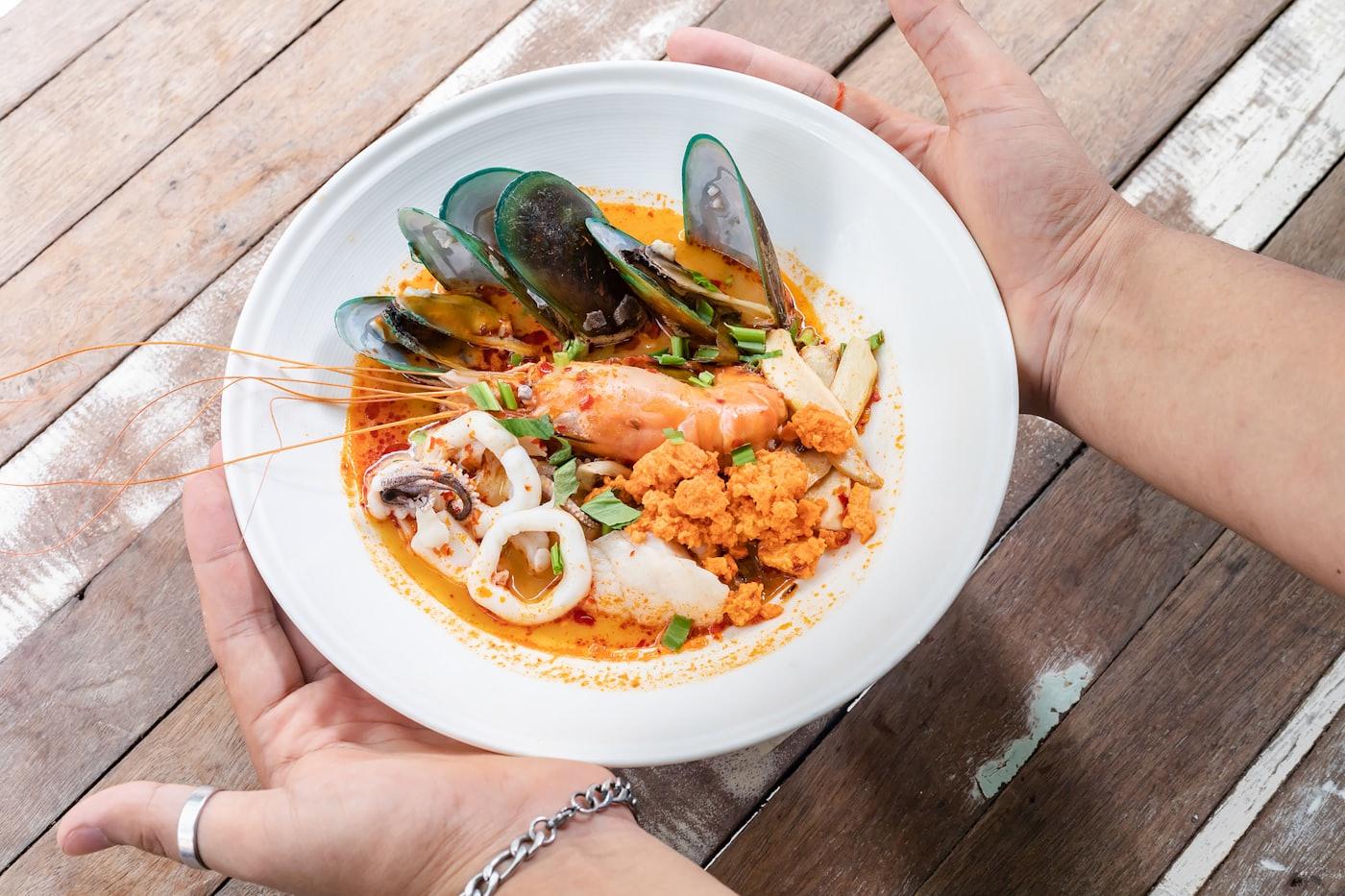
If Thai cuisine had to be summed up in a single bowl, many people would point straight to tom yum. This isn't just a soup — it's an entire flavor spectrum in one spoonful: sour, spicy, salty and faintly sweet all at once, wrapped in a piercing citrus-herbal aroma you can't mistake for anything else. Tom yum warms you up during the rainy season and wakes you up in the heat, and its richness makes it a full meal rather than a mere starter.
The name itself tells you about its method and character. "Tom" (ต้ม) means "to boil" in Thai, while "yum" (ยำ) refers to a family of spicy, sour-savory salads and dishes built on a sharp balance of tastes. So tom yum is essentially a "boiling yum" — a hot soup constructed on the same logic of contrasts as Thai salads. Add the word "goong" (กุ้ง — "shrimp"), and you get tom yum goong, the most famous version of all.
In this article we'll unpack what tom yum is really made of, how the clear and the "creamy" versions differ, which aromatic herbs give it that signature fragrance, and why it's surprisingly easy to make at home. And at the end, a tried-and-true recipe will be waiting for you.
What Tom Yum Is and Where It Comes From
Tom yum is a central Thai dish that became a culinary calling card for the whole country. Historically it's tied to Thailand's central plains along the Chao Phraya River, where freshwater shrimp were abundant — which is precisely why shrimp became the classic protein base. Over time the soup spread across the kingdom and far beyond it, turning into one of the most recognizable symbols of Thai gastronomy.
The core idea of tom yum isn't a fixed ingredient list — it's a flavor balance. Thai cooking is built on the harmony of a few fundamental tastes, and in tom yum they ring out especially clearly:
- Sourness — from freshly squeezed lime juice.
- Heat — from fresh chilies (and sometimes from chili paste in oil).
- Saltiness and umami — from fish sauce.
- Aroma — from lemongrass, galangal and kaffir lime leaves.
That's exactly why tom yum is called a hot-and-sour soup: those two notes carry the melody while everything else supports them. When the balance is right, a single spoonful of the broth practically jolts your taste buds awake.
Tom Yum Goong: The Classic with Shrimp
The most famous variety is tom yum goong (with shrimp). This is the version most often served in restaurants worldwide, and it's exactly where you should start your acquaintance.
In a good tom yum goong the shrimp are large, juicy and barely cooked through, so they stay tender. Often the shrimp heads and shells go into the soup too — they're seared or simmered for the broth because they release a deep, briny flavor and that characteristic orange richness. Beyond the shrimp, the bowl almost always holds mushrooms (usually straw or oyster mushrooms) and tomatoes, which add a gentle sweetness and juiciness.
For balance, a touch of sugar is added to the broth — it doesn't make the soup sweet but simply rounds off the spicy and sour edges. The finishing touch is fresh cilantro and sometimes a pinch of green onion. The finished soup is eaten hot, usually alongside steamed jasmine rice, which softens the heat and helps stretch out the pleasure.
The Aromatic Trio: Lemongrass, Galangal and Kaffir Lime
Three herbs create the scent of tom yum, and without them the soup simply won't become itself:
- Lemongrass — firm stalks with a bright, lemony aroma. They're bruised and cut into large pieces so they release their fragrance, but they're usually not eaten — the stalk is too tough.
- Galangal — a root from the ginger family, but with a character all its own: sharper, woody-citrusy, almost piney. Substituting regular ginger should be a last resort, since the flavor will be noticeably different.
- Kaffir lime leaves — glossy double leaves with an intense citrus aroma. They're lightly torn along the edges to release their essential oils, then dropped into the broth whole.
These three components are the inedible but irreplaceable "skeleton" of the aroma. They go into the pot, simmer, and before serving they're often left right in the bowl as a garnish — with the understanding that they're not meant to be eaten.
Nam Khon and Nam Sai: Two Sides of One Soup
Many people are surprised to learn that tom yum comes in two quite different forms. The difference lies in the broth base.
Tom yum nam sai (น้ำใส, "clear water") is the original, clear version. The broth is clean, light and genuinely refreshing: the sourness and heat speak plainly and directly, with nothing to soften them. This is the form you can consider the authentic classic — nothing extra, just herbs, chili, lime and fish sauce.
Tom yum nam khon (น้ำข้น, "thick water") is a younger but wildly popular version. Coconut milk or evaporated cream is added (and sometimes a spoonful of chili paste in oil, nam prik pao), turning the broth creamy, orange-pink and more substantial. The heat is tamed, and a velvety texture and gentle sweetness appear. This "creamy" version is the one most often loved outside Thailand — it feels more filling and approachable.
Which one is "correct"? Both. Nam sai is prized for its purity and brightness, nam khon for its richness and creaminess. Many Thais cook either one depending on their mood. If you're just starting out, try both and decide which speaks to you.
Variations and Relatives of Tom Yum
Tom yum is more of a formula than a rigid recipe, so it has many variations:
- Tom yum thale — "seafood," with a mix of shrimp, squid, mussels and pieces of fish.
- Tom yum gai — with chicken, a more affordable everyday version.
- Tom yum pla — with fish.
It's worth distinguishing tom yum from its close cousin, tom kha. Tom kha (tom kha gai with chicken) is also built on coconut milk and galangal, but it's milder, creamier and far less hot and sour: the emphasis there is on the tenderness of coconut rather than a sharp balance. If tom yum is a bright flash, tom kha is a warm embrace.
How to Make Tom Yum at Home
The good news: real tom yum cooks quickly — usually in under half an hour. The main challenge isn't technique but ingredients: lemongrass, galangal and kaffir lime leaves are best sought in Asian grocery stores or large supermarkets (they're often sold frozen, which is perfectly fine and convenient).
A few principles will help you get the soup right:
- Aroma first, flavor second. Begin by simmering lemongrass, galangal and kaffir lime leaves in water or a light stock — that's your foundation.
- Add protein at the end. Shrimp cook in a couple of minutes; overcook them and they turn rubbery.
- Lime goes in last. Add the lime juice after removing the pot from the heat, otherwise it can turn bitter.
- Balance to taste. The hot-sour-salty profile is tuned individually: fish sauce, lime, chili and a pinch of sugar are your dials.
If you'd rather skip straight from theory to a steaming bowl, head to the step-by-step Tom Yum with Shrimp recipe — it spells out the proportions, timing and tips for ingredient substitutions in detail.
Conclusion
Tom yum is the perfect example of how a handful of simple ingredients, arranged around a precise balance of flavors, turns into a world-class dish. The sourness of lime, the heat of chili, the saltiness of fish sauce and the unmistakable aroma of lemongrass, galangal and kaffir lime — that's the whole secret. And the choice between clear nam sai and creamy nam khon makes the soup truly versatile: right for any mood and any weather.
The best part is that you don't need to fly to Bangkok to get acquainted with it. All it takes is finding the aromatic herbs, grabbing some fresh shrimp and spending half an hour in the kitchen. Start with the tom yum with shrimp recipe, and you'll likely want to experiment with your own versions afterward — seafood, chicken or that famous "creamy" one.