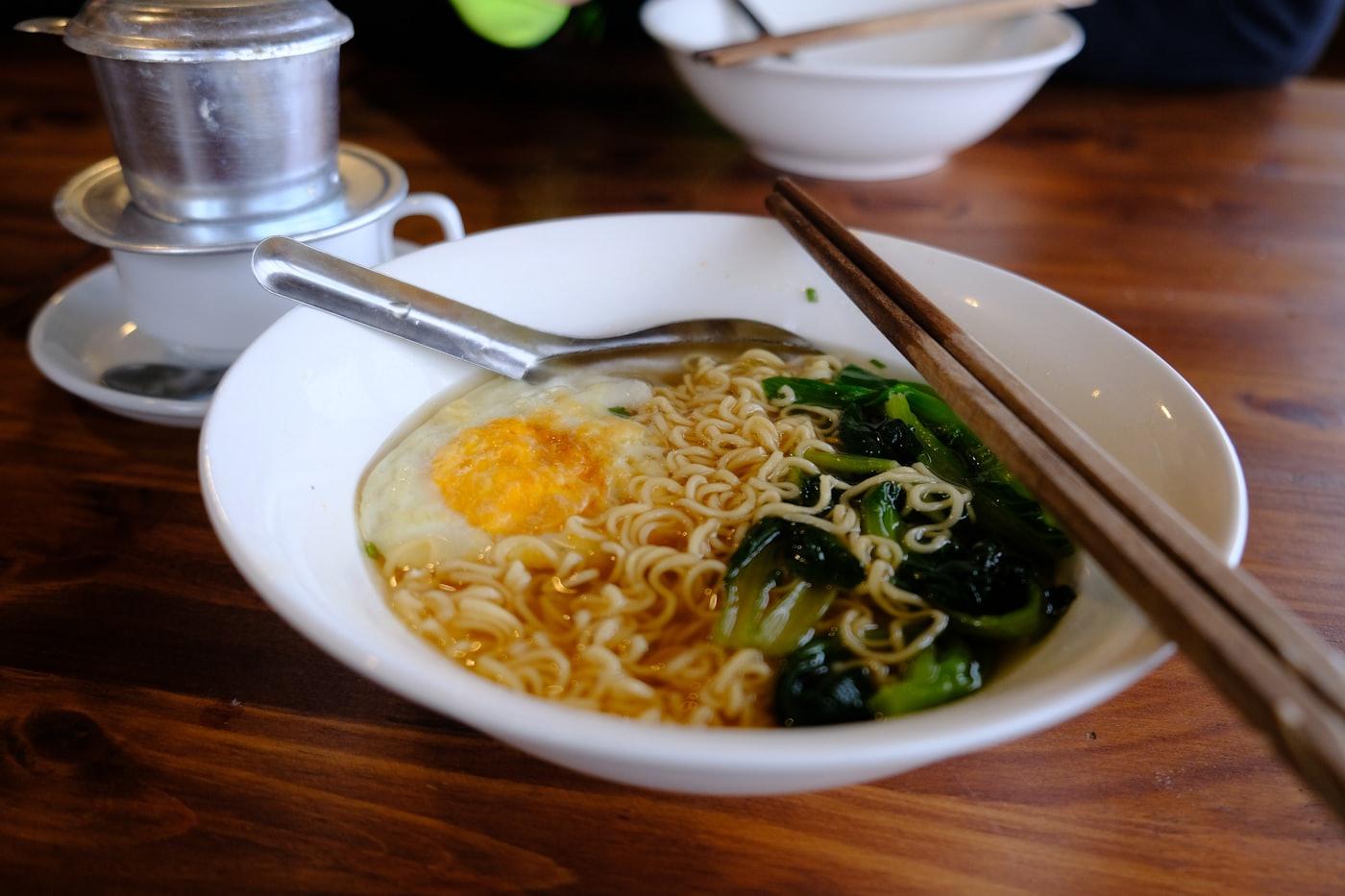
Some scenes stay with us for years, even if we first watched the movie as kids. In Kung Fu Panda, it's the conversation between Po and his goose father, Mr. Ping, about the "secret ingredient" in their family noodle soup. Po is convinced that to make a soup truly great, you need something hidden and magical. Then his father leans in and quietly confesses: there is no secret ingredient. "To make something special, you just have to believe it's special."
That line isn't really about cooking. Or rather, it's not only about cooking. It's the entire philosophy of the film compressed into one bowl of steaming broth. The Dragon Scroll turns out to be a blank mirror, and Po's power lives inside him, not in a magic recipe. But if you set the moral aside and stare at the bowl itself, an honest question pops up: what was Po actually eating? Could you really make that soup?
The good news is yes, you can. The "secret noodle soup" is a piece of storytelling, but behind it stands a completely real and very old tradition of Chinese noodle cookery. Let's break down what the canon shows, what stands behind it in genuine Chinese cuisine, and how to build your own bowl where the secret ingredient is, well, you.
What the movie actually shows
Mr. Ping's shop in the film is a classic family noodle restaurant, the kind that exists by the tens of thousands across China. Po works there as a waiter and cook, carrying steaming bowls around, and the house specialty is the noodle soup itself. On screen we see long wheat noodles, a clear golden broth, fresh greens, and bits of topping. The filmmakers never give specifics, and that's the whole point: the magic is precisely that no special ingredient exists.
Let's be honest here: the "secret noodle soup" is a fictional dish. It has no canonical recipe written down by DreamWorks, and no single historical prototype carries that name. But visually and in spirit, it clearly nods to two huge layers of Chinese cuisine:
- Tang mian (湯麵) — noodles in broth, the foundational category of noodle soups all across China.
- Lamian (拉麵) — hand-pulled wheat noodles, where a master stretches a single lump of dough into dozens of thin strands.
It's the long hand-pulled noodles and the clear broth that make the frame recognizable. So the film doesn't invent a cuisine; it leans on a real one and simply chooses not to name it.
The real lesson: there's no ingredient, only craft
Mr. Ping's line sounds like gentle wisdom, but it hides a genuinely practical culinary principle. In the Chinese noodle tradition, a soup's greatness doesn't rest on one secret component but on technique and patience. The secret is the hours spent on the broth and the hands of a cook trained over thousands of bowls.
If you translate the film's moral into kitchen language, it comes out like this:
- A good broth beats anything exotic. A slowly simmered base of bones and aromatics gives more depth than any trendy ingredient ever could.
- Freshness beats complexity. A bowl feels "magical" when the noodles are just cooked and the herbs hit at the very last second.
- Belief in the result means attention to detail. "Believing the dish is special" in practice means not rushing, tasting, and dialing the flavor in.
In other words, Mr. Ping never lied to Po. He told the plain truth of a professional: the magic is in the process, not in a hidden powder.
The anatomy of a real Chinese noodle soup
To build your own version of the Kung Fu Panda soup, it helps to understand the layers it's made of. Any Chinese noodle soup is essentially a three-part kit.
Broth — the soul of the bowl
The foundation of everything. Chinese cooking uses several broth styles:
- Chicken or pork — the most versatile, clear and mild, and closest to what the film shows.
- Bone broth — rich, simmered for hours, with a full body.
- Vegetable — built on shiitake mushrooms, ginger, and scallion for a meat-free version.
Classic broth aromatics include ginger, scallion, garlic, and sometimes star anise and white pepper. A splash of soy sauce and a few drops of sesame oil add that signature "restaurant" finish.
Noodles — the heart of the dish
For a film-style soup, reach for wheat noodles: hand-pulled lamian, thin egg noodles, or ordinary dried wheat noodles. The golden rule is to cook them separately and to keep them al dente, so they don't turn to mush once they sit in hot broth.
Toppings — the soup's personality
This is where your own story begins. The classic toppings include:
- thinly sliced pork, chicken, or a boiled egg;
- bok choy, spinach, or other leafy greens;
- bean sprouts, corn, mushrooms;
- and the mandatory finish — plenty of chopped scallion and cilantro.
Stack those three layers and you get exactly the steaming bowl that Po proudly carried around his father's shop.
From screen to stove: how to make it at home
The best part is that this soup is genuinely repeatable in an ordinary kitchen, with no rare products. We've gathered an honest, tested version in a dedicated recipe: Secret Ingredient Noodle Soup from Kung Fu Panda — it walks you step by step through the broth, the noodles, and assembling the bowl.
In short, the path to a great result looks like this:
- Simmer an aromatic broth. Chicken or pork plus ginger, scallion, and garlic, cooked for at least 40 to 60 minutes.
- Season the base. Soy sauce, a pinch of white pepper, a few drops of sesame oil, salt to taste.
- Cook the noodles separately and divide them among bowls so you control the texture.
- Add the toppings — meat, greens, egg, mushrooms.
- Pour over boiling broth and serve immediately, showered with scallion.
And remember Mr. Ping's words: no secret powder appears on the list. All the "magic" is fresh ingredients, patience, and the wish to cook something good for the people you feed.
Why this soup moves us
Movie food doesn't work because it's objectively tastier. It works because it carries a story. The "secret noodle soup" became iconic not for its recipe but for its idea: you yourself are the special ingredient. Po didn't find magic in the scroll — he brought it with him.
When you cook this bowl at home, you live the same thought. A simple set of ingredients becomes something personal at the exact moment you decide this dish matters to you. That's the honest magic of cooking — it isn't in a rare ingredient but in the care you pour into it.
So the next time you crave something warm and meaningful, simmer your own bowl. Lay in the noodles, the meat, the greens, ladle over the golden broth — and believe that it's special. Because, as one wise goose pointed out, that belief is exactly what makes it so.