Spicy food is loved and feared in equal measure. One person drowns their tom yum in chili paste and asks for more; another takes a single spoonful of curry and is already fanning their mouth and reaching for milk. The fascinating part is that, physiologically, both people are going through roughly the same thing. Spiciness is not a taste in the strict sense — it is a sensation of heat and pain that the brain dutifully reads as "hot."
The molecule behind this trick is called capsaicin. Found in chili peppers, it fools our receptors into believing there is actual fire in the mouth. The good news is that handling heat is a learnable skill. You can dose it, balance it, quench it, and even come to enjoy it on the level of brain chemistry.
In this guide we will unpack how the Scoville scale works, why water does nothing for the burn, what actually puts out the fire in your mouth, what the health benefits and cultural power of spice are — and how to put all of it to use in your own kitchen.
What spiciness really is: capsaicin and a little chemistry
The star of spicy food is capsaicin, a colorless and nearly odorless compound from the capsaicinoid family. Contrary to popular belief, it is concentrated less in the seeds and more in the white inner membranes (the placenta) to which the seeds are attached. That is exactly why removing the core and ribs noticeably tones down a pepper's burn.
Capsaicin binds to a receptor called TRPV1 on our nerve endings. Normally this receptor responds to real heat — it fires at around 42 degrees Celsius and warns us of a burn. Capsaicin activates it chemically, without any actual heat, and the brain receives a "hot and dangerous" signal. Hence the full cascade of reactions: heat, watering eyes, runny nose, a racing heart, sweat on the brow.
Here is the key fact to internalize: capsaicin does not dissolve in water. It is fat-soluble. So when we wash down something spicy with a glass of water, we simply spread the molecule around the mouth without rinsing it away. This explains why water fails — and why something else works beautifully.
The Scoville scale: how heat is measured
To compare peppers, the American pharmacist Wilbur Scoville devised a scale in 1912 that now bears his name. Its unit is the SHU (Scoville Heat Unit). The original method was sensory: an extract of the pepper was diluted with sugar syrup until a panel of tasters could no longer detect any burn. The degree of dilution gave the number.
Today heat is measured more precisely using high-performance liquid chromatography, which quantifies the actual capsaicinoid content and then converts it into familiar SHU values. To make it concrete, here is an approximate ladder of heat:
- Bell pepper — 0 SHU, with practically no capsaicin.
- Poblano pepper — roughly 1,000–2,000 SHU, a gentle spice.
- Jalapeño — around 2,500–8,000 SHU, the familiar heat of tacos and nachos.
- Cayenne pepper — about 30,000–50,000 SHU.
- Thai bird's eye chili — on the order of 50,000–100,000 SHU, the spark of Thai cuisine.
- Habanero and Scotch bonnet — 100,000–350,000 SHU.
- Carolina Reaper — over 1,500,000 SHU, one of the hottest peppers in the world.
For comparison: pure capsaicin sits at around 16 million SHU. The scale vividly shows how different peppers can be, and why a pinch of one and a handful of another can produce wildly different effects.
How to reduce and balance the heat of a dish
Suppose you went too far with the chili. The situation can be rescued mid-cooking — heat is a balanceable thing.
Fat and dairy
Because capsaicin is fat-soluble, fat is your chief ally. Coconut milk, cream, sour cream, yogurt, a knob of butter, or a spoonful of oil literally bind the heat molecules and distribute them more gently. It is no coincidence that many spicy cuisines feature a dairy or fatty component: Indian curry with yogurt, Thai dishes built on coconut milk, Mexican sauces with sour cream.
Acid and sweetness
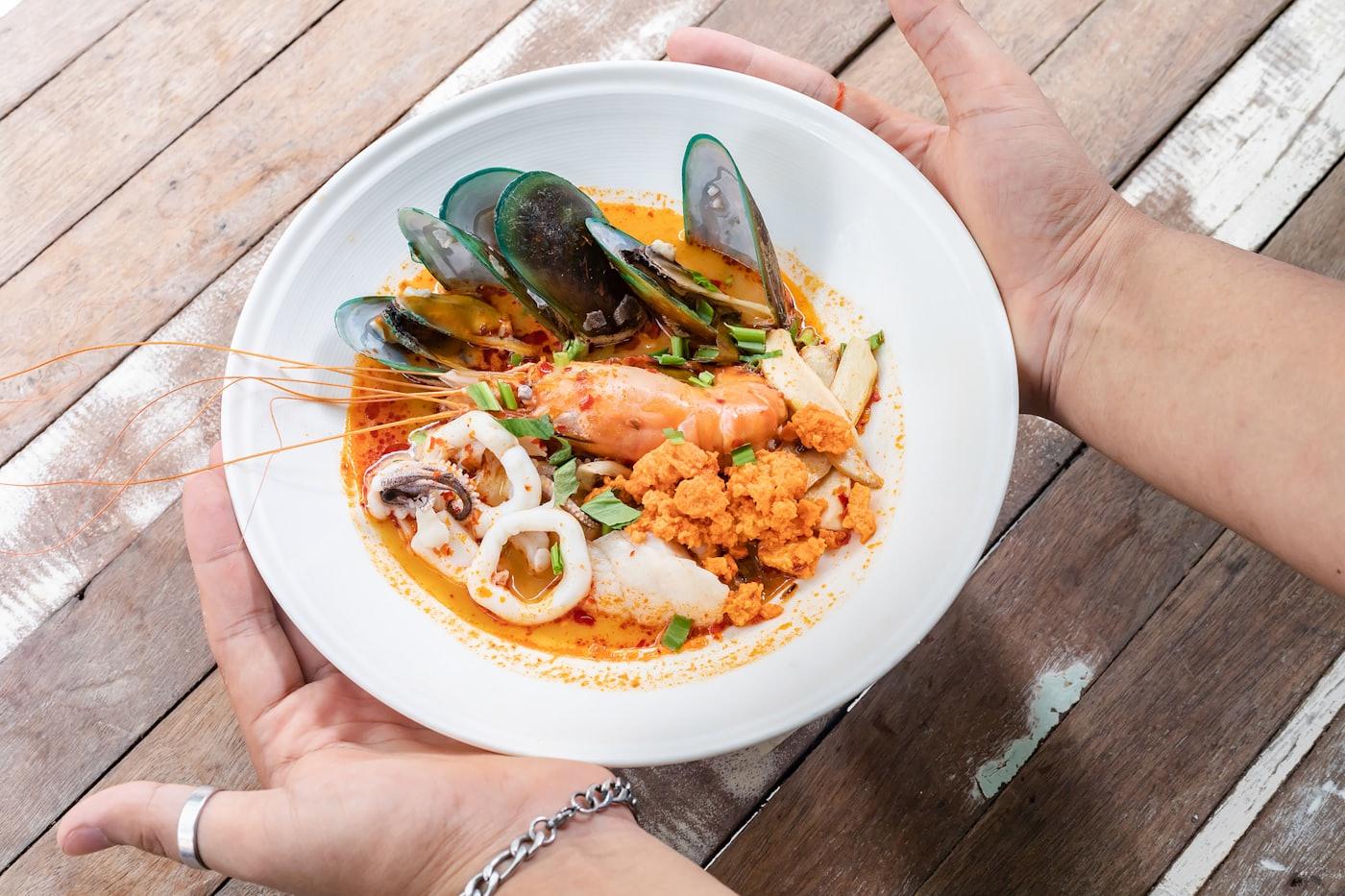
Acid — lime or lemon juice, vinegar, tomatoes — refreshes the palate and distracts the receptors from the burn. Sweetness — sugar, honey, a piece of carrot or pumpkin — softens the sharpness. A classic Tom Yum with Shrimp lives precisely on the balance of spicy, sour, and salty: chili brings the heat, lime and lemongrass bring the tang, fish sauce brings depth. Remove any one element and the dish falls apart.
Volume and starch
If there is simply too much heat, add neutral bulk: more broth, vegetables, rice, potatoes, noodles. Starchy foods absorb part of the capsaicin and physically dilute its concentration. Serving spicy food with rice or flatbread is not just tradition — it is a working way to tame the fire.
A few practical tips:
- Add chili gradually and taste as you go — removing heat is much harder than adding it.
- Take out the seeds and white ribs if you want the pepper's aroma without the strong burn.
- Build spicy sauces with a reserve of fat or acid so you have something to balance with.
- Serve a cool side alongside the heat: cucumber, a yogurt sauce, fresh herbs.
How to put out the burn: what works and what does not
When the burn is already in your mouth, act wisely. We already know the main rule: water is useless and can even make things worse by carrying capsaicin further.
What genuinely helps:
- Milk and dairy. The best rescuer is casein, a protein found in milk, yogurt, and kefir. It binds capsaicin and washes it off the receptors. Cold whole milk works noticeably better than skim.
- Fat. A piece of cheese, a spoonful of sour cream, a little oil, or nut butter help for the same reason — they dissolve the fiery molecule.
- Starch and bread. Rice, bread, flatbread, and boiled potato mechanically absorb part of the capsaicin and give your mouth a break.
- Sugar and honey. A teaspoon of sugar or honey helps dull the sense of heat.
What does not work or works poorly: water, soda, beer, and hard liquor. Alcohol does dissolve some capsaicin, but drinks contain too little of it to help, and it only aggravates the irritated tissue. So when a spicy bite catches you off guard, reach not for a glass of water but for yogurt or a piece of cheese.
The benefits and culture of spice
Spice is not merely a dare for the brave. Capsaicin has effects backed by research. It has anti-inflammatory properties, may slightly boost metabolism, and can blunt appetite, which is why it is studied in the context of weight management. Capsaicin is used in medicine too — in warming creams and patches for muscle and joint pain: applied to the skin, it first irritates the receptors and then desensitizes them.
There is a pleasant psychological bonus as well. In response to the "pain" of spice, the brain releases endorphins — those very pleasure hormones. That is why a love of chili is often called benign masochism: the body signals danger while the pleasure only grows. This is how a genuine attachment to heat takes hold.
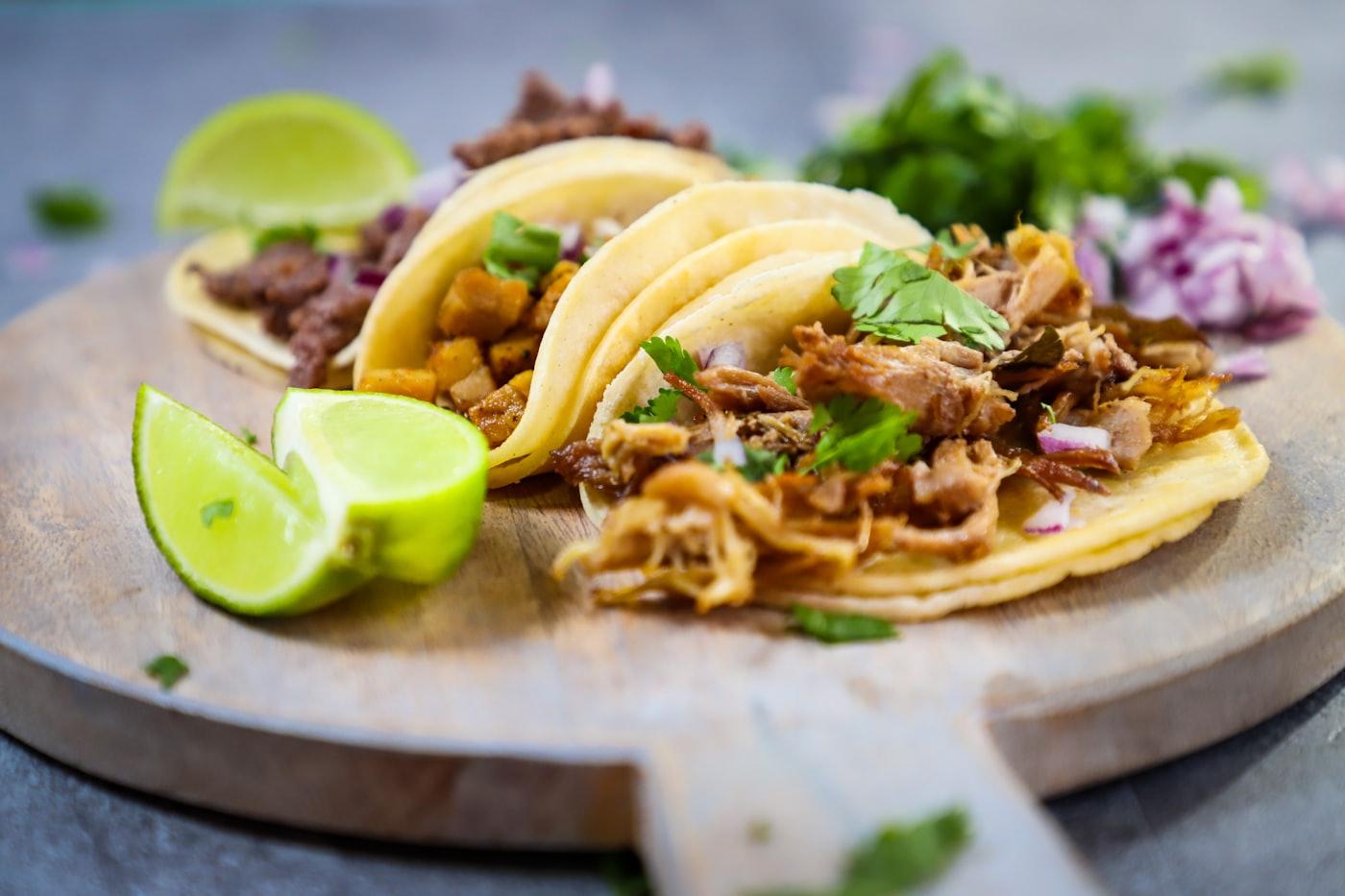
Culturally, spicy food is an enormous chapter of world cuisine. The chili pepper originated in Central and South America, and until the Columbian Exchange of the 15th–16th centuries the Old World did not know it. The chili then spread rapidly across the globe and became inseparable from cuisines we cannot imagine without it today: Thai, Indian, Sichuan, Korean, Mexican. Mexican Tacos al Pastor are a great example of chili working in an ensemble: a marinade of dried peppers and pineapple delivers heat, smokiness, and sweetness all at once, while everyone tunes the spicy salsa on top to their own taste.
In games and pop culture, spicy food also appears as a symbol of trial: fiery peppers a character must eat on a bet, or dishes that visibly steam. In real cooking, the same chemistry stands behind that image — capsaicin and our honest, trusting TRPV1 receptor.
Conclusion
Heat is neither an innate talent nor a curse, but a thoroughly manageable sensation. Knowing that capsaicin is fat-soluble and activates a heat receptor, you understand both how to reduce a dish's burn and how to quench the fire in your mouth: with fat, milk, starch, and a touch of acid — and definitely not with water.
Start small: add a little more chili than usual to a familiar dish, balance it with acid and fat, serve it with a cool side. Over time your sensitivity threshold shifts, and what felt searing yesterday becomes pleasantly warm. Spice favors the bold but rewards the careful — those who learn to tame the fire rather than merely endure it.