German cuisine is often pictured as a pile of sausages with mustard and a stein of beer, but that is a big oversimplification. In reality it is a whole mosaic of regional traditions: what people eat for breakfast in Bavaria barely resembles a table in Hamburg or Saxony. What ties it all together is a love of hearty, warming food, deep respect for bread and baking, and the close link between dishes and the festive calendar.
For centuries Germany was not a single country but a patchwork of principalities, free cities and duchies. That is why almost every region has its own signature sausage, its own kind of bread and its own sweets. Climate and farming added their part: in the north by the sea, fish and potatoes rule, while in the south near the Alps, meat, cheese and creamy sauces take the lead.
In this article we will walk through the most recognizable dishes: Bratwurst, the Brezel pretzel, Schnitzel, Christmas Stollen and the spiced gingerbread known as Lebkuchen. And at the end we will point you toward the recipe that is easiest to recreate at home, one that links a real German tradition to the world of fantasy.
Sausages: more than just Bratwurst
Sausage (German: Wurst) is, without exaggeration, a culinary symbol of the country. Germany is said to have over a thousand varieties of sausage, and many of them are tightly tied to a specific city or region.
The best known abroad is the Bratwurst, a fried sausage made of pork, beef or veal with spices. It comes in dozens of regional versions: the slim Nürnberger, traditionally served three or four to a plate, and the larger Thüringer, which is protected as a regional product.
But the world of Wurst goes far beyond Bratwurst. Here are just a few important types:
- Weisswurst — a white Bavarian sausage of veal and pork fat with parsley and lemon. By tradition it is eaten before noon, dipped in sweet mustard, and the casing is left uneaten.
- Currywurst — a Berlin street-food hit: fried sausage drenched in a curried tomato sauce. A simple post-war dish that became a genuine cult favorite.
- Bockwurst and Frankfurter — boiled sausages, ancestors of many of the world's hot dogs.
- Blutwurst and Leberwurst (blood and liver sausage) — an old country tradition of using the whole animal carefully.
Sausages almost always come with mustard, fresh bread or a pretzel, and a side of potato salad or sauerkraut.
The Brezel: a pretzel with character
The Brezel (Breze in southern dialects) is that dark-brown pretzel with a glossy crust, twisted into its trademark knot with three holes. It is not just a snack but a symbol of German and Austrian bakeries.
What gives the Brezel its signature color and flavor is a quick dip in a mild alkaline solution before baking. The lye is what creates the shiny crust and the unmistakable taste that nothing else quite matches. The pretzel is usually sprinkled with coarse salt, sometimes sesame or other seeds.
There is a charming legend about a monk who twisted the dough into the shape of arms folded in prayer, supposedly the origin of the pretzel's loop. It is not documented, but the image stuck. In southern Germany the Brezel is part of breakfast: it is sliced, spread with butter and served with coffee or, in Bavaria, with Weisswurst.
Schnitzel and the hearty backbone of the table
When it comes to the main course, the Schnitzel steps forward: a thinly pounded piece of meat coated in flour, egg and breadcrumbs, then fried to a golden crust. The famous Wiener Schnitzel is by definition made of veal and is an Austrian dish, but in Germany a pork version, labeled Schnitzel Wiener Art ("Viennese style"), is hugely popular.
A Schnitzel is served with a wedge of lemon and a side of fries, potato salad or fried potatoes. There are also generous variations such as the Jägerschnitzel with mushroom sauce.
Around this meaty center, the rest of the table takes shape:
- Potatoes in dozens of forms: boiled, fried, as dumplings (Knödel) and in salads.
- Sauerkraut — sour, fermented cabbage, the perfect partner for rich meat.
- Bread: from dense pumpernickel to countless grain varieties. German bread culture is listed as intangible heritage.
- Eisbein and Schweinshaxe — boiled or roasted pork knuckle, a classic of beer-hall feasts.
Festivals and regional flavor
German food is inseparable from the calendar. The brightest example is the Christmas markets (Weihnachtsmarkt), where December air smells of mulled wine, roasted almonds and spices.
The main festive bake is Stollen, a dense loaf cake studded with dried fruit, candied peel, nuts and marzipan, generously dusted with powdered sugar. The most famous is the Dresden Stollen, whose recipe reaches back to the Middle Ages. Its elongated, white-dusted shape is said to symbolize the infant Christ wrapped in swaddling cloth.
Regional character shows up in drinks and desserts too. In the southwest they make the famous Black Forest cherry cake (Schwarzwälder Kirschtorte) with cherries, cream and cherry brandy. In the north, people love marzipan from Lübeck. And in autumn, beer festivals take place across the country, the most famous being Munich's Oktoberfest.
Lebkuchen: German gingerbread
And now we reach the sweet heart of a German Christmas: Lebkuchen. These are honey-based spiced cakes flavored with cinnamon, cloves, cardamom, nutmeg, ginger and allspice. Nuts and citrus zest often go into the dough, with icing or chocolate on top.
The capital of gingerbread is Nuremberg: the Nürnberger Lebkuchen is a protected product, baked there since the Middle Ages, when the city sat at a crossroads of trade routes that carried expensive Eastern spices. Particularly prized are the versions baked on a thin edible wafer (Oblaten) that keeps them from sticking.
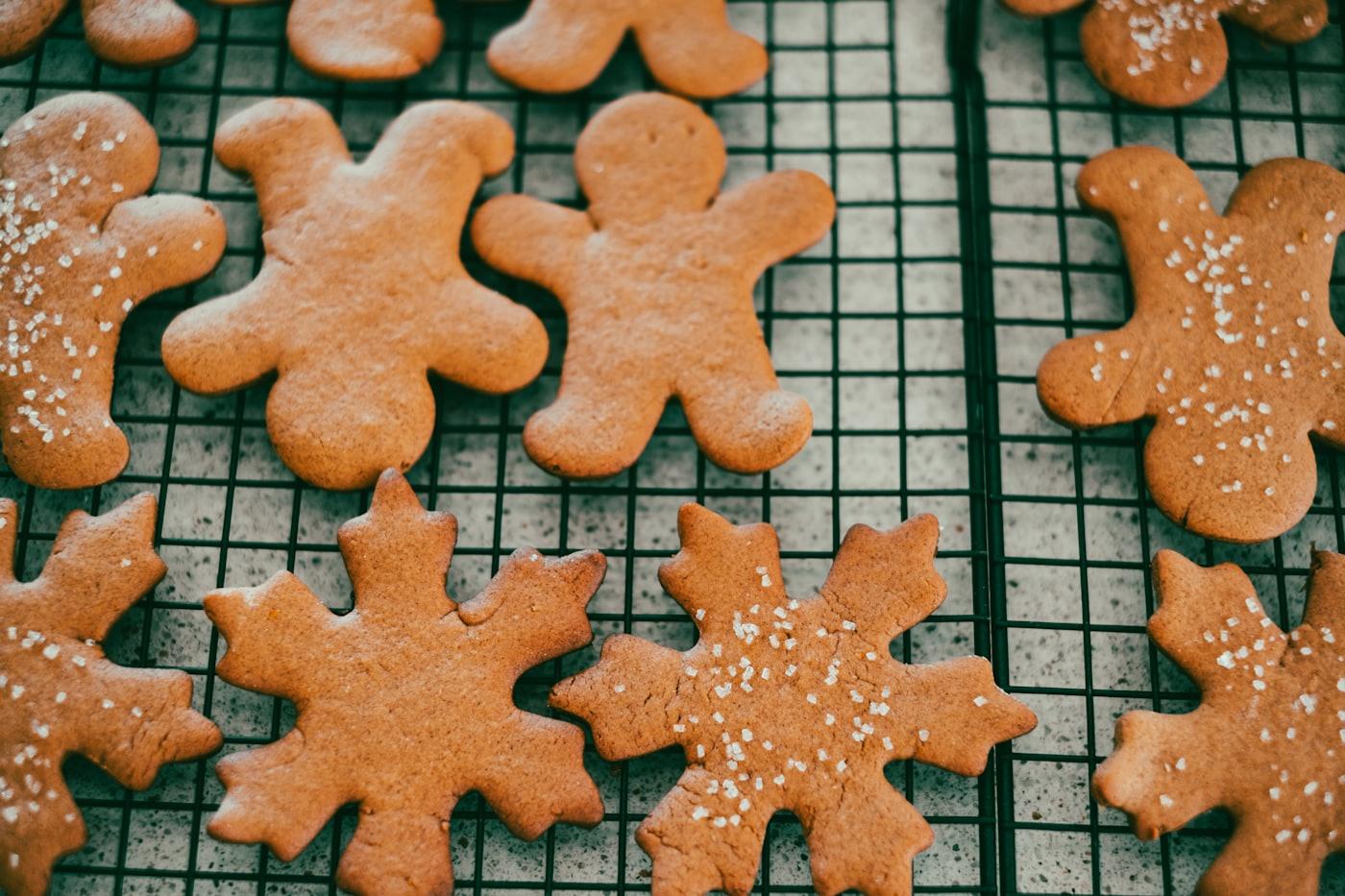
There is also a simpler, homemade genre: cut-out honey-and-ginger cookies decorated with sugar icing and hung on the tree or given as gifts. The same dough makes the famous gingerbread houses (Lebkuchenhaus), inspired by the Brothers Grimm fairy tale "Hansel and Gretel."
It is honey gingerbread that became the bridge linking a real German tradition to the world of fantasy. In Andrzej Sapkowski's saga and the game "The Witcher," the world is built on Slavic and European folklore, and honey gingerbread fits naturally into its cozy, almost fairground atmosphere. We captured that image in Geralt's Honey Gingerbread: a soft, fragrant dough of honey and spices that is easy to make at home and very close in spirit to a genuine Lebkuchen.
How spices make gingerbread what it is
Gingerbread is, at its core, all about spice, and that is the key to understanding it. A basic Lebkuchen spice blend usually includes:
- cinnamon and cloves for the base aroma;
- ginger and cardamom for warmth and a gentle bite;
- nutmeg and allspice for depth;
- sometimes anise or orange and lemon zest.
The honey in the dough is not only for sweetness: it holds moisture, which is why proper gingerbread stays soft for weeks, and the spice aroma only deepens over time.
Conclusion
German cuisine is not one stereotype but a whole country of regional flavors: from Bavarian Weisswurst to Berlin Currywurst, from a crunchy Brezel to velvety Stollen. It is held together by substance, seasonality and a warm tie to the holidays.
If you want to taste a piece of this tradition at home, sweets are the easiest place to start. Gingerbread needs no rare ingredients, forgives small mistakes and fills the kitchen with a Christmas scent at any time of year. Take a look at our Geralt's Honey Gingerbread — it is the friendliest way to get to know the world of German gingerbread baking, with a pinch of fantasy on the side.