Moroccan cuisine is a true crossroads of cultures. Here Berber traditions meet Arab heritage, echoes of Andalusian Spain mingle with Ottoman influence, and French colonial history adds its own layer. Out of this melting pot grew a cooking style where sweet boldly sits beside savory, meat is simmered with dried fruit, and almost every dish hides an entire palette of spices.
If you had to describe Moroccan food in a single word, it would be "aroma." Cumin, coriander, ginger, cinnamon, saffron, paprika, turmeric — here spices don't mask the flavor of the ingredients, they reveal it layer by layer. Cooking is slow and patient, allowing the aromas time to marry. That makes Moroccan cuisine a story about time and generosity, too: dishes are often made for a crowd, and a guest will be seated at the table at the first opportunity.
In this article we'll explore the dishes you simply can't skip: tagine, couscous, harira and pastilla — and of course the legendary spice blend ras el hanout and the sweet mint tea that brings every meal to a close.
Tagine: a dish and a vessel in one word
The word "tagine" means two things at once. First, it's a conical clay pot with a flat base and a tall cone-shaped lid. Second, it's the dish cooked inside it. The lid's shape isn't just for looks: steam rises, condenses on the walls of the cone, and trickles back down onto the food. The dish stews in its own juices with almost no added water — a real advantage in a region where water has always been scarce.
A classic tagine is a slow-braised stew. The base might be lamb, chicken, beef, fish, or vegetables alone. But the real magic of Moroccan cooking shines through in its sweet-and-savory combinations:
- lamb with prunes, almonds and cinnamon;
- chicken with preserved lemons and olives;
- beef with quince or apricots;
- kefta (meatballs) in tomato sauce with egg;
- a vegetable tagine with carrots, zucchini, chickpeas and pumpkin.
The preserved lemon is a particular point of Moroccan pride. Whole lemons are salted for several weeks until they develop a deep, slightly bitter citrus flavor that nothing else can replace. It's exactly this preserved lemon, paired with olives, that turns plain chicken into one of the country's most recognizable tagines.
If you want to try a tagine at home, the clay pot isn't essential — a heavy cast-iron Dutch oven or a thick-walled pot with a tight lid will do. The key is not to rush: the longer the braise, the more tender the meat and the richer the sauce.
Couscous: the dish of Friday
In Morocco, couscous is more than a side dish. These tiny pearls of durum wheat are traditionally rolled by hand, with flour sprinkled and moistened until the grains form. Families make couscous on Fridays, after the midday prayer, and serve it on one big communal platter — a ritual that brings the family together.
The secret to proper couscous is steaming, not boiling. The grains are steamed several times in a special two-tiered pot (a couscoussier): meat and vegetables simmer in broth below, while the grain cooks above in the fragrant steam. After each steaming, the couscous is fluffed by hand so the grains stay separate and airy. It's served in a mound, topped with vegetables — carrots, turnips, zucchini, pumpkin, chickpeas — and pieces of braised meat.
While instant boxed couscous has made life much easier, Morocco still treasures the slow steaming method. That's the difference between "a quick bite" and "feeding someone from the heart."
Harira: the soup that brings people together
Harira is a thick, hearty soup especially beloved during the holy month of Ramadan, when it's eaten to break the fast after sunset. But it's enjoyed all year round, being both filling and warming.
Harira is built on tomatoes, lentils and chickpeas, along with finely chopped meat (usually lamb) and a generous bunch of herbs: cilantro and parsley. The soup is seasoned with ginger, turmeric, cinnamon and pepper, and at the end it's often thickened with a flour-and-water mixture or beaten egg, giving it a characteristic velvety texture. Harira is served with dates, honey-soaked chebakia pastries and a wedge of lemon — once again, that Moroccan love for the contrast of savory and sweet.
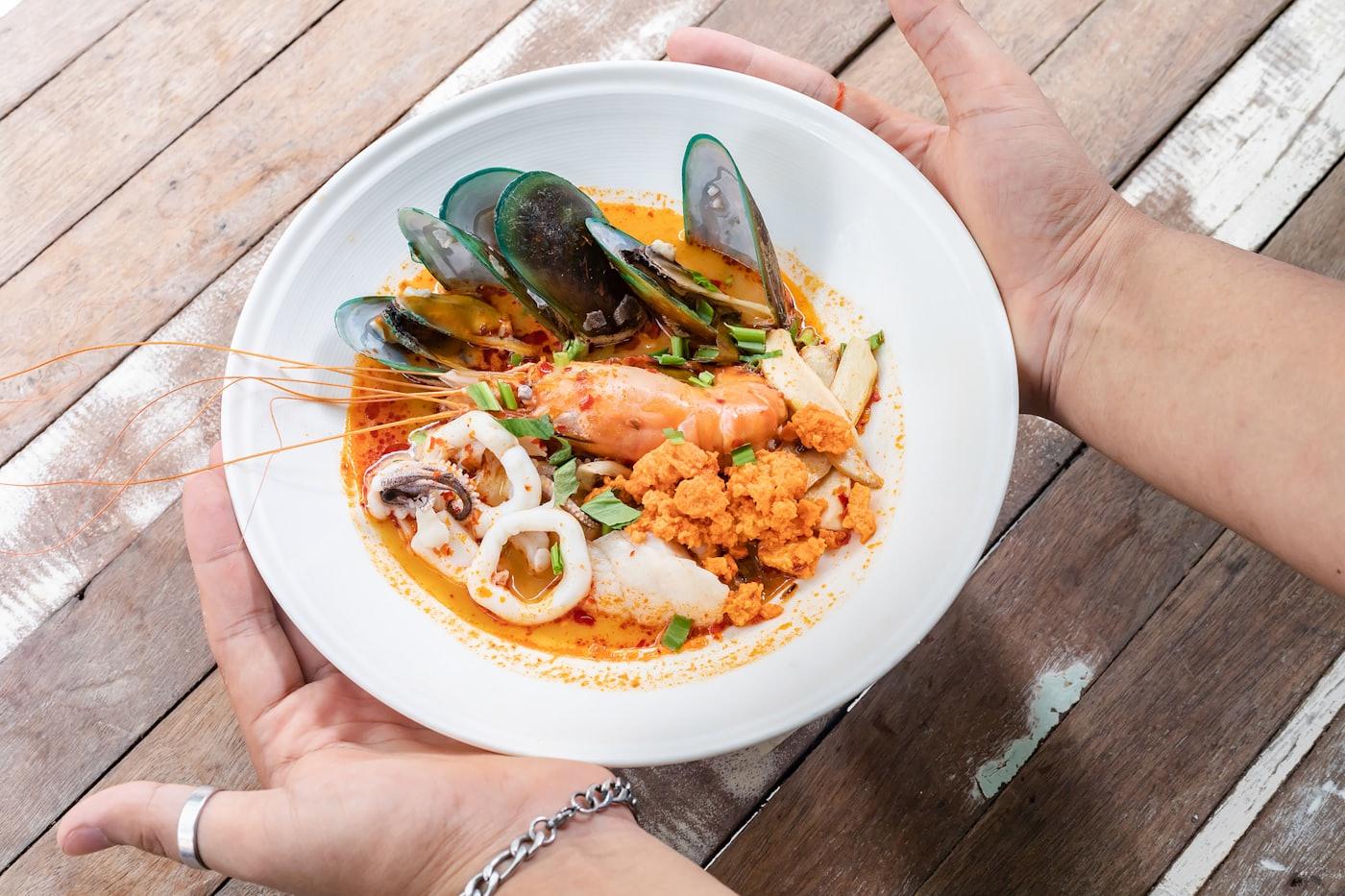
If you love rich, spicy and slightly tangy soups, harira is sure to win you over. For fans of bold soups with character, take a look at the Thai classic too — the hot and fragrant Tom Yum with Shrimp: different cuisines, but the same passion for balancing flavors.
Ras el hanout: "head of the shop"
No conversation about Moroccan cuisine is complete without ras el hanout. The Arabic name roughly translates as "head of the shop" or "the best in the store" — in other words, a blend of the finest spices a merchant has to offer. There's no single recipe: every family and every vendor has their own version, and some blends contain twenty or even thirty ingredients.
A typical ras el hanout might include:
- cinnamon, ginger and turmeric;
- black pepper, cardamom and cloves;
- nutmeg and cubeb;
- dried rose petals and lavender;
- coriander, cumin and paprika.
The blend is warm, floral and gently spicy all at once. It's rubbed onto meat before cooking and stirred into tagines, couscous and marinades. One important note: ras el hanout isn't "spicy" in the chili sense — its job is not to burn but to create depth and a layered aroma. If you buy a ready-made version, choose one that's fresh and keep it in a tightly sealed jar: ground spices lose their punch quickly.
Other spices you can't do without
Beyond ras el hanout, the Moroccan pantry leans on cumin (a pinch of it often sits on the table next to the salt), sweet and smoked paprika, saffron (expensive but irreplaceable for color and aroma), fresh ginger, and harissa — a fiery chili paste that came from neighboring Tunisia but has firmly taken root in Morocco too.
Pastilla: the sweet-and-savory pie
Pastilla (or bastilla) is perhaps the most surprising dish for a Western palate. It's a layered pie made from paper-thin warqa dough (similar to phyllo), filled with poultry. Traditionally that meant pigeon, though chicken is more common today. The meat is braised with spices, onions and eggs, mixed with fried almonds, sugar and cinnamon, and the finished pie is dusted generously with powdered sugar and cinnamon.
It's this very contrast that makes pastilla legendary: you bite through a crisp, sweet crust and discover spiced, savory meat beneath. The dish has roots in the Andalusian cooking of Moorish Spain, and pastilla is considered a festive delicacy served at weddings and grand celebrations. A sweet version also exists — made with milk custard and almonds.
For a Moroccan, this marriage of sweet and savory is entirely natural: the cuisine doesn't draw the hard line between "main course" and "dessert" the way European cooking tends to.
Mint tea: hospitality in a glass
Ending a meal in Morocco without a glass of mint tea is nearly impossible. The drink is a genuine national symbol and a ritual of hospitality. It's made from green tea (usually the gunpowder variety), a large bunch of fresh mint and a generous amount of sugar.
There's a signature gesture, too: the tea is poured in a thin stream from a height so a frothy head forms in the glass. It's not a show-off trick — pouring this way lightly aerates the drink and lets the aroma open up. Refusing the tea you're offered is considered impolite, and a guest is traditionally served three glasses in a row, each with its own subtle shade of flavor.
If you'd like to recreate the ritual at home, remember the main thing: don't boil the mint. Pour hot (but not furiously boiling) water over it and let it steep for a few minutes so the drink doesn't turn bitter.
Conclusion
Moroccan cuisine wins you over not with a single dish but with a whole philosophy: slow braising, generous spicing, bold sweet-and-savory unions, and an almost sacred attitude toward hospitality. The tagine teaches patience, couscous brings the family together, harira warms, pastilla surprises, and mint tea places a soft, fragrant period at the end of the meal.
The easiest way to begin is with a chicken tagine with preserved lemons and olives, or a vegetable version — neither needs special equipment, just time and a good spice blend. From there, Moroccan cuisine will pull you into its world of aromas, where every pinch of cumin or single rose petal tells an entire story.