Chinese cuisine is not a single dish, nor even a single way of cooking — it is an entire continent of flavors. When we say "Chinese food," we are really talking about dozens of regional traditions that took shape over thousands of years across a vast territory: from the subtropical south to the cold north, from rice terraces to wheat-growing plains. Here rice and noodles share the table, steam sits beside sizzling oil, and sweetness lives happily alongside vinegary tang and fierce chili heat.
For a visitor from abroad, China usually begins with familiar images: carts loaded with dim sum, glossy Peking duck, a steaming bowl of noodles. But behind those snapshots lies a clear logic — a balance of five flavors, deep respect for texture, a cult of fresh ingredients, and an almost engineering precision in how things are cut. To understand Chinese cuisine is to see the system inside the variety.
In this article we will travel through the eight culinary traditions, sort out what makes dim sum more than just a snack, learn why Peking duck demands an entire ritual, read the map of noodles and baozi, and discover where that famous Sichuan heat comes from. At the end you will find recipes that make a friendly starting point for your own journey.
The Eight Great Culinary Traditions
In China people speak of the "eight great cuisines" (八大菜系). This is not a rigid standard but a historically settled way of grouping regional styles, each one grown from its local climate, ingredients and trade routes.
- Cantonese (Guangdong) — the most famous outside China. Gentle flavors, careful steaming, and a focus on freshness and the natural taste of the ingredient. The birthplace of dim sum.
- Sichuan — spicy and aromatic, with its signature numbing tingle from Sichuan peppercorns (花椒). It loves chilies, garlic, ginger and complex fermented pastes.
- Hunan — even more bluntly hot than Sichuan, but without the numbing effect; it bets on the clean burn of chili and on smoking.
- Shandong — the northern classic and the foundation of Beijing's imperial cooking. Plenty of wheat, rich broths and seafood.
- Jiangsu — refined and courtly, with delicate stocks and meticulous knife work.
- Zhejiang — fresh and light, built on river fish and seasonal vegetables.
- Fujian — known for soups and broths, fond of seafood and a gentle sourness.
- Anhui — forest-and-mountain cooking, with wild herbs and slow-braised dishes.
This breakdown reveals a simple truth: the "Chinese cuisine" of northern Shandong and southern Guangdong differ more from each other than the cuisines of two neighboring European countries. In the north wheat reigns — noodles, flatbreads, steamed buns. In the south rice rules. This north–south axis is the single most useful key to the map of the Chinese table.
Dim Sum: Little Joys With a Pot of Tea
Dim sum (Cantonese 點心, dim sam, literally "to touch the heart") is not a dish but a format: many small portions served alongside tea. The tradition comes from Guangdong and Hong Kong, where the morning visit to a teahouse — yum cha (飲茶, "drinking tea") — grew into a social ritual all its own.
The classic dim sum lineup is enormous, but a few items appear almost everywhere:
- Har gow — translucent shrimp dumplings in a thin wrapper made of wheat and tapioca starch.
- Siu mai (shumai) — open-topped pouches filled with pork and shrimp.
- Char siu bao — fluffy steamed buns stuffed with sweet-savory barbecue pork.
- Cheung fun — silky rice-noodle rolls drizzled with soy sauce.
- Egg tart — a Portuguese-Chinese custard pastry, a legacy of Macau.
The great technical hero of dim sum is steam. Bamboo baskets are stacked over boiling water, and the delicate wrappers cook gently without drying out. That is exactly why dim sum feels so light: minimal frying, maximum aroma from the filling.
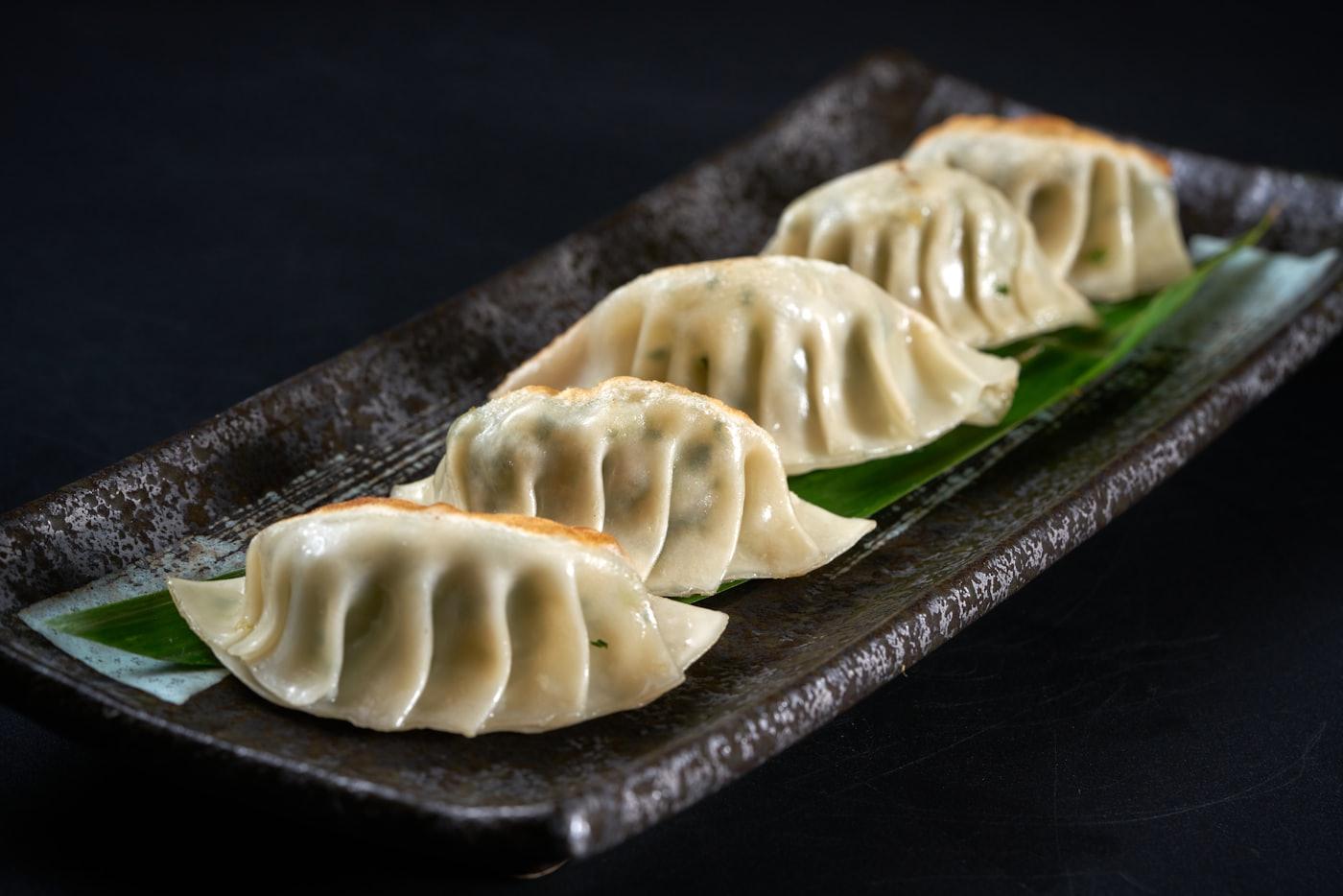
If you love steamed dumplings, look at a neighboring tradition — Gyoza (Japanese Dumplings). Gyoza are a Japanese reading of Chinese jiaozi: the same origins, but a different presentation — they are usually pan-fried to a crisp bottom and then finished with steam. Comparing the two approaches is a wonderful way to feel how a single idea travels across the cuisines of Asia.
Peking Duck: A Ritual, Not Just a Dish
Peking duck (北京烤鸭) is perhaps the most ceremonial dish in all of Chinese cuisine. Its history reaches back to the imperial kitchens of the Ming dynasty, and it was perfected into a canonical form in Beijing. This is not simply "roast duck": the result rests on a long and exacting technique.
The classic sequence looks like this:
- The skin is separated from the meat with air, creating a gap beneath it that helps the crust come out thin and crisp.
- The bird is scalded with boiling water and coated in a sweet glaze based on maltose or honey.
- It is air-dried for several hours, sometimes a full day.
- It is roasted in a special oven — either an open wood-fired one (fruitwood logs add aroma) or a closed type.
The serving is governed by rules too: the chef slices the duck into thin pieces right at the table, separating the glassy, crackling skin. You eat by wrapping the pieces in thin wheat pancakes along with strips of fresh leek or scallion, cucumber, and a thick sweet sauce, tianmianjiang, made from fermented bean paste. The result is a play of contrasts: crisp and soft, rich and fresh, sweet and savory. It is precisely this layering that turned Peking duck into the country's calling card.
Noodles and Baozi: Food That Brings People Together
If Peking duck is a celebration, then noodles and steamed buns are the everyday soul of Chinese cooking.
Noodles
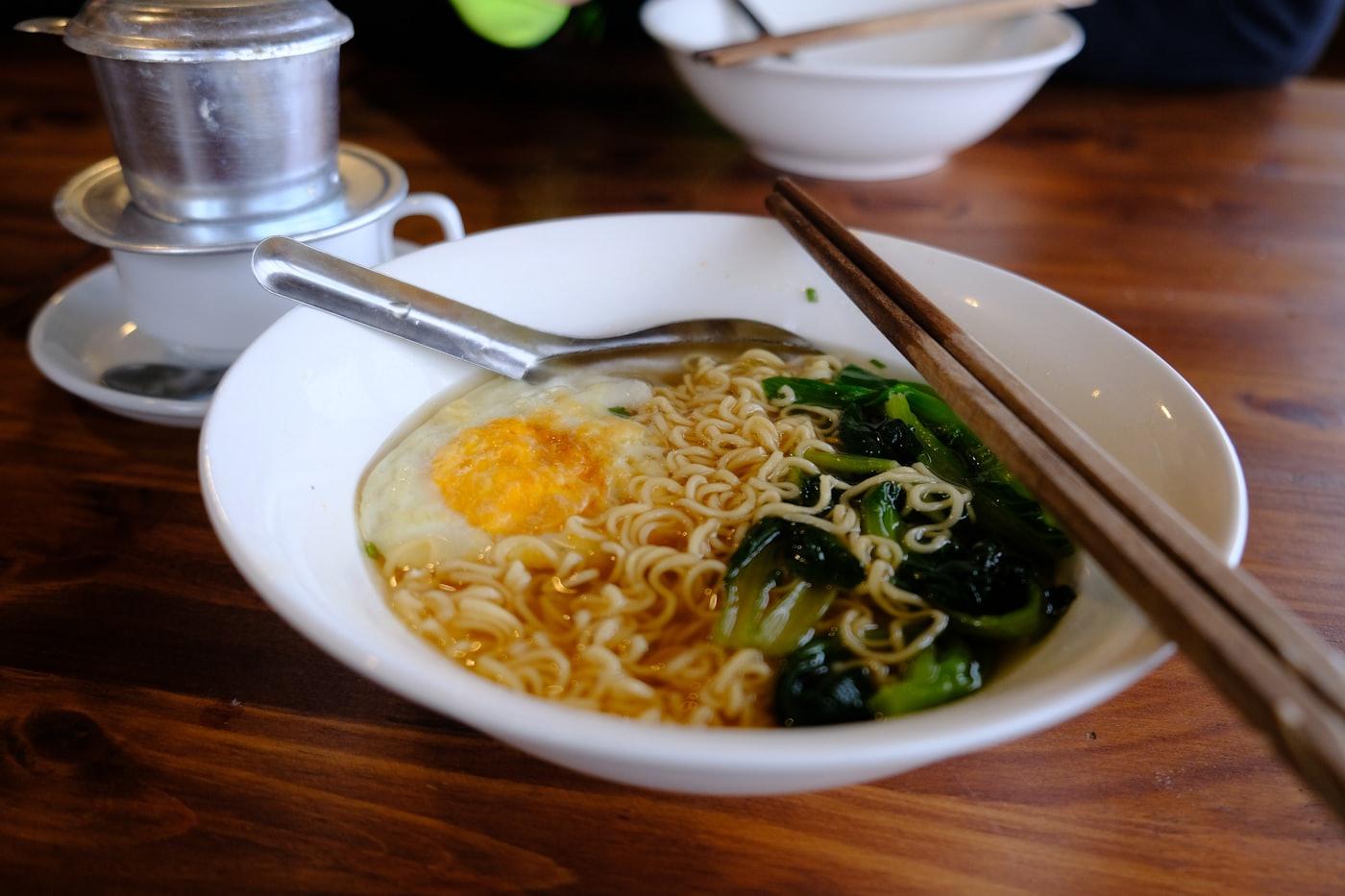
Noodles in China are older than in many other cuisines of the world: archaeologists have found traces of them around four thousand years old. They come wheat-based and rice-based, as thin as thread and as wide as a ribbon, hand-pulled (lamian) and knife-cut (daoxiaomian). Every region has its classic: Lanzhou beef noodles in a clear broth, Sichuan dandan noodles with spicy paste and sesame, and the spice-laden styles of Yunnan in the southwest.
Noodles are also a symbol. Long strands stand for longevity, so they are traditionally not cut, especially on a birthday. This idea of "noodles with a special meaning" is even played with in pop culture — think of the Secret Ingredient Noodle Soup from Kung Fu Panda. In the film the "secret ingredient" turns out to be the absence of any ingredient — a metaphor for the idea that belief and care are what make a dish special. In a real kitchen the "secret" to a good noodle soup is far more down-to-earth and honest: a long, fragrant broth, fresh noodles with the right springy bite, and a balance of soy sauce, ginger and herbs.
Baozi
Baozi (包子) are fluffy steamed buns of leavened dough with a filling. Their close relatives are mantou (plain, no filling) and the already-mentioned char siu bao. The filling can be anything: juicy minced pork, vegetables, mushrooms, or sweet red-bean paste. A special star is the Shanghai xiaolongbao, thin "soup dumplings" hiding hot broth inside: this is achieved by folding set, jellied stock into the filling, which melts as the dumplings cook. You must eat them carefully so as not to scald yourself — that caution is part of the pleasure and part of the local etiquette.
Sichuan Heat and the Balance of Five Flavors
No conversation about China can skip Sichuan cuisine — the most vivid of all in terms of sensation. Its signature is the ma la (麻辣) effect: ma is the numbing, slightly fizzy tingle from Sichuan peppercorns, while la is the burn from chilies. Together they create an unusual, almost electric feeling in the mouth — something you get used to quickly and then start to crave.
The Sichuan peppercorn, by the way, is not related to black pepper or chili at all — it is the dried husk of the fruit of the zanthoxylum plant. That husk is what delivers the numbing tingle, not the heat. The heat comes from dried chilies and from doubanjiang, a fermented broad-bean-and-chili paste that forms the base of many Sichuan dishes: mapo tofu, kung pao chicken, fish in spicy broth.
It is important to understand that heat in China is not an end in itself, nor a race to be "hotter at any cost." It is built into a broader philosophy: the balance of five flavors — sour, sweet, bitter, pungent and salty (and often a sixth, umami). A good dish is an equilibrium, where heat lifts the sweetness of a sauce, acidity refreshes the richness, and salt ties everything together. The same logic runs through Cantonese dim sum and northern noodle bowls alike — only the accents are placed differently.
Where to Start Cooking at Home
Chinese cuisine can feel endless, but stepping into it is easier than you might think. Begin with things that need neither rare ingredients nor a special oven:
- Noodles in broth — the friendliest start of all. A good broth, fresh noodles, a little greenery and soy sauce, and you already have an honest bowl of Chinese comfort.
- Steamed or pan-fried dumplings — great practice with dough and fillings; Japanese Gyoza (Japanese Dumplings) are a gentle way to master the technique.
- A simple stir-fry — vegetables and meat over high heat in a wok in a couple of minutes teach the core principle: high temperature, quick cutting, and a sauce ready at hand.
And if you want not just to eat but to feel a dish's story and character, start with a bowl of noodles that has a "secret." The Secret Ingredient Noodle Soup from Kung Fu Panda is a warm, slightly playful recipe that reminds us: the main ingredient in any kitchen is care for the people you are cooking for.
Chinese cuisine rewards the curious. The further you go — from Cantonese steam to Sichuan fire, from festive duck to everyday noodles — the more clearly you see not a chaos of dishes but an orderly map of flavors. And the best part: to set off on that journey, all you really need is one pot, good noodles, and the willingness to taste.