Boiling an egg seems like the simplest job in the kitchen — right up until the shell cracks, the yolk turns grey-green, and the peeled egg looks like it has been gnawed. In reality a perfect boiled egg is a matter of precise timing and a couple of tricks. Master them and you will get a predictable result every time.
Let's go through every cooking method with exact times, the reasons behind common problems, and proven tricks for peeling and checking freshness.
The basic method and timings
The most predictable approach is to lower eggs into already boiling water (rather than starting in cold water and waiting for it to boil). That way every egg has the same start and the timing is exact. Take eggs at room temperature, lower them gently with a spoon into the boiling water, and reduce to a gentle simmer. Times for a medium egg:
- Soft-boiled — 4 minutes. Runny yolk, barely set white.
- Medium (mollet) — 6 minutes. A creamy, flowing yolk and a firm white.
- The perfect jammy egg — 7 minutes. Bright orange yolk, just creamy at the centre.
- Hard-boiled — 9-10 minutes. Fully set yolk without overcooking.
Cook large eggs 1 minute longer. After cooking, transfer the eggs straight into ice water — this stops the cooking and makes peeling easier.
Why shells crack
Shells crack for two reasons, and both are easy to fix:
- A sharp temperature change. A cold egg from the fridge cracks in boiling water. The fix is to take eggs out ahead or lower them gently.
- The air pocket. As it heats, the air inside expands and splits the shell. The fix is to pierce the blunt end of the egg with a needle or pin before cooking so the air can escape.
A pinch of salt in the water does not prevent cracks, but it helps the white set faster if the shell does split.
Why the yolk turns green and how to avoid it
The grey-green ring around the yolk is a sign of overcooking. With prolonged heat, sulphur from the white reacts with iron from the yolk to form iron sulphide. It barely affects the taste but looks unappealing.
To keep the yolk bright yellow, don't cook eggs longer than 10 minutes and cool them in ice water straight away.
How to peel eggs easily
An egg that peels badly is a common frustration. A few tricks solve it:
- Use eggs that aren't the freshest. Paradoxically, eggs aged 7-10 days peel more easily than fresh ones: as they age the white's pH rises and it sticks less to the membrane.
- Rapid cooling. An ice bath creates a steam gap between white and shell.
- Peel under running water or in a bowl of water, starting at the blunt end where the air pocket is.
- You can gently roll the egg on the table to crack the shell into a web of fine lines.
A poached egg without the shell
A poached egg is cooked without its shell, with a tender white and a runny yolk. The technique:
- Bring the water to a barely shivering state, without a rolling boil (around 90 C).
- Add a spoon of vinegar — it helps the white set faster.
- Make a whirlpool with a spoon and slip a fresh egg into the centre (freshness is critical here — the white holds its shape).
- Cook for 3 minutes, lift out with a slotted spoon and drain.
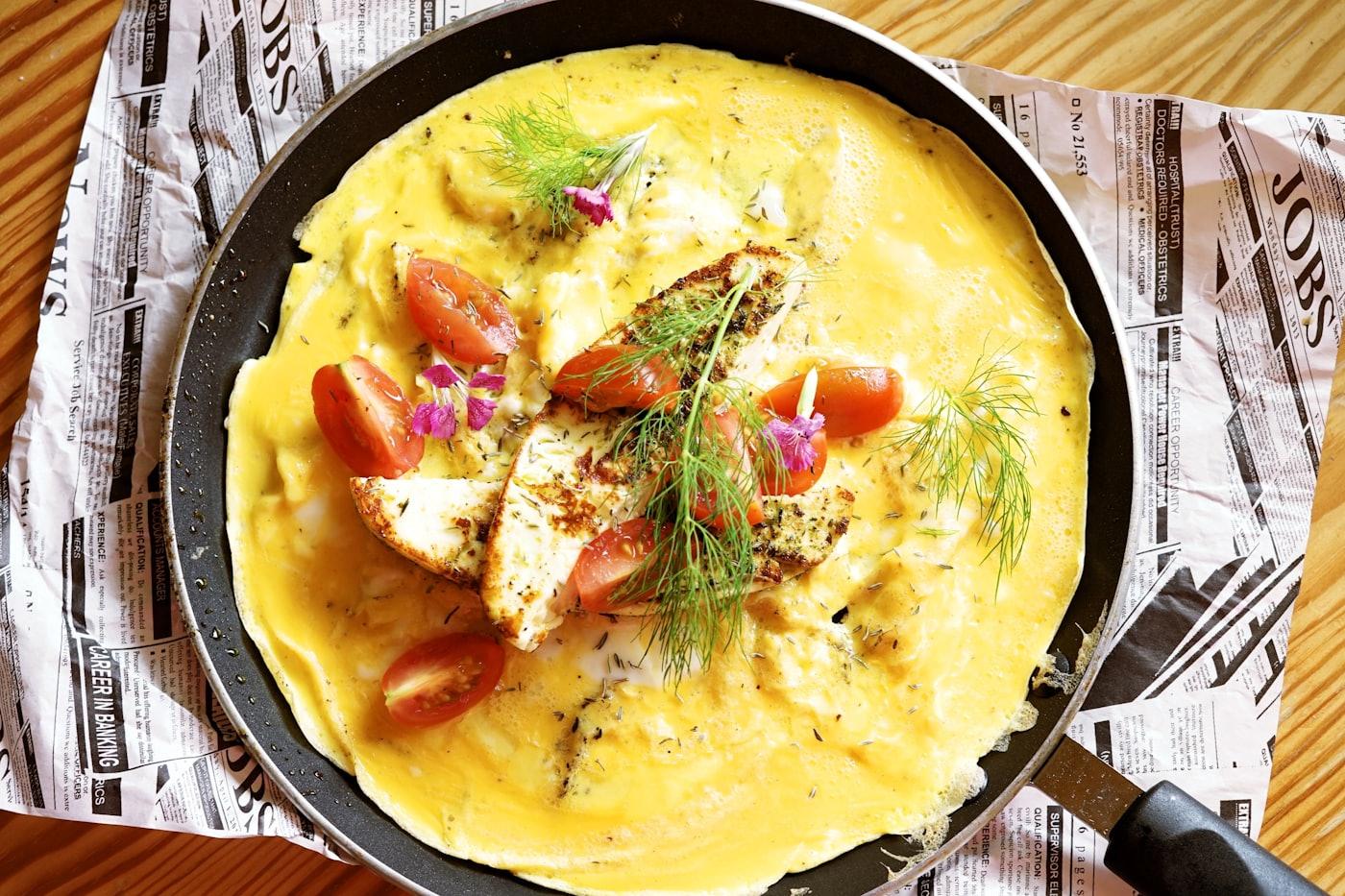
A poached egg is the base of dishes like eggs Benedict, and its runny yolk turns any side into a sauce. If you want something simpler, the same velvety yolk works beautifully in a farmhouse-style omelette.
Freshness and quail eggs
A simple freshness test — drop an egg into a glass of water:
- It lies on the bottom — very fresh.
- It stands upright but touches the bottom — about a week old, fine to use.
- It floats — the air pocket has grown, the egg is old and best not used.
Quail eggs cook much faster because of their size: soft-boiled in about 2 minutes, hard-boiled in 3-4. Their thin speckled shell is easiest to crack and peel from the blunt end.
Now you have a full map of timings and tricks. Remember the essentials: exact timing, a boiling start and an ice bath at the end — and the perfect egg will no longer be a lottery.