Cooking pasta looks like the easiest thing in the world: boil water, drop in the noodles, drain in a colander. In reality, this is exactly where so many Italian dishes fall apart. Overcooked mushy strands, under-salted water, that "magic" starchy liquid poured straight down the sink — small mistakes that even a great sauce can't fully rescue.
The good news is that the rules here are few and they make sense. Once you understand what you're doing and why, pasta stops being a gamble and becomes a reliable weeknight dinner — one you'd happily serve to guests. In this guide we'll go through it step by step: water and salt, doneness, starchy water, the oil myth, and how to match pasta shape with sauce.
And at the end we'll bring it all together with a classic — pasta carbonara, where your cooking technique decides absolutely everything.
How Much Water and Salt: The Main Rule
Italians love repeating the "1–10–100" formula: for every 100 grams of dry pasta, use 1 liter of water and 10 grams of salt. It's not dogma, just a handy starting point. For two servings (around 200 grams of pasta) you'll want a large pot, roughly 2 liters of water, and 20 grams of salt — a heaping tablespoon.
Why so much water? Pasta releases starch as it cooks. With too little water, the starch concentration rises, the pasta sticks together, and the water turns into glue. In a roomy pot, the pasta moves freely and cooks evenly.
Now for the salt — and this is probably the most common home-kitchen mistake. The water should taste distinctly salty, "like the sea." This is the only moment when the pasta itself, not just the sauce, gets seasoned from within. Unsalted water gives you bland noodles that no amount of sauce can fix later.
- Bring the water to a rolling boil and only then add the salt — otherwise it can leave pitted marks on the bottom of the pot.
- Add the pasta right after the salt, once the water returns to a boil.
- Don't cover the pot while cooking: it keeps the water from boiling over and the pasta from foaming up.
One more thing: don't break long pasta like spaghetti to make it fit. Fan it into the pot, give it 10–15 seconds to soften, and it will slide under the water on its own — just stir.
Al Dente: What It Means and How to Catch It
"Al dente" translates from Italian as "to the tooth." It's the level of doneness where the pasta is no longer raw but still offers a slight resistance when you bite — a hair-thin pale core remains at the very center. Pasta cooked this way holds its shape better, has a more pleasant texture, and is actually easier to digest, since the starch hasn't been boiled into mush.
Your main reference is the time on the package, but treat it as a hint, not law. Manufacturers list the time for fully cooked pasta, so for al dente, pull it out 1–2 minutes earlier. The most reliable method is to taste: a couple of minutes before the end, fish out a single piece and bite into it.
There's a second rule many people miss: pasta almost always finishes cooking in the sauce. So it makes sense to drain it slightly underdone and let it simmer with the sauce in the pan for a minute or two. That way the noodles absorb flavor instead of remaining a separate side dish with sauce simply piled on top.
Starchy Water: Liquid Gold
Remember one thing: before you drain the pasta, scoop out a mug of the water it cooked in. That cloudy, milky liquid is the secret ingredient of nearly every pasta sauce.
The starch that leaches into the water during cooking acts as a natural thickener and emulsifier. Stir a little of it into your sauce and you achieve several things at once:
- the sauce turns silky and uniform, without oil and liquid splitting apart;
- it clings to every strand instead of pooling at the bottom of the plate;
- you can adjust the consistency — a couple of spoonfuls of water loosens a sauce that's gone too thick.
Starchy water is exactly why restaurant pasta looks like one cohesive dish, while home versions often break down into "noodles here, sauce there." In sauces like carbonara or cacio e pepe, you simply can't get the right creamy emulsion without it.
The rule is simple: yes to the colander, but set aside a mug of water first. There's no need to drain the pasta bone-dry — a few drops clinging to the noodles only help the sauce.
Why You Shouldn't Add Oil to the Water
The tip to "add a spoonful of oil to the boiling water so the pasta doesn't stick" gets passed from recipe to recipe, but it doesn't work well. Oil is lighter than water and simply floats on the surface, barely touching most of the pasta. It doesn't prevent sticking — enough water and a good stir during the first minutes of cooking handle that.
Worse, the oil ruins the finish. When you drain the pasta, a thin greasy film coats the noodles and makes them slippery. As a result, the sauce literally slides off the surface and won't cling — and yet the bond between pasta and sauce is the whole point.
The one exception: if you're cooking pasta ahead and plan to store it cold, a drop of oil after draining helps keep it from clumping. But for a dish you're serving right away, oil in the water is pointless. Save that spoonful of olive oil for the sauce itself.
Pasta Shape and Sauce: How to Match Them
In Italian cooking, the shape of the pasta isn't an accident — it's a function. Different shapes hold different sauces in different ways, and the right pairing noticeably changes the dish.
Long Pasta
Spaghetti, linguine, and bucatini pair beautifully with smooth sauces based on oil and egg, or with light tomato sauces. A thin or oily sauce coats the long strands so that every twirl of the fork is balanced. The genre classics are carbonara and aglio e olio.
Short, Textured Pasta
Penne, rigatoni, fusilli, ridged tubes and twists are made for thick, chunky sauces — meat ragù, vegetables, bolognese. The ridges and hollows catch sauce and bits of filling, so every forkful has both pasta and topping.
The general principle: the thicker and chunkier the sauce, the more textured and short the pasta should be; the lighter and more fluid the sauce, the better long, thin shapes suit it. It isn't a strict law, but it almost always improves the result.
If you'd like to step away from pasta toward another Italian classic, the same balance principle applies to baking too — take a look, for example, at Margherita Pizza, where the simplicity of the ingredients rests entirely on their quality and proportion.
Bringing It All Together: The Road to Carbonara
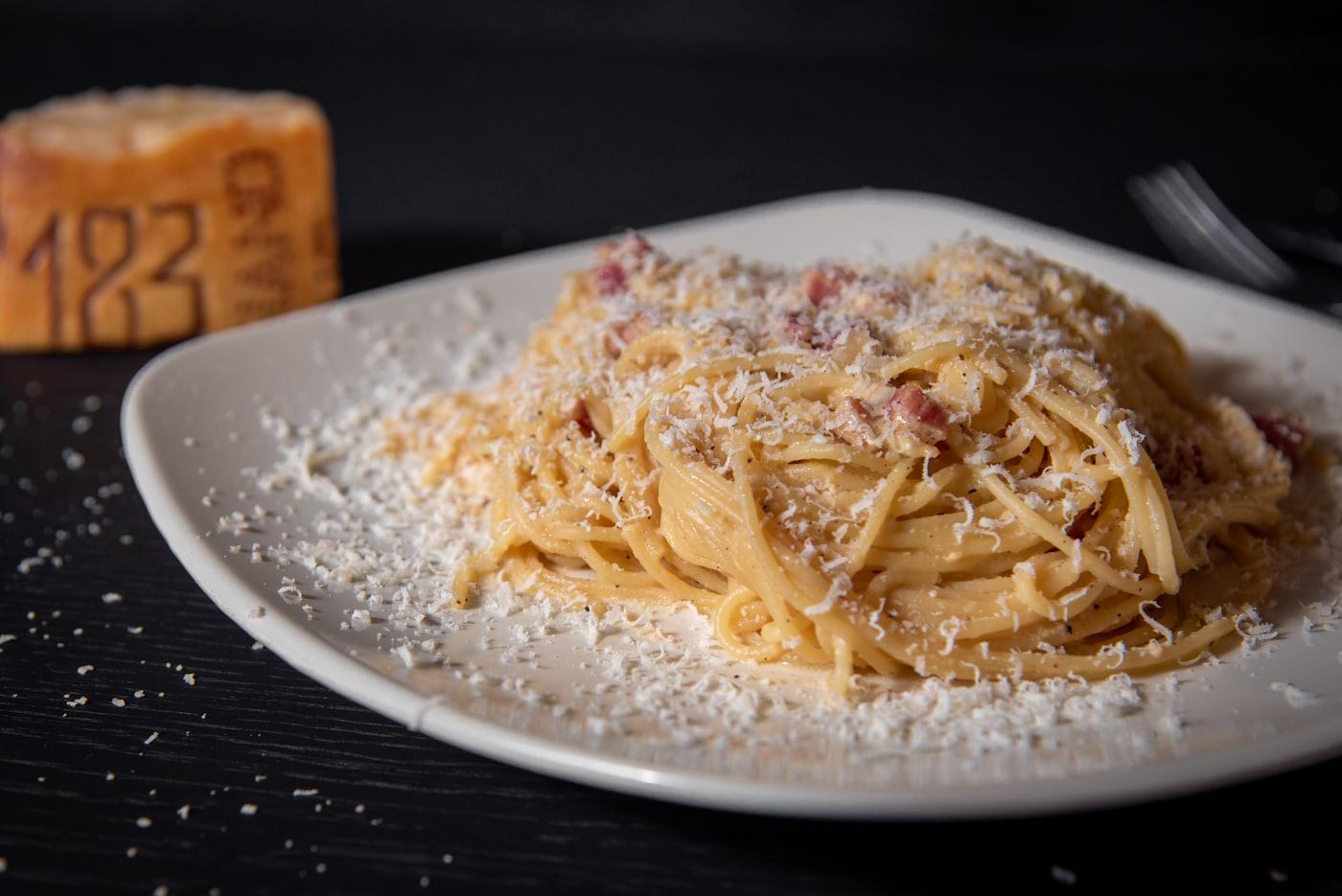
Carbonara is the perfect pasta-cooking exam, because it has no cream, no flour, no other crutches: the creaminess comes from an emulsion of eggs, pecorino cheese, and that very starchy water. Authentic Roman carbonara is made from just a few components: spaghetti, guanciale (cured pork jowl), egg yolks, pecorino romano cheese, and black pepper. No cream and no onion — that's a persistent myth, not the canon.
Here's where every rule in this guide comes together:
- Salted water seasons the pasta from within while the guanciale renders.
- Al dente is essential: the pasta finishes cooking in the pan with the rendered fat.
- Starchy water is whisked into the yolks and cheese — it's what turns them into a silky cream rather than scrambled eggs.
- No oil in the water — otherwise the sauce slides off and the emulsion won't set.
The key technical detail: the egg-and-cheese mixture goes in off the heat, or the yolks will scramble. The residual heat of the pasta plus a couple of spoonfuls of starchy water are enough to thicken the sauce to a creamy texture. For a full step-by-step breakdown, see our Pasta Carbonara recipe.
Conclusion
Cooking pasta rests on a handful of simple principles: plenty of water, salt "like the sea," al dente doneness, saved starchy water, and no oil in the pot. Add a thoughtful choice of shape to match the sauce, and even everyday noodles become noticeably better.
These skills scale to any pasta, but they shine brightest in dishes where technique matters more than the ingredient list. So cook your pasta by the rules, set aside that mug of starchy water — and try carbonara. It's the best way to feel how a handful of simple ingredients becomes a genuine Italian dish.