Marinades are surrounded by myths. Many believe acid "penetrates the meat all the way through" and tenderises it, and that a couple of hours in vinegar turns a tough cut soft. The truth is subtler: a marinade works mainly on the surface and a couple of millimetres deep, and the real tenderiser is often not acid at all but salt. Let's break it down component by component.
Understanding this chemistry saves time and rescues dinners: you'll stop leaving a steak in lemon juice until it turns to rubbery mush and start marinating with purpose.
Salt is the hero
Salt does more to meat than anything else. It penetrates deeper than the other components, breaks down proteins and helps the meat hold moisture — which is why a properly salted cut stays juicy even after searing. In effect, salt acts as a mini-brine.
Hence two approaches:
- Dry brine — you simply rub the meat with salt and leave it uncovered in the fridge from an hour to a day. The surface dries out for a great crust when seared, and the salt has time to migrate inward. For steaks and chicken this often beats any wet marinade.
- Wet brine/marinade — the meat sits in salted liquid. It gives juiciness and even flavour, especially for lean meat like chicken breast or pork.
Acid: helpful but treacherous
Acid (vinegar, citrus juice, wine, kefir, yogurt) denatures surface proteins, loosening the texture slightly and brightening the flavour. But it has a downside: with long contact, acid "cooks" the protein chemically, as in ceviche. The surface of the meat first softens and then turns dry, dense and unpleasantly grainy, as if boiled.
The rule is simple: acidic marinades should not be long. For thin cuts and poultry, 30 minutes to 2 hours is plenty; for denser cuts, up to 4-6 hours, but rarely more. Dairy marinades (yogurt, kefir) are gentler than straight acids and forgive longer soaks — hence the tenderness of tandoori chicken.
Enzymes: nature's tenderisers
A separate category is fruit enzymes that literally cut through protein fibres:
- bromelain in pineapple;
- actinidin in kiwi;
- papain in papaya;
- proteases in figs and ginger.
They work powerfully, so they call for caution. Half an hour with kiwi puree will tenderise a tough cut, but overdoing it turns the surface into mush. Use such additions sparingly and briefly — 20-40 minutes is usually enough.
Oil, sugar and aromatics
The remaining components are about flavour and crust, not tenderising.
- Oil dissolves the fat-soluble aromas of spices and herbs, helps them cling to the meat, and improves heat transfer when searing, giving an even crust.
- Sugar (and honey) brings caramelisation and lovely colour but burns fast over high heat. If a marinade is high in sugar, cook over moderate heat or brush it on only near the end.
- Aromatics — garlic, onion, spices, herbs, soy sauce — are the flavour. Soy sauce, miso and Worcestershire also add salt and umami.
A few rules of safety and technique
Always marinate in the fridge, never on the counter: at room temperature bacteria multiply quickly on the meat's surface. Use non-metal containers — glass, ceramic or a zip-lock bag: acid reacts with aluminium and leaves a metallic taste. A bag is actually handier than a bowl — it hugs the meat closely, needs less marinade, and can be flipped for even coverage in one move.
And the cardinal hygiene rule: never use marinade that held raw meat as a sauce while still raw. If you want to spoon it over the dish, set some aside before it touches the meat, or boil the leftover for at least a couple of minutes. Before searing, always pat the meat dry with paper towel — a wet surface steams instead of browning, and you get no crust.
In practice: for different jobs
A few working guidelines.
- Kebab (pork, lamb). Onion (its juice works gently), salt, spices, a little oil. Minimal acid or none. Rest for 2 to 12 hours in the fridge.
- Chicken. A spiced yogurt marinade (tandoori-style) for 2-8 hours makes breast and thighs tender and juicy. Or a dry salt brine overnight.
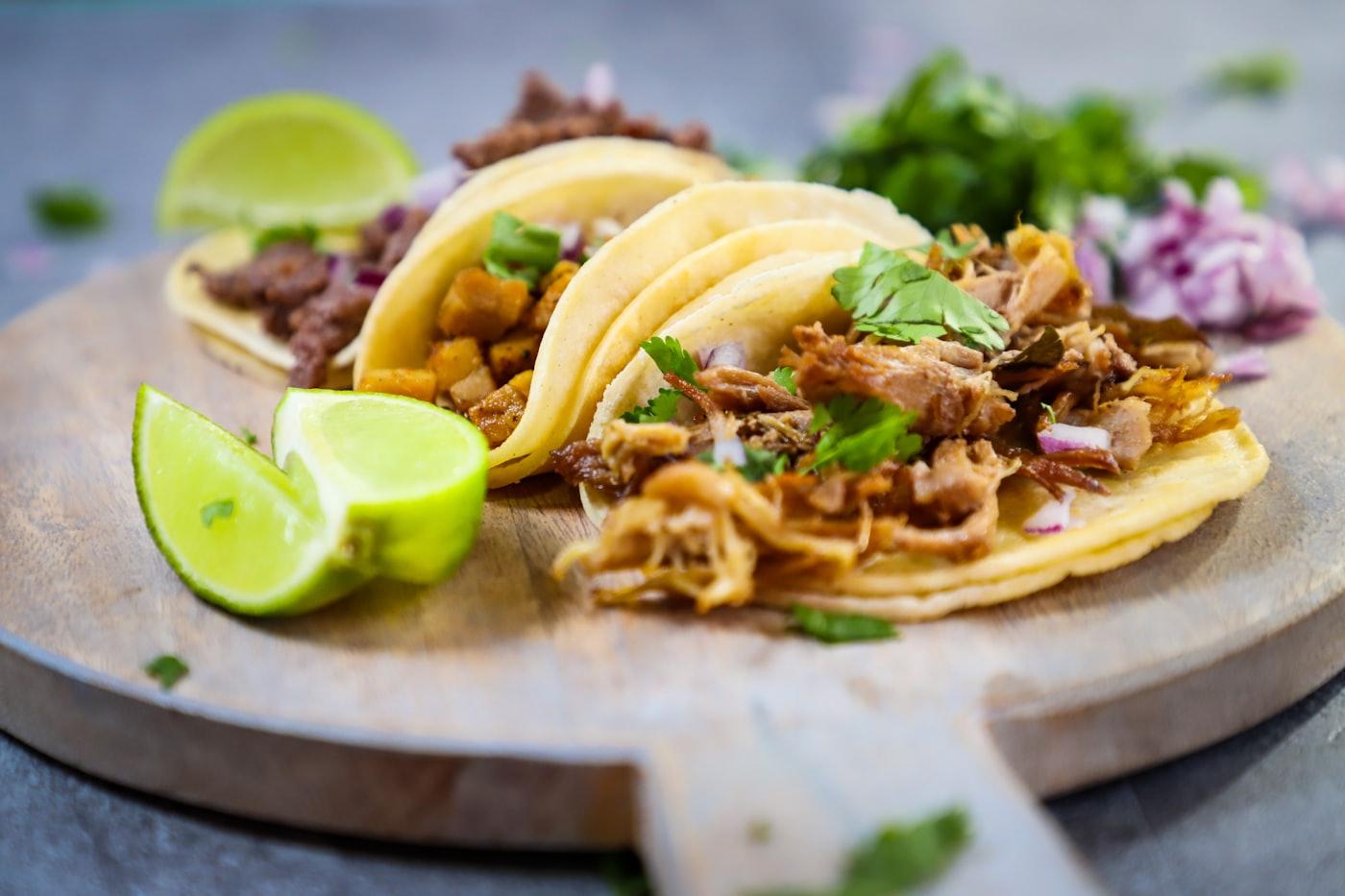
- Pork for tacos. Al pastor-style marinades combine chillies, pineapple (an enzyme!) and spices — don't go past a couple of hours because of the pineapple. Try our tacos al pastor.
- Beef steak. Often best with no marinade at all — just a dry salt brine an hour to a day before searing, and good heat. A marinade here is for flavour rather than tenderness.
Bottom line: don't expect a marinade to work "all the way through." Think of it as a layer of flavour plus salt that does work inward. Give salt time, keep acid and enzymes on a timer, and the meat will reward you with juiciness and a crust rather than a rubbery surface.