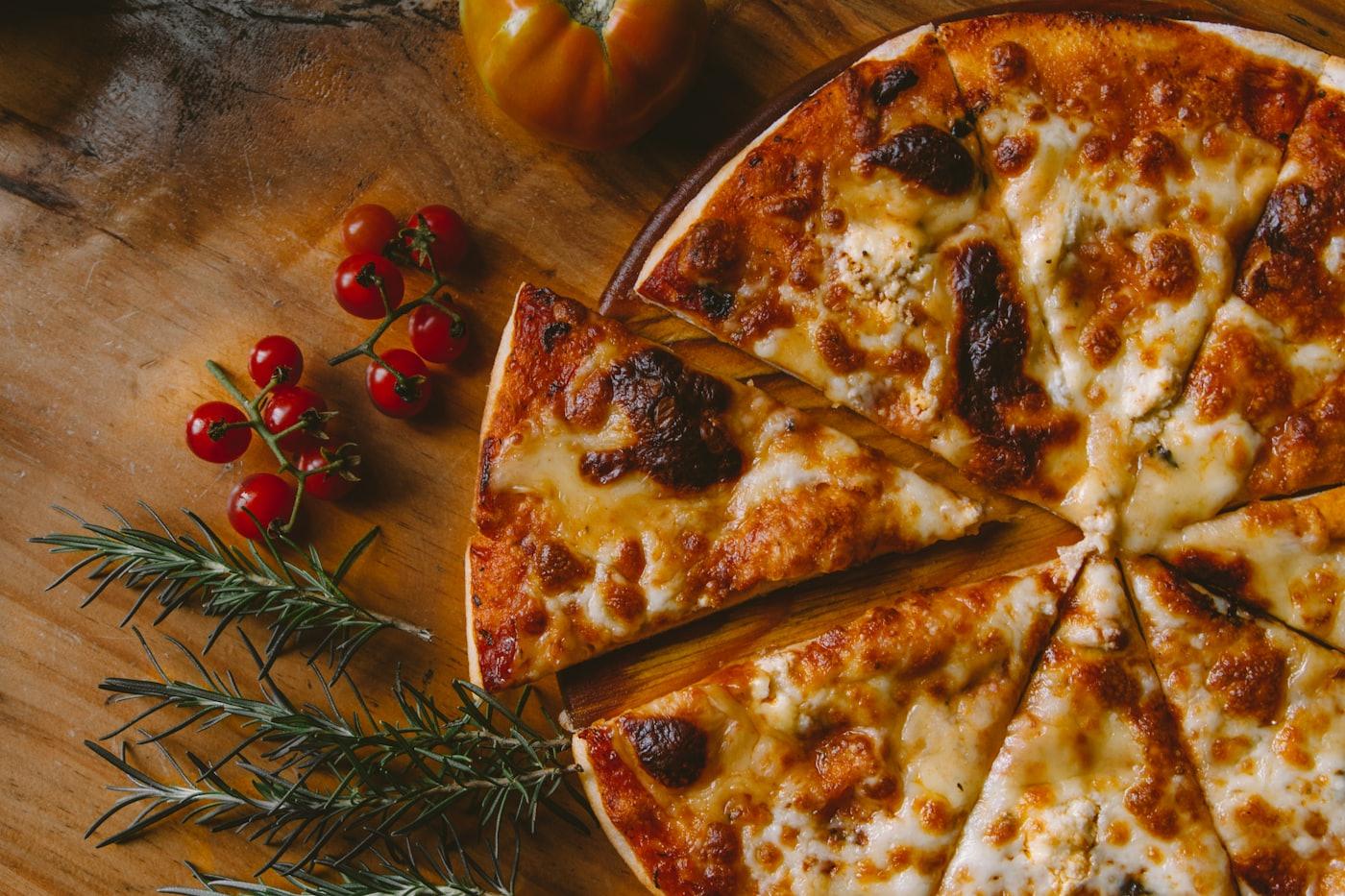
Of all the pizzas in the world, the Margherita is the most recognizable and the most deceptively simple. A thin base, tomato sauce, mozzarella, and a few basil leaves — what could be complicated about that? Yet behind this minimalism hides a century-old tradition, strict Neapolitan standards, and an almost religious devotion to dough.
The story of the Margherita is tied to one of Italy's most charming culinary legends — about a queen, a flag, and a Neapolitan pizzaiolo. The legend is beautiful, but reality, as so often happens, is a little more complicated. Let's sort out what's true and what's clever nineteenth-century marketing, and why a real Margherita is made quite differently from what many people are used to.
By the end, you'll know exactly what sets an authentic Neapolitan pizza apart from its many imitations — and you'll be able to make one at home.
The Legend of Queen Margherita
The classic version goes like this. In 1889, King Umberto I of Italy and his wife, Queen Margherita of Savoy, visited Naples. To please the royal guest, a local pizzaiolo named Raffaele Esposito prepared three kinds of pizza for her. One of them — with tomatoes, mozzarella, and basil — echoed the colors of the Italian flag: red, white, and green. The queen liked it best of all, and the pizza was named the Margherita in her honor.
Historians treat this story with caution. A letter of thanks from the royal household to Esposito survives, but many researchers question its authenticity, and the combination of tomatoes, cheese, and basil existed in Naples earlier — long before the queen's visit. Most likely the legend is a lovely wrapper for a dish that already existed, but it was that legend that turned humble street food into a national symbol.
Something else matters more: the very idea of a "flag-colored pizza" was brilliant. Red sauce, white cheese, and green basil aren't just delicious — they're patriotic, symbolic, and easy to remember. In the era of Italian unification, that image landed perfectly.
The Flag Colors Aren't Marketing — They're the Point
The tricolor composition of the Margherita is neither an accident nor a later invention. The three ingredients genuinely correspond to the Italian tricolore:
- Red — ripe tomatoes, ideally the San Marzano variety, grown in the volcanic soil near Mount Vesuvius.
- White — mozzarella, traditionally made from black buffalo milk (mozzarella di bufala) or the gentler cow's-milk fior di latte.
- Green — fresh basil, added to the finished or nearly finished pizza so it doesn't scorch.
This simplicity is the philosophy of the Margherita. When there are few ingredients, each one has to be flawless. There's nowhere to hide cheap cheese or a watery sauce: the pizza is either honest or nothing at all. That's why Naples takes ingredient sourcing so seriously.
What the AVPN Standard Is
To protect the "real" Neapolitan pizza from endless variations, the Associazione Verace Pizza Napoletana (AVPN) — the True Neapolitan Pizza Association — was founded in 1984. It set out what an authentic pizza must be, and today its discipline is recognized as a Traditional Speciality of the European Union.
The AVPN rules read almost like a religious code. Here are just a few of the key requirements:
- The dough is kneaded only from flour, water, salt, and yeast — no oils or improvers in the base.
- The base must be shaped by hand, without a rolling pin: air is pushed from the rim toward the center, forming the characteristic puffy edge (cornicione).
- The finished pizza is about 30–35 cm across, thin in the center with a high, airy rim.
- It must be baked in a wood-fired oven at around 430–480 °C.
- Baking time is just 60–90 seconds.
This is precisely why home pizza almost never matches the Neapolitan original perfectly: an ordinary oven simply can't reach that temperature. But that's no reason to despair — once you understand the principles, you can get close even in a domestic kitchen.
Dough Secrets: Flour, Water, and Time
Ask a true Neapolitan pizzaiolo what the secret of the Margherita is, and he'll almost certainly say: the dough. Sauce and cheese matter, but it's the dough that turns pizza from a flat disc into something alive and airy.
Type 00 Flour
The classic choice is soft, finely milled wheat flour, type "00" (doppio zero). It's fine, almost like powder, and gives an elastic, silky dough. For long fermentation, bakers often choose a high-protein (strong) flour, because it holds its structure better during extended proofing.
Long Fermentation
The main secret that separates great pizza from a mediocre one is time. Neapolitan dough ferments slowly: anywhere from 8–12 hours to a full day or even two in the fridge. During that time the yeast works unhurriedly, and a complex flavor and aroma develop in the dough.
What a long cold fermentation gives you:
- a deeper, slightly nutty bread flavor;
- a light, airy crumb with big bubbles in the rim;
- better digestibility — the dough doesn't sit like a lump in your stomach.
The beginner's biggest mistake is rushing. Dough mixed and baked within a couple of hours will never be like dough that has rested for a day.
High Hydration and Gentle Hands
Neapolitan dough is fairly wet — hydration (the proportion of water) is usually 60–70%. Wet dough is fussier to handle, but it's exactly what produces that softness and those bubbles. It's kneaded until smooth, then left to rest at length, and the base is shaped by hand alone — stretched from the center outward.
The Oven: The Heart of a Real Pizza
A wood-fired oven isn't a traditionalist's whim but a physical necessity. At 450 °C the pizza cooks in a minute: the base sets instantly while staying elastic inside, the rim puffs up, and here and there those characteristic char spots appear — the "leopard" pattern that marks a proper Neapolitan pizza.
Replicating this at home is hard, but getting close is realistic:
- Preheat your oven to its maximum (250–300 °C) together with a pizza stone or a heavy baking tray — for at least 45 minutes.
- Use the top grill function at the end of baking to brown the rim and cheese.
- Don't overload the pizza with toppings: the less moisture, the better the base bakes.
A pizza stone is the best home investment for this dish. It stores heat and releases it into the base from below, imitating the floor of a wood-fired oven.
From History to the Plate
Now that you know the legend of the queen, understand the logic of the tricolor, and keep the AVPN rules in mind, only the main thing remains — to cook. The good news: even without a wood-fired oven you can make a pizza your guests will envy, as long as you respect the dough and don't rush.
Start with a long fermentation, find good flour, and give the dough plenty of resting time — the result will surprise you. And a step-by-step recipe with proportions and timing is waiting for you here: Margherita Pizza.
Cook with respect for tradition, and a simple three-ingredient pizza will reveal itself just as the Neapolitans intended more than a hundred years ago.