Spanish cuisine is not a single rulebook but a colorful mosaic of dozens of regional traditions, held together by sun, sea and the habit of eating together. In the north, in the Basque Country, seafood and the famous pintxos rule. In central Castile, people love roasted meats and hearty soups. In the east, in Valencia, paella was born. And in the south, in Andalusia, the cold soup gazpacho was invented to survive the summer heat. What unites all this is not a recipe but an attitude: a dish is an excuse to gather.
If you tried to describe Spanish gastronomy in one word, that word would be "togetherness." People here rarely eat in silence or alone. Tapas are passed around, paella is set in the center of the table and eaten straight from the pan, and dinner starts so late that for a northern European it already feels like the middle of the night. Food here is social glue, not just fuel.
In this article we will explore the main pillars of Spanish cooking — paella, tapas, jamon, gazpacho and tortilla — peek into the culture of tapas bars, and talk about why "Spanish cuisine" in a sense does not exist at all: there is Valencian, Andalusian, Basque and dozens of other cuisines.
Paella: the pride of Valencia
Paella is probably the most recognizable Spanish dish in the world, and at the same time the most misunderstood. It was not born on the coast among seafood, but in rural Valencia, in the rice fields around the Albufera lagoon. The word "paella" itself does not mean the dish but the pan — a wide, flat, two-handled pan in which rice cooks in a thin layer and develops a golden crust.
The classic paella valenciana is not a seafood feast at all. The canonical recipe includes chicken and rabbit, white and green beans (garrofo and bajoqueta), sometimes snails, plus rice, olive oil, tomatoes, saffron and rosemary. Seafood is a separate story — paella de marisco, also legitimate but different. And adding chorizo to paella is something many Spaniards consider almost a culinary crime.
The real secret of paella is not the ingredients but the texture. The rice should absorb the stock and stay as separate grains, while at the bottom of the pan a socarrat forms — a toasted, caramelized crust that connoisseurs prize most of all. Paella is never stirred while cooking, and is traditionally eaten straight from the pan with wooden spoons, with the whole family gathered around it.
A few rules for real paella
- Use short-grain rice such as bomba or senia — it soaks up a lot of liquid without turning mushy.
- Do not stir the rice once the stock is in, or you will lose the socarrat.
- Use saffron for color and aroma, not turmeric or dyes — this matters.
- Let the paella rest under a cloth for five minutes before serving.
Tapas and the culture of tapas bars
If paella is about family and the Sunday lunch, then tapas are about friends and the evening city. Tapas are small bites served alongside drinks: olives, a slice of jamon, a piece of tortilla, prawns in garlic oil, patatas bravas with a spicy sauce. According to legend, the word comes from the verb "tapar" (to cover): a slice of bread or ham was once placed over a glass to keep flies out of the wine. And so the snack became wedded to the drink.
Tapas culture is less about food and more about movement. In Spain there is a tradition called "ir de tapas" or "tapeo": a group moves from bar to bar, ordering one or two tapas and a drink in each. Nobody fills up in a single place — the point is the change of scenery and company, the conversation and the unhurried stroll through the neighborhood. In some cities, such as Granada, tapas are still served free with every drink.
Close relatives of tapas are the Basque pintxos: snacks skewered on a toothpick or laid on a slice of bread, displayed along the bar. Guests take whatever catches their eye and pay at the end according to the number of skewers. This culture of shared mini-meals makes the Spanish dining experience remarkably social — eating in Spain always means eating with someone.
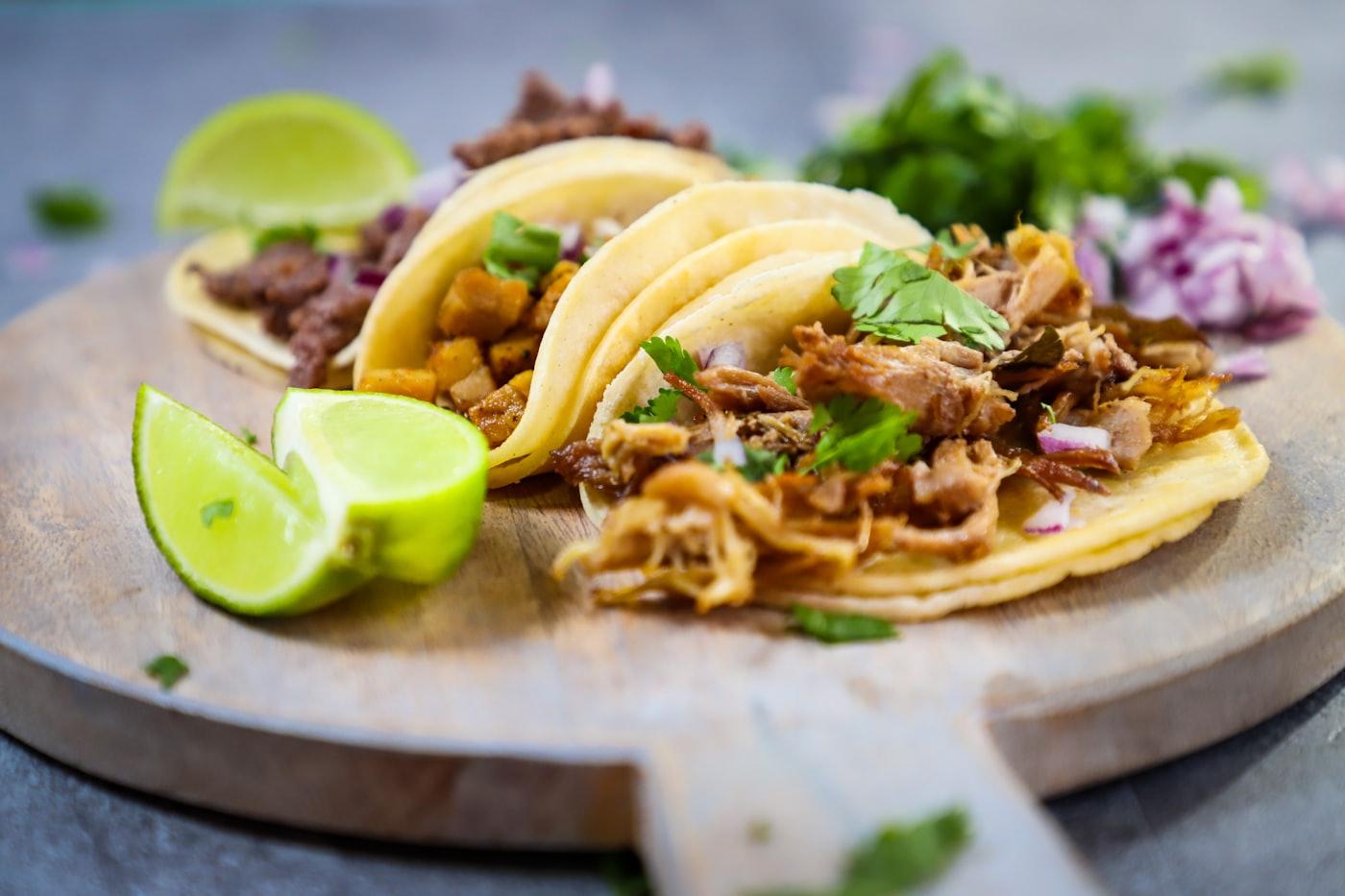
If you like the very idea of small, vivid bites eaten by hand and shared with friends, take a look at the Mexican Tacos al Pastor — a different culture, but the same logic of shared, friendly food on the go.
Jamon: cured ham as an art form
Jamon is dry-cured pork leg, and for Spain it means roughly what parmesan means for Italy: a source of national pride and fine classification. The leg is salted and then cured for months, sometimes years, in dry mountain air. The result is a deep, nutty flavor and a melting texture.
The main distinction is between jamon serrano and jamon iberico. Serrano is made from white pig breeds; it is more affordable and widespread. Iberico is the premium product from black Iberian pigs; its highest grade, jamon iberico de bellota, comes from animals fattened on acorns (bellota) while roaming free in oak woodlands called dehesas. It is this acorn diet that gives the meat its marbling and characteristic aroma, for which enthusiasts will gladly pay serious money.
Jamon is not cooked — it is sliced. Thin, almost translucent slices are cut by hand with a long knife from a leg fixed on a special stand called a jamonera. It is served simply: with bread, with a slice of melon, with a glass of wine. It is a snack that needs nothing but good company.
Gazpacho: the soup that rescues you from the heat
Gazpacho is a cold vegetable soup from Andalusia, the south of Spain, where in summer the thermometer easily climbs past forty degrees Celsius. It is a peasant dish that became a gastronomic classic: ripe tomatoes, cucumber, pepper, garlic, bread, olive oil and vinegar are blended into a smooth, cool puree and served ice-cold.
Originally, before tomatoes reached Europe, gazpacho was far simpler — bread, garlic, oil, vinegar and water pounded together. Tomatoes and peppers came from the New World and made the soup what we know today. Gazpacho has a close relative — salmorejo from Cordoba: thicker, made only from tomatoes and bread, and served with chopped egg and jamon.
Gazpacho is a great example of how Spanish cuisine turns scarcity into ingenuity: cheap seasonal vegetables and stale bread become a refreshing, nourishing and surprisingly elegant dish.
Tortilla: the Spanish omelette
Do not confuse it with the Mexican flatbread: the Spanish tortilla (tortilla espanola, or tortilla de patatas) is a dense omelette of eggs and potatoes fried in olive oil. Onion is sometimes added — and that choice, "con cebolla" or "sin cebolla" (with or without onion), provokes almost religious arguments in Spain.
A tortilla is simple to make but takes a bit of skill: the potatoes are slowly cooked in oil until soft, mixed with beaten eggs, poured into the pan, and then flipped with the help of a plate to brown the second side. Inside, a good tortilla stays slightly moist and creamy.
It is a universal dish: eaten hot for lunch, cold on a picnic, cut into cubes and served as a tapa in a bar, or tucked between slices of bread in a bocadillo sandwich. Cheap, filling, delicious — and utterly Spanish.
Conclusion
Spanish cuisine rests on two pillars: the quality of simple ingredients and the habit of sharing food with others. Paella gathers the family around a pan, tapas lead friends from bar to bar, while jamon, gazpacho and tortilla show how much can come from very little. And behind each of these dishes stands its own region — Valencia, Andalusia, the Basque Country — each with its own character and flavor.
Try starting small: make a tortilla for dinner or a gazpacho on a hot day. And when you feel like a bigger reason to gather friends around the table, move on to paella. The main rule of Spanish cuisine is simple — food tastes better when you share it with someone.