Indian cuisine is not a single dish, or even a single style of cooking — it is an entire continent of flavors packed inside one country. What the West casually calls "curry" actually splinters into thousands of recipes, each with its own character, its own history and its own set of spices. From the fiery Goan vindaloo to the gentle yogurt-based dishes of Kashmir, the range is so wide that talking about "Indian cuisine" in the singular feels almost unfair.
The real secret of this cuisine is spices. Not individual seasonings, but the art of combining them, toasting them and coaxing out their aroma in hot oil. An Indian cook works with spices the way a musician works with notes: the same turmeric, cumin and coriander, in different proportions, produce completely different dishes. That is exactly why Indian food is so hard to fake and so easy to love.
In this article we will unpack what "curry" really means, get to know the key spices, walk through the main dishes — from dal and naan to biryani and tandoori — and understand why northern and southern India cook almost like two different countries.
What curry really is
The word "curry" is one of the biggest culinary misunderstandings in history. There is no single dish called "curry" in India. The word itself is thought to come from the Tamil "kari", meaning a sauce or gravy served with rice. British colonizers heard it, generalized it, and carried it home as a label for any Indian dish with a thick, spiced sauce.
Today "curry" is more of a category than a recipe: a braised dish in a rich sauce built on spices, onions, tomatoes, and sometimes yogurt or coconut milk. Hundreds of completely different dishes fall under that umbrella.
A separate source of confusion is "curry powder." This is a Western invention — a ready-made spice blend created to make Indian cooking easier for Europeans. No such universal powder exists in India itself, where every dish is built from spices individually, and there is simply no one-size-fits-all "curry mix."
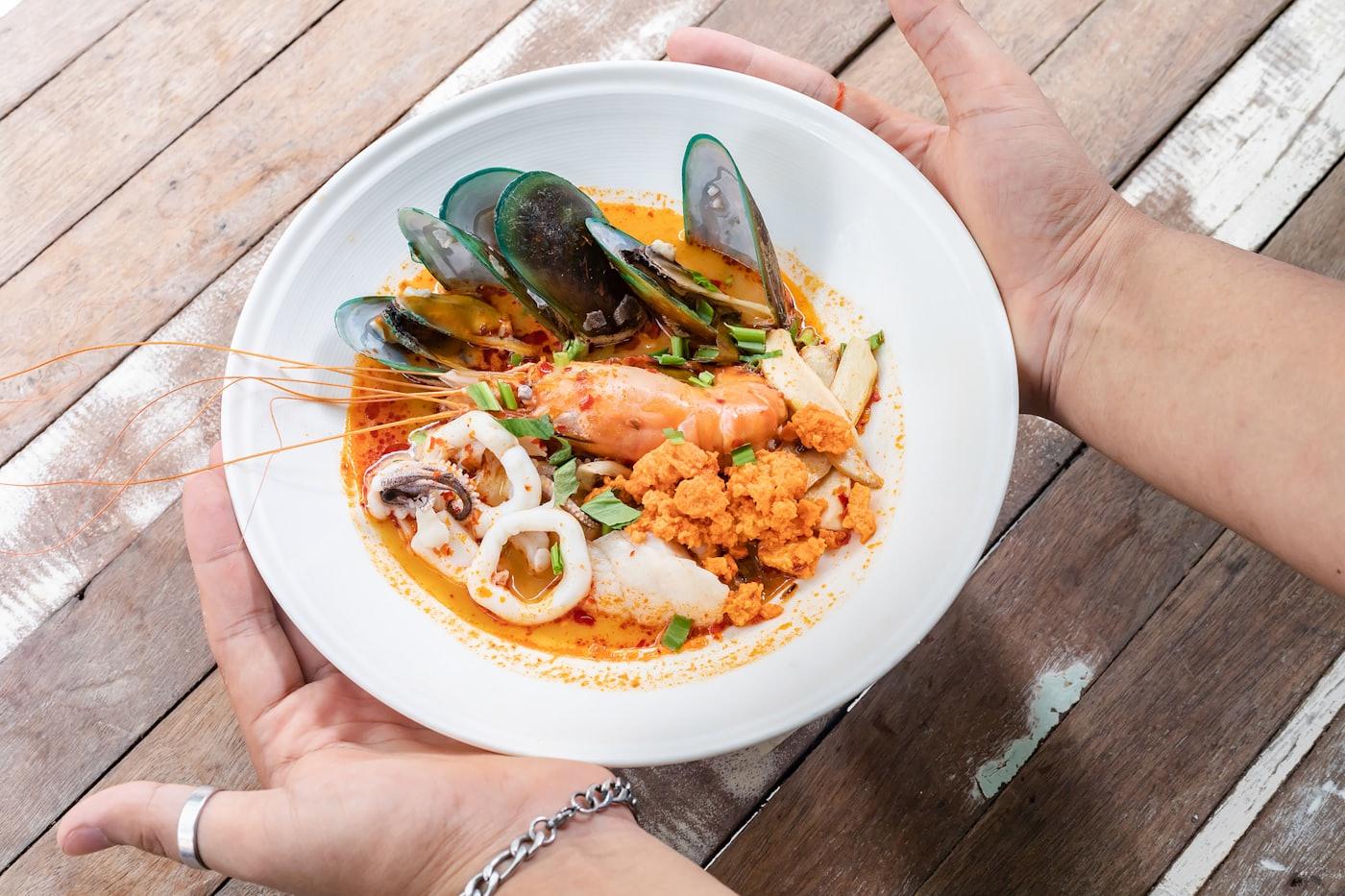
Interestingly, the idea of a fragrant, spiced broth underpins neighboring cuisines too. Thai Tom Yum with Shrimp, for instance, is a completely different soup, but it follows the same logic: the flavor comes from a careful balance of aromas, not from one dominant ingredient.
Spices: the heart of Indian cooking
Take the spices out of Indian cuisine and almost nothing remains. Here spices are flavor, aroma, color — and, in traditional thinking, even medicine. Let's meet the main players.
- Turmeric (haldi) — a golden-yellow powder ground from a root. It gives dishes their sunny color and an earthy, slightly bitter note. Almost every Indian sauce contains turmeric.
- Cumin (jeera) — warm, nutty seeds that are often fried in oil at the very start of cooking to release their aroma.
- Coriander — both the seeds and the fresh herb (cilantro). The seeds bring a citrusy freshness; the leaves are stirred in at the end.
- Cardamom — fragrant green pods with a sweet, spicy flavor. Used in savory dishes, desserts and masala chai alike.
- Garam masala — not a single spice but a blend ("garam" means warm, "masala" means mix). It usually includes cardamom, cinnamon, cloves, pepper, cumin and coriander, and every family and region has its own recipe.
Masala — the art of the blend
The word "masala" simply means "a mix of spices," and it appears in dish names constantly: tikka masala, chana masala, masala chai. A masala can be dry or wet — a paste of ground spices, onions, garlic and ginger. It is this paste, fried in oil until deeply fragrant, that forms the base of most sauces.
A key technique of Indian cooking is the "tarka" (or "chhaunk"): spices are quickly fried in hot oil or clarified butter (ghee) to release their essential oils. This aromatic fat is then stirred into the dish or used as its foundation. Without a tarka a dish tastes flat; with it, it becomes layered and alive.
The main dishes: from dal to biryani
Indian cuisine is vast, but there is a core set of dishes by which it is known all over the world.
Dal is a spiced stew of lentils or pulses. It is the everyday backbone of the Indian table and a protein source for millions of vegetarians. Dal can be thin like a soup or thick like a puree, mild and soothing or sharp with tomatoes and garlic. It is usually served with rice or flatbread.
Naan is a soft, leavened flatbread traditionally baked against the walls of a blazing-hot tandoor oven. It comes out puffy, with golden blisters and a hint of smoke, and is often brushed with garlic butter or ghee. It is far from the only Indian bread: there is also thin roti (chapati), flaky paratha and deep-fried puri.
Biryani is a celebratory dish of fragrant basmati rice layered with meat, spices, sometimes saffron and fried onions. Biryani has Persian roots and arrived in India with Muslim rulers. Today every region has its own version — Hyderabadi, Lucknowi, Kolkata-style — and each claims the title of best.
Tandoori and the magic of the clay oven
The tandoor is a vertical clay oven heated by charcoal or wood to a very high temperature. It bakes naan and produces the famous tandoori chicken — chicken marinated in yogurt with spices and turmeric (hence its reddish-orange color) and seared in fierce heat. The same principle gives us tikka: skewered pieces of marinated meat.
It is from this tandoori tradition that perhaps the world's most famous Indian dish grew — chicken tikka masala, grilled chicken pieces in a creamy, tomatoey, spiced sauce. Food historians believe the dish in its familiar form was born not in India but in Indian restaurants in Britain — another example of how Indian cuisine conquered the world and changed along the way.
North and south: two Indias on a plate
The country's main culinary divide runs between north and south, and the differences are enormous.
The north is richer, heavier and more dairy-driven. Here wheat flatbreads rule (naan, roti), along with ghee, yogurt, cream and dried fruit. The sauces are thick and luscious, and many dishes come from the tandoor. It is northern cooking — Punjab, Delhi, Kashmir — that has most shaped the image of "Indian food" abroad.
The south is lighter, spicier and more plant-based. Rice, not wheat, is the staple, with plenty of coconut, tamarind, curry leaves and hot chilies. Iconic southern dishes include dosa (a thin, crispy crepe of fermented batter), idli (steamed rice cakes) and sambar (a tangy lentil-and-vegetable stew). Many southern dishes are sourer and sharper than their northern counterparts.
There are other regional worlds too: western Gujarat with its vegetarian, slightly sweet cooking; coastal Goa with its fish and Portuguese influence (home to the searing vindaloo); eastern Bengal with its love of fish, mustard oil and sweets. Each region is a chapter of its own.
It is also worth remembering vegetarianism: a large part of India's population avoids meat for religious reasons, which is why Indian cuisine is one of the richest vegetarian traditions on earth. Chickpeas, lentils, paneer (fresh homemade cheese), vegetables and spices create such variety that meat is often simply unnecessary.
How to cook Indian food at home
Indian cuisine can look intimidating, but it is very doable at home if you remember a few principles.
- Start with spices in oil. Fry cumin, mustard seeds or whole spices in hot oil until fragrant — this is your flavor base.
- Do not be shy with onion, garlic and ginger. This trio, fried to a golden color, is the foundation of most sauces.
- Turmeric for color and base, garam masala at the end. The ground blend goes in near the finish so its aroma does not fade.
- Balance the flavors. Acidity (tomatoes, lemon, yogurt), sweetness, salt and heat should all stay in equilibrium.
The easiest place to start is a dal or a simple vegetable curry — they forgive mistakes and cook quickly. Once you get a taste, it is easy to fall in: Indian cuisine is endless, and every new dish reveals another dozen spices and techniques.
Conclusion
Indian cuisine is not about "spicy" and not about a mysterious supermarket curry powder. It is about mastery over spices, about regional diversity the size of a continent, and about dishes that took millennia to form — from a humble dal to a lavish festive biryani. Once you grasp the logic of the spices, Indian food stops being exotic and becomes a clear, flexible and incredibly delicious language you will want to speak again and again.