French cuisine can feel like an impenetrable fortress: long names, mysterious sauces, chefs in tall white hats, and a reputation for being terribly complicated. In reality, it is one of the most logical and beginner-friendly culinary traditions in the world. At its core lies not showy complexity but a handful of simple principles: respect for the ingredient, patience, and a few basic techniques you can master in your own kitchen.
The central idea of French gastronomy is to transform ordinary, affordable ingredients into something greater through time and method. A humble onion becomes a golden onion soup, tough meat turns into the most tender stew, and plain vegetables become a celebratory dish. The French rightfully claim the concept of haute cuisine, yet the same soil grew a warm domestic tradition too: cuisine de grand-mere, grandmother's cooking.
In this guide we will walk through the iconic dishes, make sense of sauces and regions, and show you where to begin if you want to cook something French for the first time. No magic involved, just clear steps.
Philosophy and Regions
French cuisine is not a single cuisine but dozens of regional traditions united by a shared respect for ingredient quality. The north leans toward butter, cream, and cider; the south toward olive oil, tomatoes, garlic, and herbs. This geography largely defines how the dishes taste.
A few key gastronomic regions:
- Provence — home of ratatouille, olive oil, herbes de Provence, and garlic. Bright, vegetable-forward, Mediterranean cooking.
- Burgundy — the land of red wine, beef, and slow-braised dishes such as beef bourguignon.
- Normandy and Brittany — butter, cream, cider, apples, and the famous buckwheat galettes.
- Alsace — a border region with German influence: sauerkraut, tarts, and onion pies.
- Lyon — the gastronomic capital of France, with its cozy bistro-style bouchons.
Underlying it all is the idea of terroir — the connection between a product and the land it grew on. Cheese, wine, butter, and vegetables are seen as expressions of a specific place. This is why French cooking values seasonality and local produce so highly: a Provencal tomato in August and Normandy butter are already half the success of a dish.
Sauces — the Heart of French Cooking
If there is one skill that turns a home cook into a "French" one, it is sauces. In the 19th century, chef Auguste Escoffier systematized them into the so-called mother sauces — bases from which hundreds of derivatives are made.
The five classic mother sauces:
- Bechamel — a milk-based sauce built on a roux (flour cooked in butter). The base for gratins and creamy bakes.
- Veloute — a light sauce made from roux and stock (chicken, fish, or veal).
- Espagnole — a dark sauce built on brown stock, the foundation of many meat gravies.
- Hollandaise — an emulsion of egg yolks and butter, the very sauce for eggs Benedict.
- Tomato — yes, the French count it among their bases too.
You do not need to learn them all at once. Start with bechamel: melt butter, whisk in flour, pour in warm milk, stir until thickened, then season with salt and a pinch of nutmeg. This is the foundation that supports half of French home cooking. Once you understand the principle of a roux and an emulsion, you will stop fearing sauces forever.
Iconic Dishes to Start With
French classics sound intimidating, yet many dishes are surprisingly simple in their ingredient list. Here are a few candidates for your first encounter.
Ratatouille
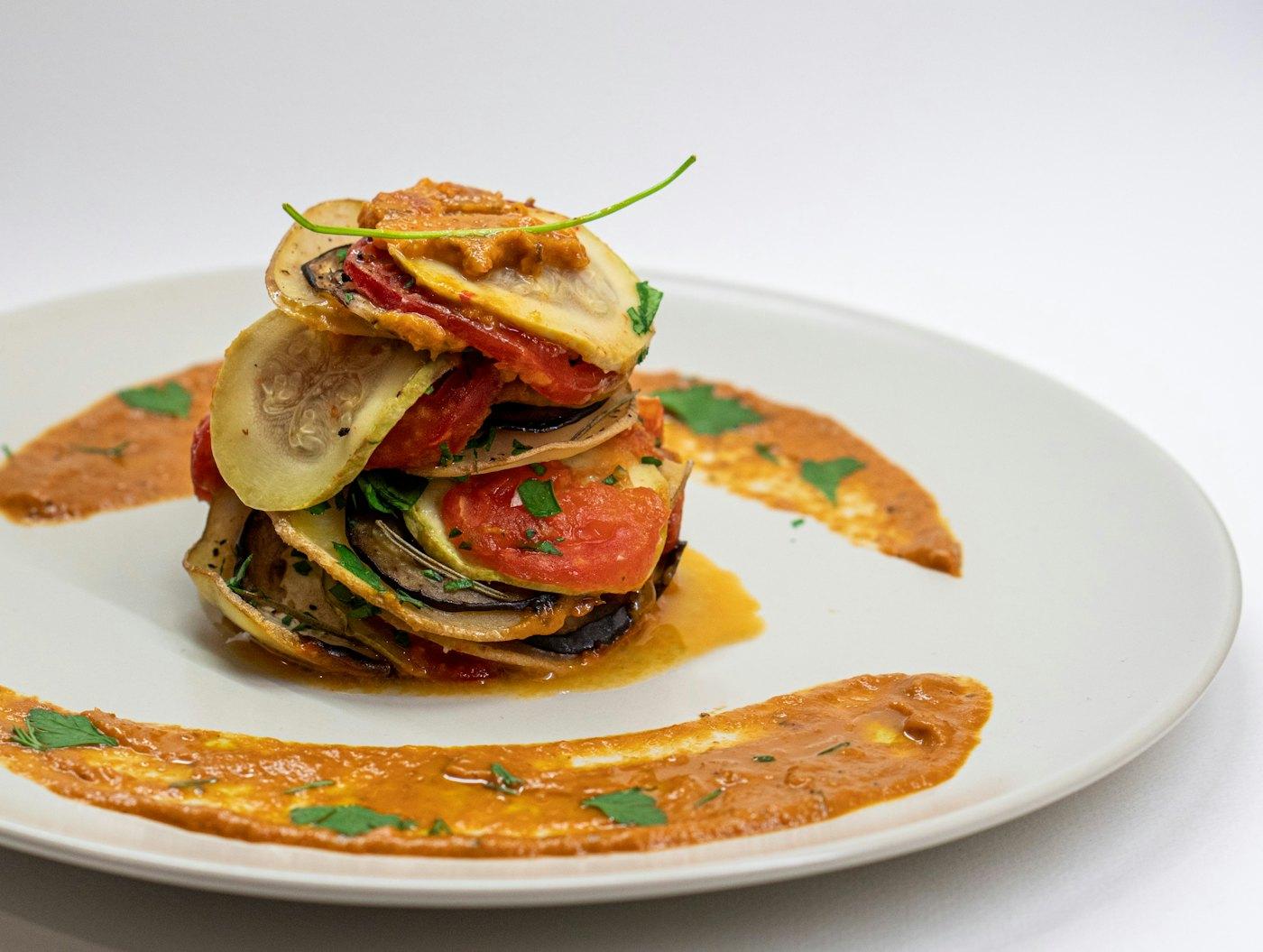
Ratatouille is a Provencal vegetable stew of eggplant, zucchini, peppers, tomatoes, and onion with herbs. It began as simple peasant food, a way to use up the summer vegetable harvest. There are two main presentations: the classic stewed version and the elegant confit byaldi, where thin rounds of vegetables are arranged in a spiral and baked.
That refined version is exactly what the Pixar film made famous. If you want to recreate the dish from the screen, we have a detailed recipe for Ratatouille like in the movie — it is perfect as a first French dish: there is no deep-frying involved, yet the result looks restaurant-worthy.
Quiche
Quiche is an open tart built on shortcrust or puff pastry with a filling of eggs, cream, and add-ins. The most famous is quiche lorraine with bacon and cheese, from the Lorraine region. The logic is simple: pastry, a custard of eggs and cream, and whatever filling you like. It is the ideal dish for understanding how a custard-based bake works.
Onion Soup
French onion soup (soupe a l'oignon) is onions caramelized to a deep amber, beef broth, a toasted crouton, and melted Gruyere cheese on top. The key secret is patience: the onions must be cooked slowly, around forty minutes, to release all their sweetness. Cheap ingredients, an unforgettable result.
Beef Bourguignon
Beef bourguignon is beef braised in red wine with carrots, onion, mushrooms, and bacon. The dish hails from Burgundy, where red wine was both a product and a way to tenderize tough cuts of meat. It cooks for a long time but with almost no hands-on effort: after searing, everything simmers in the oven for several hours. The dish owes much of its fame to Julia Child, who introduced Americans to French cooking.
French Baking: Croissants and Beyond
Baking is a separate point of French pride, and here viennoiserie reigns: croissants, pain au chocolat, brioche. Contrary to popular belief, the croissant has Austrian roots — its ancestor is thought to be the Viennese kipferl — but it was in France that it became a flaky, buttery masterpiece.
The secret of the croissant lies in laminating the dough: butter is repeatedly rolled and folded between layers of dough, creating dozens of thin sheets. During baking the butter releases steam, the layers rise, and you get that signature texture — crisp outside, airy inside. This technique takes practice, so beginners should start with simpler baking — the quiche or a tart, for instance.
Among the less obvious classics, the madeleine deserves a mention — delicate shell-shaped sponge cookies immortalized by Marcel Proust — along with the clafoutis, a simple cherry pudding cake from the Limousin region that even a beginner can master.
Where a Beginner Should Start
If you are only just approaching French cuisine, do not try to storm croissants or multi-component sauces right away. It is better to build a path from simple to complex.
- Step one: master bechamel and one vegetable dish like ratatouille.
- Step two: try a quiche — it teaches you to work with pastry and a custard filling.
- Step three: take on a slow-braised dish, such as onion soup or beef bourguignon, where patience is everything.
- Step four: once the basic techniques feel natural, move on to baking and emulsion sauces.
The main piece of advice: do not skimp on the quality of your base ingredients. Good butter, fresh vegetables, decent cooking wine, and coarse sea salt will change a dish's flavor more than any complicated technique. French cuisine is, above all, about respect for the ingredient, and only then about mastery.
Conclusion
French cuisine only seems elitist and out of reach. In truth it is built on understandable principles: good ingredients, basic techniques, and patience. Start with a single dish — let it be a bright ratatouille or a comforting onion soup — and you will quickly feel the very logic that links a rustic village stew to a restaurant masterpiece.
The key is to take your time and enjoy the process. The French long ago understood that food is not only a result but a ritual. Bon appetit.