Few animated series have managed to turn a dollop of chicken-nugget sauce into a full-blown cultural phenomenon. Rick and Morty did exactly that: a single joke about McDonald's Szechuan Sauce sparked a wave of fan frenzy, lines outside restaurants, and packets of sauce reselling for hundreds of dollars. Food in the show isn't just background dressing — it's a genuine engine for plot and memes.
The genius, cynical, perpetually drunk scientist Rick Sanchez travels across infinite dimensions with his grandson Morty. In almost every episode, food lurks somewhere in the frame: an alien delicacy here, another school lunch there, or the famous sauce that Rick is willing to upend the universe for. Creators Dan Harmon and Justin Roiland have a gift for turning everyday trifles into cosmic obsessions.
In this article we'll break down the show's most memorable culinary references: which ones actually existed, which stayed pure fiction, and how to recreate the Rick and Morty vibe in your own kitchen — no portal gun or intergalactic ingredients required.
McDonald's Szechuan Sauce: the sauce Rick will do anything for
In the finale of the season-three premiere, Rick — dosed with truth serum — confesses that his entire driving purpose in life is to get McDonald's Szechuan Sauce. That sauce really existed: McDonald's launched Szechuan Sauce in 1998 as a limited promotion tied to the release of Disney's Mulan. After a brief moment of glory, it vanished from menus for nearly two decades.
The joke proved so powerful that in October 2017 McDonald's staged a one-day return of the sauce. Demand wildly outstripped supply: fans lined up outside restaurants, some locations had only a few dozen packets, scuffles and complaints broke out, and individual portions resold at auction for striking sums. The chain eventually brought Szechuan Sauce back in a wider rollout in 2018 and 2019.
What did the sauce actually taste like
The original Szechuan Sauce was a sweet-and-spicy dip in the style of a simplified American take on Asian flavors. Based on descriptions and its makeup, it combined:
- a sweet base (sugar, molasses, or corn syrup);
- soy sauce for umami and saltiness;
- vinegar for tang;
- ginger and garlic;
- a touch of heat and a hint of sesame.
The name nods to China's Sichuan cuisine, but the sauce has little to do with the real thing and its famous numbing-spicy flavor (ma-la). It's a classic fast-food product: approachable, on the sweet side, and friendly to mass tastes.
How to make a similar sauce at home
Capturing the spirit of that sauce is easy. Whisk together soy sauce, rice or apple cider vinegar, brown sugar (or honey), grated ginger, minced garlic, and a drop of sesame oil. Warm the mixture over low heat and thicken it with a teaspoon of cornstarch dissolved in cold water. Want more heat? Add a pinch of Sichuan pepper or a splash of hot sauce. Serve it with nuggets or fried chicken — and you'll be right in Rick's spirit.
Morty's school lunches and the Smith household: what the family eats
If the sauce is a cosmic obsession, then Morty's lunches and the daily life of the Smith family are grounded, recognizable America. The show is full of everyday staples: breakfast cereal, the school cafeteria, frozen meals, cookies, and soda from the garage fridge where Rick set up his lab.
This ordinary food works through contrast: against a backdrop of intergalactic adventures, the family still argues about what to make for dinner and gathers around a normal table. That's exactly why simple dishes like sandwiches, pasta, or cereal feel so familiar in the show — they're an anchor of normalcy in the middle of chaos.
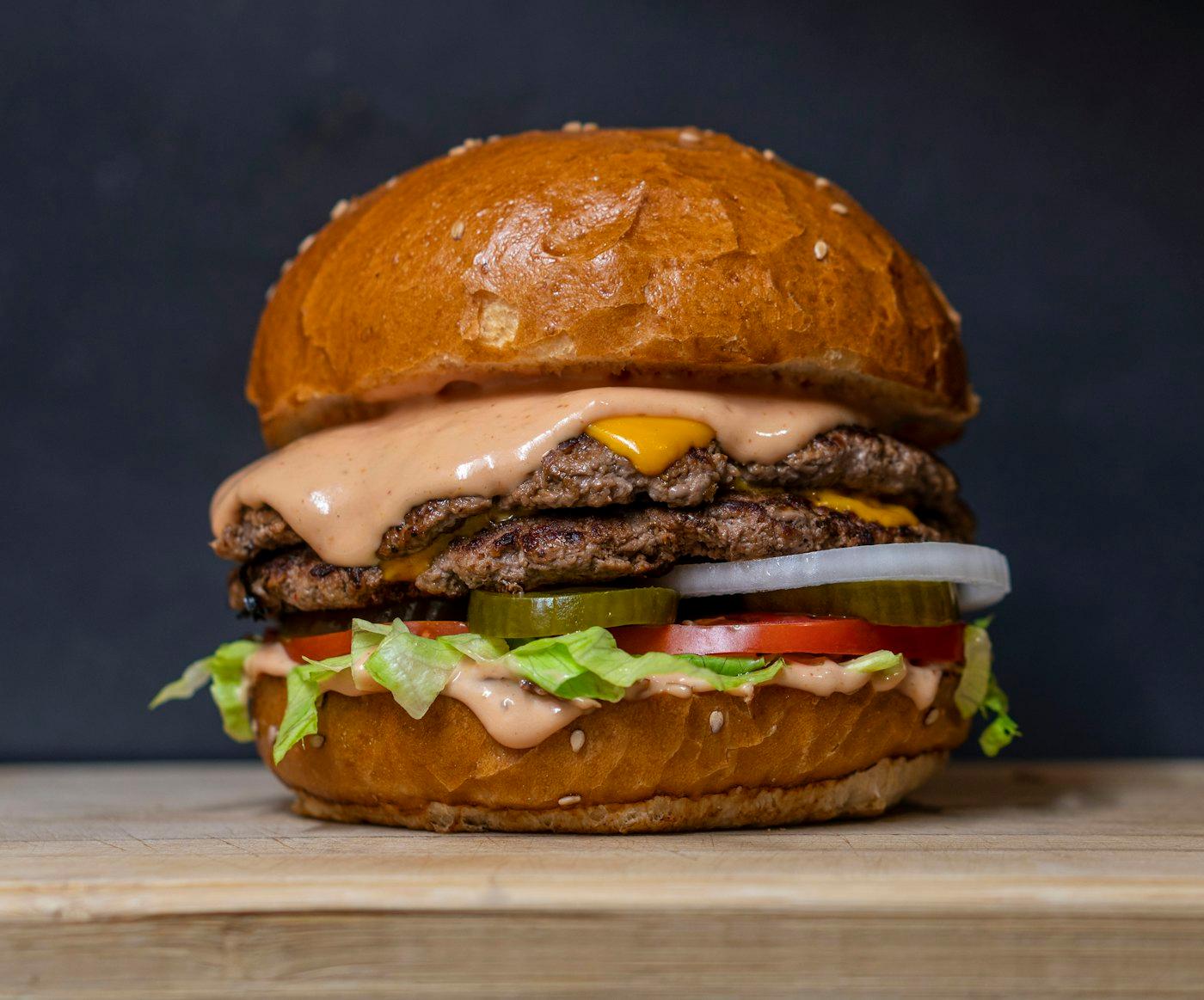
If you want to throw a Rick and Morty night, lean into American diner classics: burgers, nuggets, fries, soda, and something sweet for dessert. A burger rhymes perfectly with cartoon pop culture — take a look at our recipe for the Krabby Patty from SpongeBob: it's the same friendly fast-food spirit, just from a different universe.
Alien dishes and invented food
Alien food is a genre of its own in the show. More often than not it exists as a visual gag or a plot device rather than a real recipe. Here are a few notable examples.
- Interdimensional market goods. In episodes tied to cross-dimensional commerce and alien worlds, all sorts of "delicacies" flash by with no real-world equivalent — they're satire on consumption and absurd products.
- Food from the Citadel of Ricks. In the megacity populated by endless versions of Rick and Morty, there are diners and fast food that riff on corporate and urban culture.
- Rick's strange drinks and concoctions. His flask and lab fluids are more fuel for the plot than cuisine, but they've become a recognizable trademark of the character.
It's important to be honest: most of the alien food in Rick and Morty is pure invention with no canonical recipe. Unlike the Szechuan Sauce, which genuinely existed, these dishes can't be "cooked correctly" — you can only invent your own interpretation. And there's freedom in that: themed fan cooking is play, not reconstruction.
How fans adapt invented food
Food bloggers and fans usually take one of two paths. The first is to lift the visual image from a frame (color, shape, "alien-ness") and recreate it with familiar ingredients: bright jellies, colorful cocktails, oddly plated desserts. The second is to riff on the mood of the scene: if the food looked hilariously gross, they make a deliberately weird dish for effect. The golden rule of honest fan cooking is never to pass off guesses as canon.
Why food in Rick and Morty resonates so much
The Szechuan Sauce phenomenon showed just how strongly pop culture can drive real demand. A cartoon joke literally pushed a multinational corporation to revisit its menu, and thousands of people to queue up for a packet of sauce. It's a rare case where a character's fictional obsession leapt off the screen and became a genuine marketing event.
The trick is that food in the show always means something. The sauce is a metaphor for an empty yet all-consuming goal. The everyday meals are the normalcy the characters cling to. The alien delicacies are satire on consumption. So even a tiny detail like nuggets turns into a symbol.
For fan cooking, that's perfect soil. You don't need expensive props: simple American fast food, a homemade Asian-style sauce, and a drop of irony will do. The Rick and Morty atmosphere is built not on elaborate recipes but on the clash of the mundane and the absurd.
Conclusion
Rick and Morty proved that food in a cartoon can become a cultural event. The Szechuan Sauce is a real product with a genuine history that the show revived; Morty's lunches are recognizable everyday America; the alien dishes are honest fiction that leaves plenty of room for imagination.
If you'd like to host a themed night, start with a homemade sweet-and-spicy sauce for your nuggets, add burgers and soda, and Rick's universe will feel closer than you'd think. For more cartoon-food ideas, browse our fan recipes: sometimes the simplest Krabby Patty from SpongeBob sets the mood better than any portal gun.