Brazilian cuisine isn't a single menu — it's an entire continent of flavors packed into one country. Brazil is vast: the distance from the Amazon rainforest in the north to the cool hills of the south is greater than from Lisbon to Moscow. So speaking of "Brazilian food" in the singular is as odd as speaking of "European food." On the coast of Bahia, cooks reach for dende palm oil and coconut; in the cattle-ranching south, they grill meat over coals; and in Minas Gerais, home cooks knead dough made from cassava flour.
And yet some dishes are recognized by every Brazilian, wherever they live. Black-bean feijoada, churrasco with its endless skewers of meat, cheesy pao de queijo, the fish stew moqueca and the caipirinha cocktail form a national code assembled from three great traditions. Indigenous peoples contributed cassava and corn; the Portuguese brought pork, rice and the art of sweet baking; and Africans, arriving through the tragic wave of the slave trade, brought palm oil, chili and the very idea of slow-simmering everything in a single pot.
This blend is exactly what makes Brazilian cooking so generous and so instantly recognizable. Below we'll walk through its signature dishes — what they are, where they came from and how to make them at home without booking a flight to Rio.
Feijoada: the dish that slows a whole afternoon
Feijoada is the country's most famous dish and its unofficial national symbol. The base is black beans simmered for a long time with pork: ribs, smoked sausage, and sometimes ears, tail and other humble cuts. The result is a thick, almost black stew with a deep, meaty flavor.
A popular legend claims feijoada was invented by enslaved people who stewed beans with the scraps left over from the master's table. Historians are skeptical: similar bean-and-pork dishes exist all over Portugal and Europe, and prime cuts like ribs would rarely have reached enslaved households. Feijoada most likely grew out of European bean stews and adapted to local ingredients. In other words, it isn't "poor people's food" but a full-fledged celebratory dish.
Brazilians eat feijoada seriously, usually on a Wednesday or Saturday, because it tends to invite an afternoon nap. The classic set of side dishes is almost ritual:
- white rice;
- farofa — toasted cassava flour that soaks up the sauce;
- orange slices, which refresh the palate and help cut the rich meat;
- couve — thinly sliced collard greens, quickly sauteed;
- a hot sauce made from malagueta peppers.
Making feijoada at home is simpler than it looks: you'll need black beans (soaked overnight), smoked pork ribs, a sausage such as chorizo or a smoked variety, onion, garlic and a bay leaf. Everything simmers for a couple of hours until it turns into a thick, creamy stew. Don't rush — it's the time that transforms plain ingredients into something velvety.
Churrasco: South American barbecue
If feijoada is about the slow-simmering north, churrasco is about the fire-loving south. On the plains of Rio Grande do Sul, traditional cattle country, the culture of the gauchos — local cowboys who grilled meat on skewers right over the coals — took root.
The guiding principle of churrasco is minimalism. A good cut of beef doesn't need a dozen marinades; it's rubbed with coarse salt and grilled over live heat to the desired doneness. The most celebrated cut is picanha — the top sirloin cap with its layer of fat — threaded onto a skewer in a horseshoe shape. The fat renders, drips, and the meat comes out juicy and seared at the same time.
The churrascaria and the rodizio system
Outside Brazil, churrasco is usually encountered in a churrascaria restaurant running on the rodizio system. Waiters circulate between tables with enormous skewers and carve meat straight onto your plate as long as a green card sits on your table saying "bring more." Flip it to red and the parade of meat stops. It's not just a dinner but a gastronomic marathon, where the trick is not to surrender too early.
Recreating the spirit of churrasco at home is easy: take a good thick steak, salt it generously with coarse salt about half an hour before cooking, fire up the coals and grill over high heat, flipping only once or twice. Serve it with chimichurri — a green sauce of parsley, garlic, oregano and olive oil that came from neighboring Argentina and Uruguay but feels at home across the southern part of the continent.
Pao de queijo and the corn-and-cassava foundation
You can't understand Brazilian cooking without cassava. The Tupi-Guarani peoples domesticated this root long before Europeans arrived, and it's still turned into flour, starch and farofa today. Cassava's most charming offspring is pao de queijo, the cheese balls native to the state of Minas Gerais.
The secret is that the dough is made not from wheat but from cassava flour (tapioca), which makes pao de queijo naturally gluten-free. Outside there's a crisp crust; inside, a stretchy, almost chewy crumb full of cheese flavor. The classic cheese is the firm Minas variety known as queijo meia-cura, though at home it's easily approximated with parmesan plus something meltier.
They come together quickly: the tapioca is scalded with milk and oil, eggs and grated cheese are worked into the dough, the balls are rolled and baked until golden. In Brazil they're eaten for breakfast with coffee, sold on every corner and packed for the road — true street-side comfort food.
Moqueca: a fish stew with two personalities
Moqueca is a stew of fish or seafood in a fragrant broth, and here begins an eternal regional debate. There are two main schools.
Moqueca baiana, from the northeastern state of Bahia, is the most "African" in character: it uses dende palm oil, which gives it a rich orange color, plus coconut milk and hot chili. Moqueca capixaba, from the state of Espirito Santo, is considered older and more restrained — no dende, no coconut, made with olive oil and plenty of tomatoes, onion, cilantro and red annatto for color.
What they share is slow cooking in a clay pot, with layers of vegetables and fish that aren't stirred, so the pieces stay whole. Moqueca is served with rice and pirao, a savory porridge of broth thickened with cassava flour. The dish is a great example of how one name can unite completely different flavors depending on which culture left the deeper mark on a region.
Caipirinha and a sweet finish
To wash it all down there's the national cocktail, the caipirinha. The recipe is disarmingly simple: lime, sugar, ice and cachaca — a strong spirit distilled from sugarcane juice. The lime and sugar are muddled right in the glass, then ice and cachaca are added. The result is fresh, sweet-tart and deeply Brazilian. Cachaca is not the same as rum: rum is usually made from molasses, while cachaca is made from fresh cane juice, which gives it a different, greener character.
For something sweet, get to know the brigadeiro — fudgy candies of condensed milk, cocoa and butter, rolled in chocolate sprinkles. They appear at every birthday party and, for many Brazilians, taste like childhood. There's also pudim de leite, the local take on flan made with condensed milk, proof that the Portuguese love of milky desserts settled here for good.
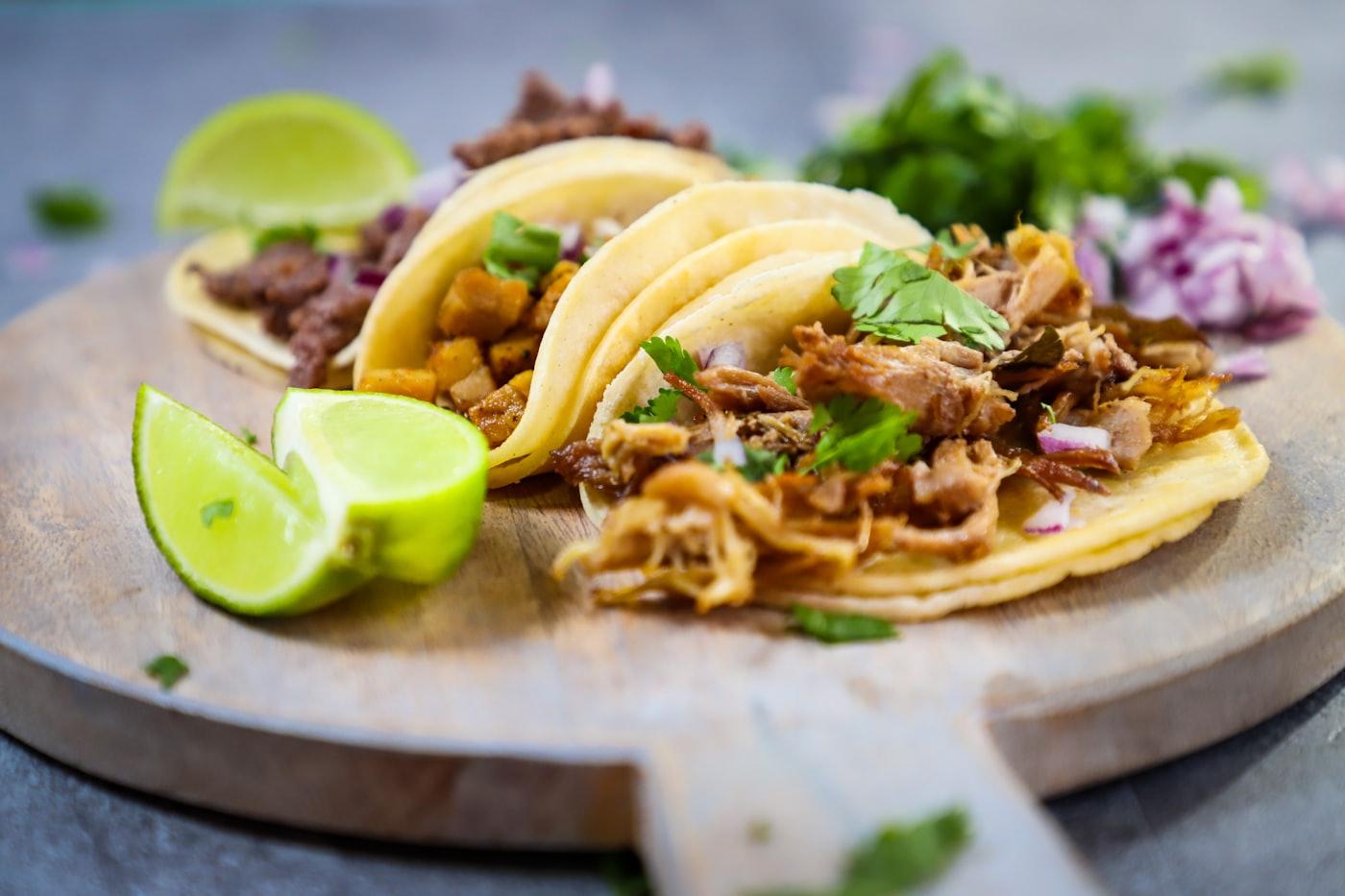
If you're drawn to the Latin American thread and to cuisines born at the crossroads of cultures, look to the neighbors: Mexico's Tacos al Pastor, for instance, are built on the same idea of street food and playful spice that animates so many Brazilian dishes.
Conclusion
Brazilian cuisine is the story of three worlds meeting: Indigenous peoples with their cassava and corn, the Portuguese with their pork and sweet baking, and Africans with their palm oil and culture of slow simmering. From this fusion came feijoada, churrasco, pao de queijo, moqueca and the caipirinha — dishes that are easy to recreate at home and that instantly carry you to a shared table full of food, warmth and people. Start with one, and you'll understand why in Brazil food is always a reason to gather.